BBQ Fire Control
How to Control Smoker Temperature: Airflow, Vents, Fuel & Clean Smoke
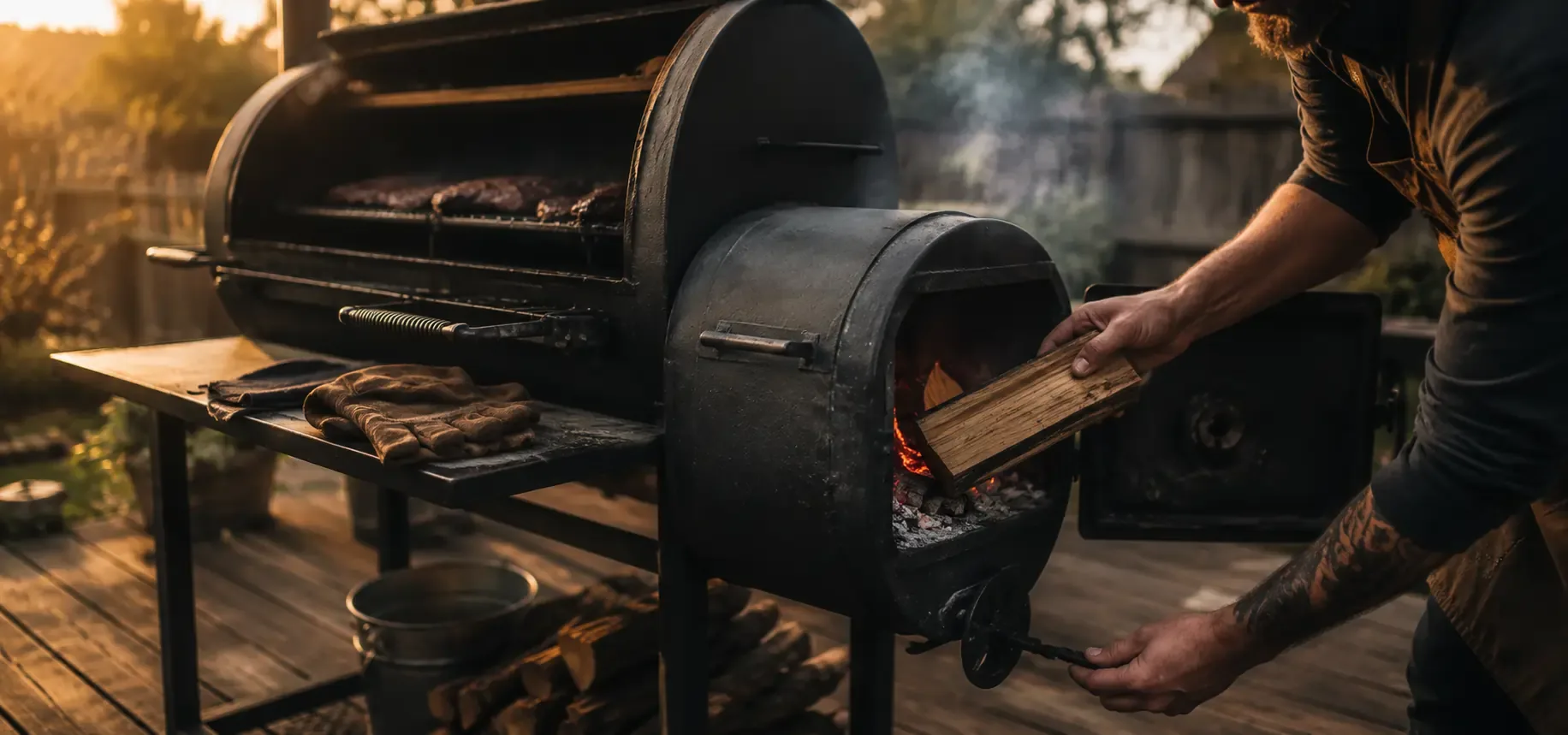
Learning how to control smoker temperature is one of the most important BBQ skills. Stable heat helps you cook more predictably, create cleaner smoke, avoid harsh flavors, protect moisture, and make better decisions during long backyard smoking sessions.
Quick navigation
What this smoker temperature guide covers
Quick answer
The simple way to control smoker temperature
To control smoker temperature, manage airflow first, fuel second, and lid openings last. The intake vent usually has the biggest effect on fire strength, while the exhaust vent helps smoke and heat move through the cooker. Small adjustments work better than constant overcorrection.
Most backyard BBQ problems come from chasing every small temperature swing. A smoker does not need to sit on the exact same number every minute. It needs to stay in a useful cooking range with clean smoke and steady airflow.
This guide explains how to control smoker temperature without panic-adjusting vents every few minutes. The goal is a stable cooking environment, not perfect numbers on a screen.
Target range
What smoker temperature should you use?
Many backyard BBQ cooks use a low-and-slow range around 225°F to 275°F for meats like brisket, pork shoulder, ribs, turkey, and chicken. The right smoker temperature depends on the cut, smoker type, schedule, texture goal, and how much smoke flavor you want.
| Smoker temperature range | Best use | What to watch | Common BBQ decision |
|---|---|---|---|
| 225°F | Long low-and-slow cooks | Longer cook times and more time in the stall | Useful when you want a slow cook and more smoke exposure |
| 250°F | Balanced backyard BBQ range | Good mix of smoke, bark, and reasonable cook time | A strong default for brisket, pork shoulder, and ribs |
| 275°F | Faster BBQ cooks | Less margin for neglecting moisture, bark, or timing | Useful when you want to shorten the cook without going too hot |
| 300°F+ | Hot-and-fast BBQ or finishing poultry skin | Faster browning, faster drying risk, and tighter timing | Useful for chicken skin, finishing, or specific hot-and-fast methods |
The smoker temperature is only part of the system. You still need to watch internal meat temperature, texture, tenderness, and resting. For safe internal temperatures, use a food thermometer and compare your cook with a reliable temperature chart.
Airflow
How airflow controls smoker temperature
Fire needs oxygen. When more oxygen reaches the fuel, the fire usually burns hotter. When airflow is restricted, the fire usually weakens and the smoker temperature drops. That is why airflow is the first thing to understand when learning how to control smoker temperature.
The exact behavior depends on your smoker. A charcoal grill, pellet smoker, offset smoker, and electric smoker do not respond the same way. But the basic idea remains: airflow controls how the fire burns and how heat moves through the cooker.
Thin, clean smoke usually means the fire is breathing better. Heavy white smoke often points to poor combustion, wet fuel, blocked airflow, or a fire that is struggling.
Vents
How to use intake and exhaust vents
On many charcoal and offset smokers, the intake vent controls how much oxygen enters near the fire. The exhaust vent controls how smoke and heat leave the cooker. Both matter, but they do not do the same job.
Use the intake vent for temperature control
If the smoker is running too cool, opening the intake vent can help the fire breathe and raise temperature. If the smoker is running too hot, closing the intake slightly can reduce oxygen and calm the fire.
Keep the exhaust vent mostly open
In most backyard smoking setups, the exhaust should stay mostly open so stale smoke can leave the cooker. Closing the exhaust too much can trap dirty smoke, reduce draft, and create a harsher flavor.
Make small changes and wait
Vent changes take time. Make a small adjustment, wait 10 to 20 minutes, and watch the trend. If you adjust again too soon, you may overshoot the target and end up chasing temperature for the rest of the cook.
Fuel
Fuel management keeps smoker temperature stable
Fuel controls heat capacity. Airflow controls how that fuel burns. A smoker with too little fuel may struggle to recover. A smoker with too much lit fuel may run hotter than you want. Good BBQ temperature control comes from balancing both.
Charcoal smokers
Use a controlled charcoal arrangement so the fire spreads gradually. Add fuel before the smoker drops too far, and avoid dumping in too much fully lit charcoal unless you want a fast temperature spike.
Offset smokers
Smaller, cleaner fires are usually easier to manage than huge fires. Add properly sized splits before the fire collapses, and let the smoker breathe through the firebox and exhaust.
Pellet smokers
Pellet smokers use an auger and controller to manage fuel feed. Keep pellets dry, clean the fire pot when needed, and avoid opening the lid too often because recovery still takes time.
Electric smokers
Electric smokers simplify heat control, but they still depend on stable setup, proper preheating, airflow, and avoiding constant door openings during the cook.
Clean smoke
Clean smoke is part of temperature control
Smoker temperature is not only about heat. It is also about fire quality. A fire that burns cleanly produces better smoke. A fire that smolders poorly can make food taste bitter, harsh, or ashy.
Clean smoke is often thin, light, and slightly blue or nearly invisible. Thick white smoke can happen when the fire is starved of oxygen, the wood is too wet, the smoker is overloaded, or the fire has not stabilized yet.
How to encourage cleaner smoke
- Preheat the smoker before adding food.
- Use dry, appropriate fuel.
- Avoid choking the exhaust vent.
- Let new wood ignite cleanly before closing everything down.
- Use small airflow changes instead of smothering the fire.
Temperature probes
Where to measure smoker temperature
The thermometer built into a smoker lid does not always show the temperature where the food is cooking. Heat can vary between the dome, the cooking grate, the fire side, the exhaust side, and different shelf levels.
For better smoker temperature control, measure close to grate level near the food. A grate-level ambient probe gives a more useful picture of what the meat is actually experiencing.
Track both temperatures: smoker temperature for the cooking environment and internal temperature for the food. FoodSafety.gov recommends using a food thermometer to confirm safe internal temperatures for meat, poultry, seafood, and leftovers. See FoodSafety.gov safe minimum internal temperatures.
Stability
How to stabilize a smoker before adding meat
Many temperature problems start before the food ever goes on the smoker. If the cooker has not stabilized, you may spend the first hour reacting to swings instead of managing the cook calmly.
- Start the fire or smoker early.
- Let the cooker preheat fully.
- Wait for heavy startup smoke to clear.
- Set vents or controller to your target range.
- Watch the temperature trend for 15 to 30 minutes.
- Add food once the smoker is stable and the smoke looks cleaner.
A stable smoker does not mean the number never moves. It means the temperature stays in a useful range and responds predictably when you adjust airflow or fuel.
Temperature swings
What to do when smoker temperature rises or drops
If the smoker temperature is too low
- Open the intake vent slightly.
- Check whether the fire needs more fuel.
- Make sure ash is not blocking airflow.
- Confirm the exhaust is not overly restricted.
- Wait before making another adjustment.
If the smoker temperature is too high
- Close the intake vent slightly.
- Avoid closing the exhaust completely.
- Do not panic-open the lid unless there is a real flare-up or safety issue.
- Let the fire settle before making another adjustment.
- Use smaller fuel additions next time.
Temperature swings are normal. The key is watching the trend. A smoker drifting slowly from 250°F to 265°F is not the same problem as a smoker racing from 250°F to 350°F.
Common mistakes
Smoker temperature mistakes beginners make
Chasing exact numbers
Trying to force the smoker to stay on one exact number can make you over-adjust vents and fuel. A useful range is more practical than a perfect number.
Opening the lid too often
Every lid opening releases heat and changes airflow. Check when needed, but do not turn every cook into constant inspection.
Choking the exhaust
Closing the exhaust too much can trap stale smoke and hurt fire quality. Control heat mostly with intake and fuel, not by suffocating the cooker.
Adding too much fuel at once
Large fuel changes can create large temperature changes. Add fuel with a plan instead of reacting only after the smoker has already dropped.
FAQ
Smoker temperature control questions
How do you control smoker temperature?
Control smoker temperature by managing airflow, fuel, and lid openings. Use the intake vent to adjust oxygen near the fire, keep the exhaust mostly open, add fuel before the fire collapses, and make small adjustments instead of chasing every small swing.
Should the smoker vent be open or closed?
The exhaust vent should usually stay mostly open so smoke and heat can move through the cooker. The intake vent is usually the better place to make small temperature adjustments.
Why does my smoker temperature keep dropping?
A smoker may drop because the fuel is running low, ash is blocking airflow, the intake vent is too closed, the lid has been opened often, or weather is pulling heat away from the cooker.
Why is my smoker getting too hot?
A smoker can run too hot when too much fuel is lit, the intake vent is too open, the fire is too large, or the cooker is placed in strong wind that feeds the fire.
Is 225°F or 250°F better for smoking meat?
Both can work. 225°F gives a slower cook, while 250°F is often a balanced backyard BBQ temperature that shortens the cook slightly while still supporting smoke, bark, and tenderness.
How long should a smoker stabilize before cooking?
Let the smoker preheat and stabilize before adding food. Many backyard cooks wait until the heavy startup smoke clears and the cooker holds a useful temperature range for 15 to 30 minutes.
Do pellet smokers still need temperature control?
Yes. Pellet smokers automate fuel feeding, but they still react to weather, lid openings, pellet quality, grease buildup, dirty fire pots, and probe placement.
Where should I place a smoker temperature probe?
Place an ambient probe near grate level close to the food, without touching the grate or meat. This gives a better reading than relying only on a lid thermometer.
Food safety note
Smoker temperature is not the same as food-safe internal temperature
Smoker temperature tells you how hot the cooking environment is. Internal temperature tells you what is happening inside the food. For safe cooking decisions, check internal temperature with a food thermometer.
External source: FoodSafety.gov safe minimum internal temperatures
Related BBQ guides
Connect smoker temperature with internal meat temperature.
Once you understand how to control smoker temperature, the next step is learning when the meat itself is done. Pair this guide with the smoking meat temperature chart so you can manage both the cooker and the food.