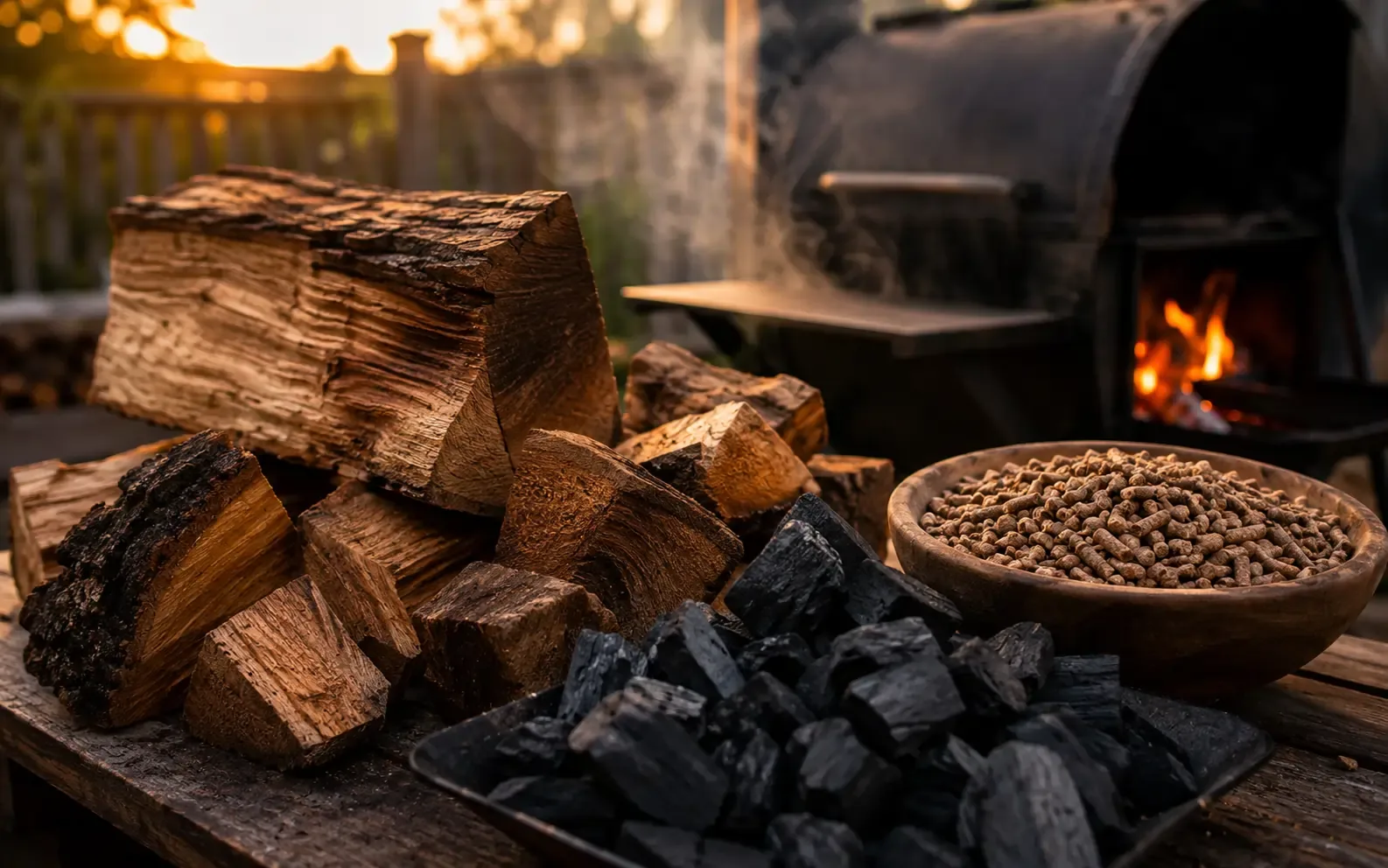
BBQ Wood & Fuel Guide
Smoke Flavor Starts With the Fuel.
Wood and fuel shape heat, smoke flavor, bark, burn time, combustion, and how your smoker behaves. BackyardBBQGuide.com helps backyard cooks understand oak, hickory, mesquite, fruit woods, charcoal, pellets, chips, chunks, and splits without overcomplicating the cook.
Core Lesson
More smoke is not always better.
Good BBQ needs clean smoke, steady heat, proper airflow, and the right fuel for the meat and cooker. Heavy smoke can overpower food and create bitter flavor.
Learn clean smoke basics →Wood & Fuel Basics
Different fuels create different BBQ results.
Smoking Wood
Oak, hickory, mesquite, apple, cherry, pecan, maple, and other woods can change smoke strength, aroma, color, and flavor.
Charcoal
Lump charcoal and briquettes affect burn time, ash, temperature stability, airflow, and how often the fire needs attention.
Pellets
Wood pellets are used in pellet smokers and can affect smoke profile, fuel consumption, ash, temperature consistency, and convenience.
Chips, Chunks & Splits
The size and format of wood affects how quickly it burns, how much smoke it produces, and which cooker it fits best.
Clean Smoke
Good smoke should support the meat, not bury it.
Clean smoke comes from better combustion, airflow, fuel quality, and cooker control. Thick, stale, or dirty smoke can leave harsh flavors. The goal is balanced smoke that improves the meat without making it bitter.
Smoking Wood Flavor
Wood choice changes the final bite.
Smoking wood can add mild, sweet, nutty, earthy, strong, or intense smoke notes depending on the wood and how it burns. The same wood can feel different depending on the meat, smoker type, cooking time, and amount used.
Beginners usually do better starting with balanced woods before jumping into stronger smoke profiles.
- Oak is balanced and versatile.
- Hickory is stronger, richer, and classic for pork.
- Mesquite is intense and can overpower food quickly.
- Apple and cherry are milder and often used with pork and poultry.
Wood Pairing
Match the wood to the meat and cook time.
Long cooks can absorb more smoke over time, so strong woods need restraint. Shorter cooks may need a cleaner, more direct smoke profile. Delicate foods can become over-smoked faster than brisket, pork shoulder, or beef ribs.
Wood pairing is not a strict rulebook. It is a starting point. The best choice depends on your smoker, fuel, airflow, meat, seasoning, sauce, and personal taste.
Charcoal Basics
Charcoal is fuel, heat control, and flavor support.
Lump Charcoal
Lump charcoal can burn hot and respond quickly to airflow, but piece size and burn consistency can vary from bag to bag.
Charcoal Briquettes
Briquettes are popular because they are consistent, predictable, and useful for longer controlled cooks.
Vent Control
Airflow controls combustion. Vent changes affect temperature, smoke quality, burn rate, and fire stability.
Ash Management
Too much ash can restrict airflow and make temperature control harder during longer cooks.
Wood Pellets
Pellets are built for convenience and consistency.
Wood pellets are compressed hardwood fuel used in pellet smokers. They feed from the hopper through an auger into the fire pot, where a fan and controller help manage combustion and temperature.
Pellet choice can affect smoke profile, ash, burn rate, and how cleanly the smoker runs. Storage also matters because pellets can absorb moisture.
- Use dry pellets.
- Store pellets away from moisture.
- Clean ash according to the smoker’s needs.
- Expect milder smoke than some wood or charcoal setups.
Pellet Flavor
Pellet flavor is useful, but not magic.
Pellet labels often focus on wood type, but the final flavor also depends on smoker design, temperature, airflow, pellet quality, meat surface, cooking time, seasoning, and rest.
A good pellet smoker setup still needs solid BBQ fundamentals: proper temperature, clean burn, good probe placement, enough rest, and realistic expectations.
Wood Formats
Chips, chunks, splits, and pellets are not the same.
Wood Chips
Wood chips burn quickly and are often used in gas grills, electric smokers, or short smoke sessions.
Wood Chunks
Chunks burn longer than chips and are useful with charcoal for ribs, pork shoulder, chicken, turkey, and brisket.
Wood Splits
Splits are used in offset smokers and require good fire management, airflow, seasoning, and combustion control.
Wood Pellets
Pellets are designed for pellet smokers and feed automatically through a hopper and auger system.
Seasoned Wood
Wood quality affects smoke quality.
Wood should be appropriate for cooking and should burn cleanly. Wet, moldy, treated, painted, or unknown wood can create bad flavor and may be unsafe.
Seasoned cooking wood is usually preferred for traditional smoking because it burns more predictably and supports cleaner combustion.
- Avoid treated lumber.
- Avoid painted or chemically treated wood.
- Avoid moldy or questionable wood.
- Use wood intended for cooking.
Fuel and Smoker Type
Your cooker decides what fuel makes sense.
Pellet smokers use pellets. Offset smokers often use wood splits and a coal bed. Charcoal grills use lump charcoal or briquettes with optional wood chunks. Electric and gas smokers often use chips or chunks depending on the design.
Matching fuel to smoker type helps you avoid frustration and gives you better control over heat, smoke, cleanup, and repeatability.
Common Wood & Fuel Mistakes
Bad smoke usually starts before the meat goes on.
Using Too Much Wood
More wood can create stronger smoke, but too much can overpower the meat and leave harsh flavors.
Choking the Fire
Restricting airflow too much can create dirty smoke, poor combustion, and unstable temperature.
Ignoring Fuel Quality
Bad pellets, damp charcoal, or poor-quality wood can make temperature and flavor harder to control.
Choosing Strong Wood Too Early
Beginners often jump to intense woods before understanding clean smoke, airflow, and balanced flavor.
Coming First
Initial wood and fuel guides.
The first wood and fuel articles will focus on the decisions backyard cooks make most often.
- Best woods for smoking meat
- Hickory vs oak vs mesquite
- Wood pellets vs wood chips
- Lump charcoal vs briquettes
- How to get clean smoke
Connect the System
Fuel is only one part of better BBQ.
Wood and fuel decisions connect directly to smoker type, temperature control, meat doneness, recipe structure, and final flavor.
Wood & Fuel Hub
Cleaner smoke, steadier heat, better backyard BBQ.
BackyardBBQGuide.com teaches wood and fuel as part of the whole BBQ system: smoker type, airflow, heat control, internal temperature, meat texture, smoke flavor, and practical technique.