BBQ Thermometers
Use temperature to make BBQ safer, easier, and more consistent.
A good BBQ thermometer helps you cook with less guessing. Internal temperature, smoker temperature, probe placement, carryover cooking, resting, and tenderness cues all work together when deciding if smoked meat is ready.
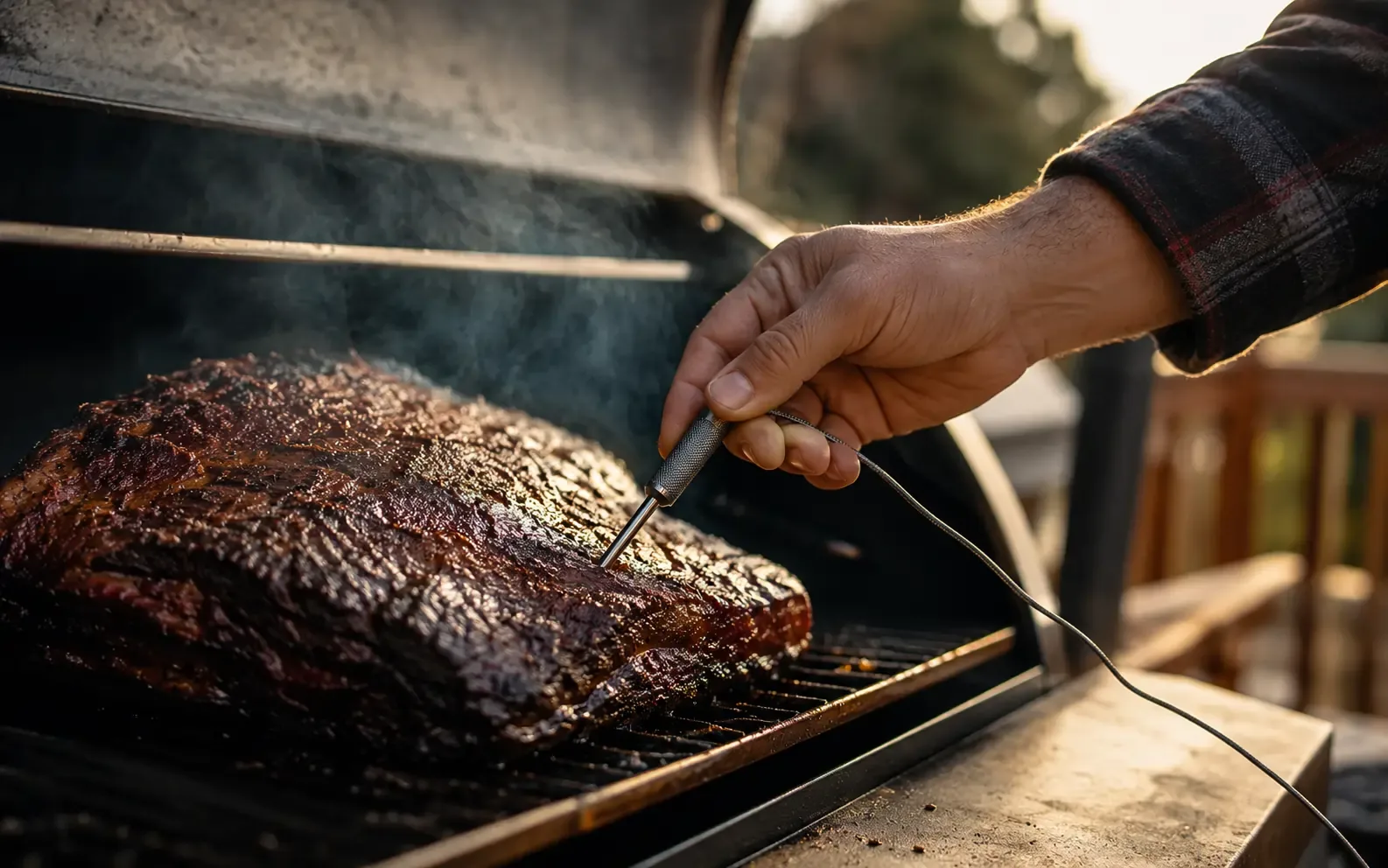
Start here
BBQ temperature topics worth learning first.
Smoking Meat Temperature Chart
Use this chart to understand safe internal temperatures, doneness cues, resting, carryover cooking, and BBQ decision-making.
Open the chart →
02Probe Placement
Learn where to place a thermometer probe so you measure the meat accurately instead of hitting bone, fat, air pockets, or the wrong section.
Explore current guides →
03Smoker Temperature
Understand the difference between dome temperature, grate temperature, hot spots, ambient probes, and real cooking conditions inside the smoker.
Explore current guides →
04Resting & Carryover
Learn why meat temperature can keep changing after it leaves the heat and why resting affects texture, moisture, slicing, and final results.
Explore current guides →
Temperature control
Temperature is a guide, not the whole story.
A thermometer tells you what is happening inside the meat, but great BBQ also depends on tenderness, texture, bark, fat rendering, carryover cooking, and resting. Use temperature as a serious tool, not as the only signal.
Internal temperature
Measure the food, not the air.
Internal temperature helps you understand safety and doneness. It is especially important for chicken, turkey, pork, burgers, sausage, and large smoked cuts where guessing can lead to dry meat or unsafe cooking.
- Use the thickest part of the meat when checking temperature.
- Avoid touching bone when measuring internal temperature.
- Check more than one spot on large or uneven cuts.
- Combine temperature with texture and tenderness cues.
Smoker temperature
Control the cooking environment.
Smoker temperature affects cooking time, smoke quality, bark formation, moisture loss, and how predictable the cook becomes. A grate-level probe can help you understand what the food is actually experiencing.
- Watch temperature at the cooking grate.
- Learn where your smoker runs hot or cool.
- Avoid chasing every small temperature swing.
- Make small airflow or fuel adjustments when needed.
Best starting point
Open the smoking meat temperature chart first.
Before building out the full thermometer library, the temperature chart gives visitors the strongest practical starting point: safe internal temperatures, BBQ doneness cues, resting notes, and better cooking decisions.