Pork Belly Recipe
Smoked Pork Belly: Bark, Fat Rendering, Smoke Flavor & Burnt Ends
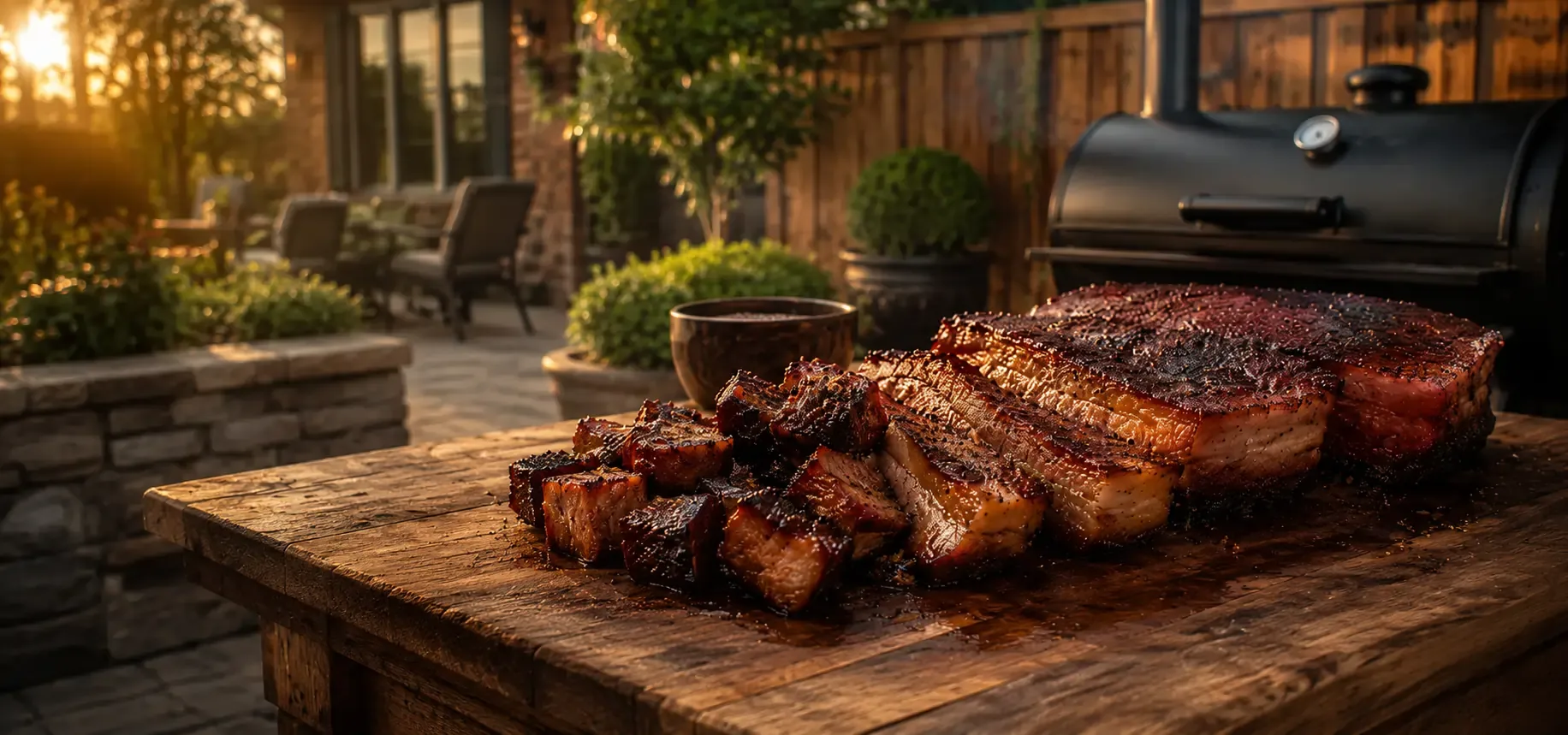
Smoked pork belly is rich, smoky, forgiving, and one of the most satisfying backyard BBQ cooks when the fat renders properly. This guide explains how to make smoked pork belly with better bark, cleaner smoke, tender texture, crispy edges, and a practical process for slices or burnt ends.
This smoked pork belly guide is written for backyard cooks who want more than a timer. The goal is to understand seasoning, smoker temperature, fat rendering, smoke wood, internal temperature, resting, slicing, and how to turn pork belly into BBQ that feels rich without becoming greasy.
Quick navigation
What this smoked pork belly guide covers
Quick answer
How to make smoked pork belly the simple way
To make smoked pork belly, trim the slab if needed, season it well, smoke it at a steady backyard BBQ temperature, cook until the fat renders and the texture softens, rest it briefly, then slice it or cube it into burnt ends.
Pork belly is about fat rendering and texture. It can reach a safe minimum temperature before it has the rich, tender BBQ texture most people want. Use temperature as a guide, then judge the final result by tenderness, rendered fat, bark, and bite.
This smoked pork belly recipe can be used for thick slices, cubes, or burnt ends. The main difference is how you cut the pork belly and whether you sauce and finish the pieces after the first smoke.
Pork belly basics
What is pork belly?
Pork belly is a rich, fatty cut from the belly of the pig. It is the same general cut used to make bacon, but fresh pork belly is not cured like bacon unless the package specifically says so.
Pork belly has layers of meat and fat. That makes it excellent for smoking, but it also means the cook needs enough time and heat for the fat to soften and render. If pork belly is under-rendered, it can taste greasy or chewy. If it is overcooked too aggressively, the meat can dry out while the fat becomes too soft.
Good smoked pork belly should taste rich, smoky, tender, and balanced. It should not feel like a raw block of fat or a dry piece of jerky.
Cooking style
Smoked pork belly slices vs pork belly burnt ends
Pork belly can be smoked as a whole slab, thick slices, strips, cubes, or burnt ends. The best method depends on the texture you want and how you plan to serve it.
| Style | How it cooks | Best for | What to watch |
|---|---|---|---|
| Whole slab | Smokes as one large piece | Slicing after the cook | Needs enough time for fat rendering |
| Thick slices | More surface area than a whole slab | Serving as rich BBQ slices | Can dry at the edges if cooked too hot |
| Cubes | More bark and smoke contact | Burnt ends or appetizer-style BBQ | Can overcook if cubes are too small |
| Burnt ends | Smoked, sauced, and finished until sticky | Sweet, rich, bite-sized BBQ | Too much sauce can hide smoke and texture |
When learning smoked pork belly, start with larger pieces instead of very small cubes. Larger pieces are more forgiving and give you more control over texture.
Setup
Equipment and ingredients for smoked pork belly
Smoked pork belly does not require complicated ingredients, but it does need a stable smoker, clean smoke, and enough time for fat rendering.
Basic equipment
- Smoker or grill set up for indirect heat
- Charcoal, pellets, or wood depending on your cooker
- Meat thermometer or probe thermometer
- Sharp knife
- Cutting board
- Foil pan if making burnt ends
Basic ingredients
- Fresh pork belly slab, strips, or cubes
- Kosher salt
- Black pepper
- BBQ rub
- Optional brown sugar
- Optional BBQ sauce, honey, or butter for burnt ends
Preparation
How to prep pork belly before smoking
Start by checking the pork belly surface. Trim loose edges, remove any tough skin if it is still attached, and decide whether you want to smoke it as a slab, slices, strips, or cubes.
- Remove the pork belly from the package.
- Pat the surface dry with paper towels.
- Trim loose flaps or uneven edges.
- Remove skin if the pork belly still has a tough skin layer.
- Cut into slices or cubes if you are not smoking it as a slab.
- Season evenly on all sides.
If the pork belly has skin attached, remove it for most backyard smoked pork belly recipes. Skin can block seasoning and smoke, and it may stay tough unless cooked with a very specific crispy-skin method.
Seasoning
How to season smoked pork belly
Pork belly can handle bold seasoning because the cut is rich and fatty. Salt, pepper, paprika, garlic, onion, chile, and a little sweetness can all work well.
Keep the seasoning balanced. Too much sugar can darken quickly, especially if the smoker runs hot or if you finish the pork belly with sauce.
| Seasoning style | Flavor profile | Best use | What to watch |
|---|---|---|---|
| Salt and pepper | Simple, smoky, pork-forward | Whole slab or thick slices | Can taste plain if under-seasoned |
| Sweet BBQ rub | Sweet, smoky, caramelized | Burnt ends or sauced pork belly | Sugar can burn if heat runs too high |
| Spicy rub | Peppery, savory, bold | Rich pork belly that needs balance | Too much heat can overpower the pork |
Smoker temperature
Best smoker temperature for pork belly
Many backyard cooks smoke pork belly between 225°F and 275°F. Lower heat gives the fat more time to soften slowly. A slightly hotter range can help build color and render fat faster, especially for cubes or burnt ends.
| Smoker temperature | How it cooks | Best for | Watch out for |
|---|---|---|---|
| 225°F | Slow and gentle | Whole slab or thick slices | Longer cook and slower bark development |
| 250°F | Balanced BBQ range | Most smoked pork belly cooks | Still needs enough time for fat rendering |
| 275°F | Faster color and rendering | Burnt ends, cubes, or crispy edges | Edges can dry if pieces are too small |
The best smoker temperature is the one your cooker can hold cleanly. Pork belly can handle smoke, but dirty smoke or unstable heat can make the final flavor harsh.
Smoke wood
Best wood for smoked pork belly
Pork belly works with both mild and stronger smoke woods. Because the cut is rich, it can handle hickory or oak, but fruit woods like apple and cherry can add a softer, sweeter smoke profile.
| Wood | Smoke strength | Best use | Flavor note |
|---|---|---|---|
| Hickory | Medium to strong | Classic BBQ pork belly | Bold, smoky, traditional pork flavor |
| Oak | Medium | Balanced smoke | Clean and steady without too much sweetness |
| Apple | Mild | Sweeter, lighter pork belly | Gentle smoke that does not overpower |
| Cherry | Mild to medium | Color and mild sweetness | Good for a warmer-looking bark and subtle flavor |
Use clean smoke instead of heavy smoke. Pork belly is rich enough that harsh smoke can make it taste bitter or muddy.
Cooking process
Step-by-step: smoked pork belly
- Prep the pork belly. Pat dry, trim loose edges, and remove skin if needed.
- Choose the cut style. Smoke it whole, sliced, or cubed depending on your goal.
- Season evenly. Cover all sides with salt, pepper, or BBQ rub.
- Preheat the smoker. Wait for stable heat and cleaner smoke.
- Place pork belly on the smoker. Keep pieces away from direct flame.
- Smoke until color develops. Look for bark, rendered edges, and a rich surface.
- Check texture and temperature. Use temperature as a guide, then judge tenderness.
- Rest briefly. Let the pork belly settle before slicing or serving.
- Finish as slices or burnt ends. Slice cleanly or cube, sauce, and finish until sticky.
This smoked pork belly process gives you a flexible structure. A whole slab, thick slices, and burnt ends all follow the same basic system: clean smoke, steady heat, fat rendering, texture, and rest.
Internal temperature
What temperature is smoked pork belly done?
Smoked pork belly can be food-safe before it has the texture you want. For BBQ, the goal is usually not just reaching the safe minimum. The goal is rendered fat, tender meat layers, good bark, and a bite that feels rich without being rubbery.
Many smoked pork belly cooks finish well above the basic safe minimum because the cut needs time for fat and connective tissue to soften. For slices, look for tenderness and rendered fat. For burnt ends, cook until the cubes are soft, sticky, and easy to bite.
Temperature is your guide, but texture is the final decision. If pork belly reaches a safe temperature but still feels tight or fatty in a raw way, it probably needs more time.
Burnt ends
How to make pork belly burnt ends
Pork belly burnt ends are cubed pieces of smoked pork belly that are usually cooked until bark forms, then finished with sauce, sweetness, and extra time until the cubes become sticky and tender.
- Cut pork belly into large cubes.
- Season all sides with BBQ rub.
- Smoke until the cubes have good color and bark.
- Move the cubes to a foil pan.
- Add a small amount of BBQ sauce, butter, honey, or brown sugar if desired.
- Return to the smoker until the cubes become tender, sticky, and rendered.
- Rest briefly before serving.
Do not cut the cubes too small. Small cubes can dry out or become overly soft before the fat renders properly. Larger cubes are usually more forgiving.
Serving
How to serve smoked pork belly
Smoked pork belly is rich, so small portions usually work better than huge servings. Serve it as slices, burnt ends, tacos, sandwiches, rice bowls, sliders, or a BBQ appetizer.
- Slice thick pieces across the grain when possible.
- Serve burnt ends with pickles or something acidic to balance richness.
- Use sauce lightly so the pork belly does not become too sweet.
- Add texture with slaw, onions, toasted bread, or crispy edges.
Common mistakes
Smoked pork belly mistakes beginners make
Cooking too fast
Pork belly needs time for fat rendering. If the heat is too aggressive, the outside can darken before the inside texture improves.
Using too much sugar too early
Sugar can burn or darken quickly. Sweet rubs and sauces work better when heat is controlled and sauce is added later.
Cutting cubes too small
Very small cubes can dry out, over-soften, or become hard to manage. Larger cubes usually produce better burnt ends.
Serving without balance
Pork belly is rich. Acid, crunch, pickles, slaw, onions, or a lighter side can make the final plate feel better.
Food safety source
Use a thermometer for safe cooking decisions
BackyardBBQGuide.com explains BBQ doneness, fat rendering, bark, smoke flavor, resting, and texture. For official safe minimum internal temperature guidance, use FoodSafety.gov.
External source: FoodSafety.gov safe minimum internal temperatures
FAQ
Smoked pork belly questions
What is smoked pork belly?
Smoked pork belly is fresh pork belly cooked with indirect heat and smoke until the fat renders, the surface develops bark, and the meat becomes tender. It can be served as slices, cubes, or pork belly burnt ends.
What is the best temperature to smoke pork belly?
Many backyard cooks smoke pork belly between 225°F and 275°F. Around 250°F is a useful balanced range for smoke, bark, and fat rendering.
What internal temperature is smoked pork belly done?
Smoked pork belly is done when the fat has rendered and the texture is tender. Temperature helps, but texture matters more than one exact number because pork belly can be safe before it has the best BBQ bite.
How long does smoked pork belly take?
Cooking time depends on thickness, cut size, smoker temperature, whether the pork belly is whole or cubed, and the texture you want. Use time as a rough guide and judge the final result by tenderness and fat rendering.
Should pork belly be smoked whole or cubed?
Smoke pork belly whole or in thick slices if you want cleaner slices. Cube it if you want pork belly burnt ends with more bark, sauce, and sticky edges.
Do you remove the skin from pork belly before smoking?
For most smoked pork belly recipes, remove the skin if it is still attached. Skin can block smoke and seasoning, and it may stay tough unless cooked with a specific crispy-skin method.
What wood is best for smoked pork belly?
Hickory, oak, apple, and cherry all work well. Hickory is stronger, oak is balanced, and apple or cherry gives a milder, slightly sweeter smoke profile.
How do you keep smoked pork belly from being greasy?
Give the pork belly enough time for fat rendering, avoid cutting pieces too thick without enough cook time, do not drown it in sauce, and serve it with acidic or crunchy sides to balance the richness.
Related BBQ guides
Build the full pork belly BBQ system.
Smoked pork belly gets better when seasoning, smoker temperature, wood choice, fat rendering, internal temperature, and resting all work together. Use these related guides to connect the full BBQ process.