Chicken Wings Recipe
Smoked Chicken Wings: Time, Temperature and Step-by-Step Method
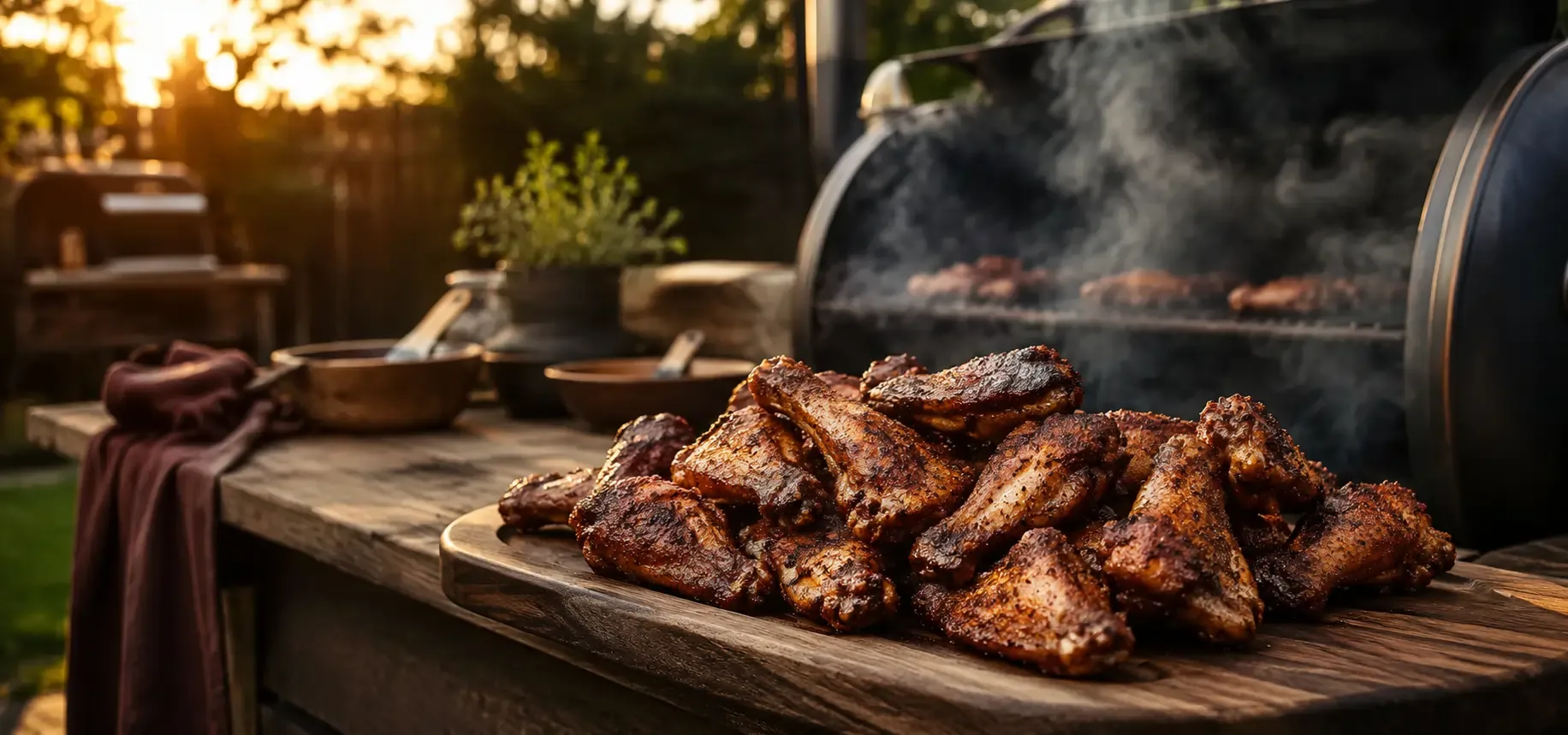
Smoked chicken wings are one of the best backyard BBQ cooks for learning smoke flavor, poultry temperature, seasoning, skin texture, and finishing heat. The goal is not only smoky wings. The goal is smoked chicken wings with safe internal temperature, flavorful skin, clean smoke, and a better bite.
This smoked chicken wings guide is written for backyard cooks who want wings that taste smoky without turning rubbery. You will learn how to season wings, run the smoker, avoid soft skin, use internal temperature correctly, and finish the wings for better texture.
Quick navigation
What this smoked chicken wings guide covers
Quick answer
How Long to Smoke Chicken Wings: Quick Answer
Plan on roughly 60–90 minutes at 250–275°F, but start checking early because wing size, cooker stability, and weather can change the timing. Smoke until several of the thickest wings reach at least 165°F on an instant-read thermometer. Add sauce during the final few minutes or after cooking.
Use temperature—not the clock—as the doneness check. FoodSafety.gov lists 165°F as the safe minimum for chicken wings. For a firmer finish, see how to get crispy skin on smoked chicken wings.
For smoke flavor options, see the best wood for smoked chicken wings, and use the smoking meat temperature chart when checking doneness.
Wing basics
Why smoke chicken wings?
Chicken wings are small, flavorful, and quick enough for a backyard BBQ cook. They pick up smoke faster than large cuts, which makes them useful when you want BBQ flavor without smoking all day.
The challenge is skin. Low-and-slow smoke can make chicken skin soft if the wings are not dried, cooked hot enough, or finished with direct heat. That is why smoked chicken wings often work best with a two-stage method: smoke first, then finish hotter.
Great smoked chicken wings need both smoke flavor and texture. If the wings taste smoky but the skin is rubbery, the cook is only halfway there.
Setup
Equipment and ingredients for smoked chicken wings
Smoked chicken wings do not need complicated equipment. A smoker, grill, seasoning, thermometer, and a plan for finishing heat are enough.
Basic equipment
- Smoker or grill set up for indirect heat
- Charcoal, pellets, or wood depending on your cooker
- Meat thermometer or instant-read thermometer
- Wire rack or tray for seasoning
- Tongs
- Hot grill, broiler, or higher smoker heat for finishing
Basic ingredients
- Chicken wings, flats, drumettes, or whole wings
- Kosher salt
- Black pepper
- BBQ rub
- Optional baking powder for skin texture
- Optional BBQ sauce, buffalo sauce, honey, or hot sauce
Preparation
How to prep chicken wings before smoking
Good smoked chicken wings start with a dry surface. Moisture on the skin makes it harder to get good texture. Pat the wings dry, separate whole wings if needed, trim any loose pieces, and season evenly.
- Remove the wings from the package.
- Pat them very dry with paper towels.
- Separate flats and drumettes if using whole wings.
- Trim loose skin or ragged pieces if needed.
- Season evenly on all sides.
- Let the wings sit uncovered in the refrigerator if you have time.
Dry wings cook better. Even 30 to 60 minutes uncovered in the refrigerator can help the surface dry before smoking.
Seasoning
How to season smoked chicken wings
Wings can handle bold seasoning because the pieces are small and the surface area is high. Salt, pepper, paprika, garlic, onion, chile, and a little sweetness all work well.
Keep sugar under control if you plan to finish the wings over high heat. Sweet rubs and sauces can burn if the wings are exposed to direct flame too early.
| Seasoning style | Flavor profile | Best use | What to watch |
|---|---|---|---|
| Dry BBQ rub | Smoky, savory, balanced | Classic smoked chicken wings | Watch sugar if finishing over high heat |
| Buffalo style | Tangy, spicy, buttery | Wings tossed after cooking | Sauce after the smoke so the flavor stays bright |
| Hot honey style | Sweet, spicy, sticky | Finishing glaze | Add near the end so it does not burn |
| Salt and pepper | Simple, chicken-forward | Cleaner smoke flavor | May need sauce or finishing seasoning |
If you use baking powder, use a small amount and mix it into the dry seasoning. It can help the surface dry and improve skin texture, but too much can create an unpleasant taste.
Smoker temperature
Best smoker temperature for chicken wings
Chicken wings can be smoked lower for flavor, but they usually need a hotter finish for better skin. Many backyard cooks smoke wings around 225°F to 275°F, then finish hotter around 350°F to 400°F, or move them to a hot grill.
| Temperature range | How it cooks | Best for | Watch out for |
|---|---|---|---|
| 225°F | More smoke exposure | Flavor-first wings | Skin may stay soft without a hot finish |
| 250°F–275°F | Balanced smoke and cooking speed | Most smoked chicken wings | Still may need higher heat at the end |
| 350°F–400°F finish | Renders skin faster | Crispier texture | Sauce and sugar can burn if added too early |
The best method is usually smoke first, then finish hot. This gives the wings time to pick up smoke while still improving the final skin texture.
Skin texture
How to get crispier skin on smoked chicken wings
Crispy smoked chicken wing skin depends on dryness, heat, and timing. Smoke flavor develops at lower temperatures, but crispy skin usually needs higher heat.
- Pat the wings dry before seasoning.
- Let the wings air-dry uncovered in the refrigerator if possible.
- Use a small amount of baking powder if desired.
- Do not sauce too early.
- Finish over higher heat after the smoke stage.
- Turn the wings as needed so the skin tightens evenly.
If you only smoke wings low-and-slow from start to finish, the flavor may be good, but the skin can stay soft. The hot finish is what fixes most wing texture problems.
Cooking process
Step-by-step: smoked chicken wings
- Dry the wings. Pat them very dry and air-dry if you have time.
- Season evenly. Coat all sides with rub or seasoning.
- Preheat the smoker. Wait for steady heat and cleaner smoke.
- Smoke the wings. Cook with indirect heat until they absorb smoke and approach safe temperature.
- Check internal temperature. Use a thermometer in the thickest part without touching bone.
- Finish hotter. Raise smoker heat, grill, or broil briefly to improve skin texture.
- Sauce near the end. Toss or glaze once the wings are nearly done.
- Rest briefly. Let the wings settle for a few minutes before serving.
- Serve hot. Wings are best when the skin still has texture.
This smoked chicken wings process gives you smoke flavor first and better texture second. That combination is what makes wings taste like real backyard BBQ instead of soft baked chicken.
Internal temperature
What internal temperature should smoked chicken wings reach?
Smoked chicken wings should reach 165°F internally. Check the thickest part of the wing and avoid touching bone with the thermometer probe because bone contact can give a misleading reading.
Wings are dark meat and have skin, fat, and connective tissue. Many cooks take wings slightly above 165°F for better texture, especially when finishing over higher heat. The key is not to undercook poultry and not to dry the wings out with uncontrolled heat.
For smoked chicken wings, food safety and texture need to work together. Use 165°F as the safety baseline, then use a hot finish to improve skin instead of guessing.
Sauce timing
When to sauce smoked chicken wings
Sauce smoked chicken wings near the end of the cook or after cooking. If sauce goes on too early, sugar can burn, the surface can turn sticky too soon, and the skin may never tighten properly.
Glaze near the end
Brush sauce on during the final minutes if you want a tacky BBQ glaze. Watch closely because sweet sauces can darken fast.
Toss after cooking
Toss wings in buffalo sauce, hot honey, or BBQ sauce after they finish if you want cleaner control over flavor and texture.
If crispy skin is the main goal, keep sauce light or serve it on the side. Too much sauce can soften the skin you worked to build.
Serving
How to serve smoked chicken wings
Serve smoked chicken wings hot, shortly after the final high-heat step. Wings are best when the skin still has texture and the sauce has not had too much time to soften the surface.
- Serve with ranch, blue cheese, pickles, or celery.
- Use buffalo sauce, BBQ sauce, dry rub, or hot honey.
- Keep sauce light if you want the skin to stay firmer.
- Add fresh herbs, lime, or vinegar-based sauce for brightness.
- Serve immediately after the hot finish for best texture.
Common mistakes
Smoked chicken wings mistakes beginners make
Not drying the wings
Wet skin makes it harder to get good texture. Pat the wings dry and air-dry them if possible.
Smoking too low the whole time
Low smoke can add flavor, but chicken skin often needs higher heat at the end to tighten and improve texture.
Saucing too early
Sweet sauce can burn or soften the skin if it goes on too early. Sauce near the end or toss after cooking.
Guessing poultry temperature
Chicken wings should be checked with a thermometer. Do not rely only on color, smoke time, or surface appearance.
Food safety source
Use a thermometer for safe poultry decisions
BackyardBBQGuide.com explains BBQ technique, smoke flavor, skin texture, sauce timing, and finishing heat. For official safe minimum internal temperature guidance, use FoodSafety.gov.
External source: FoodSafety.gov safe minimum internal temperatures
FAQ
Smoked chicken wings questions
What are smoked chicken wings?
Smoked chicken wings are wings cooked with indirect heat and smoke until they reach a safe internal temperature and develop BBQ flavor. Many cooks finish them over higher heat for better skin texture.
What temperature should smoked chicken wings reach?
Smoked chicken wings should reach 165°F internally. Check the thickest part and avoid touching bone with the thermometer probe.
What temperature should I smoke chicken wings at?
Many cooks smoke chicken wings around 225°F to 275°F, then finish hotter around 350°F to 400°F for better skin texture.
How do you get crispy skin on smoked chicken wings?
Dry the wings well, season them evenly, avoid saucing too early, and finish with higher heat. A hot grill, broiler, or higher smoker temperature can help tighten the skin.
Should you sauce wings before or after smoking?
Sauce wings near the end or after cooking. Adding sauce too early can burn sugar and soften the skin.
Do you need to flip smoked chicken wings?
Flipping helps the wings cook and brown more evenly, especially during the hotter finishing stage.
What wood is best for smoked chicken wings?
Apple, cherry, oak, and hickory can all work. Fruit woods are milder, oak is balanced, and hickory gives a stronger BBQ smoke flavor.
Why are my smoked chicken wings rubbery?
Wings often turn rubbery when they are smoked too low for the entire cook, not dried before seasoning, or sauced too early. A hotter finish usually improves skin texture.
Related BBQ guides
Build the full smoked wings system.
Smoked chicken wings get better when clean smoke, seasoning, internal temperature, skin texture, sauce timing, and finishing heat all work together. Use these related guides to connect the full BBQ process.