Smoking Wood Comparison
Hickory vs Oak vs Mesquite for Smoking
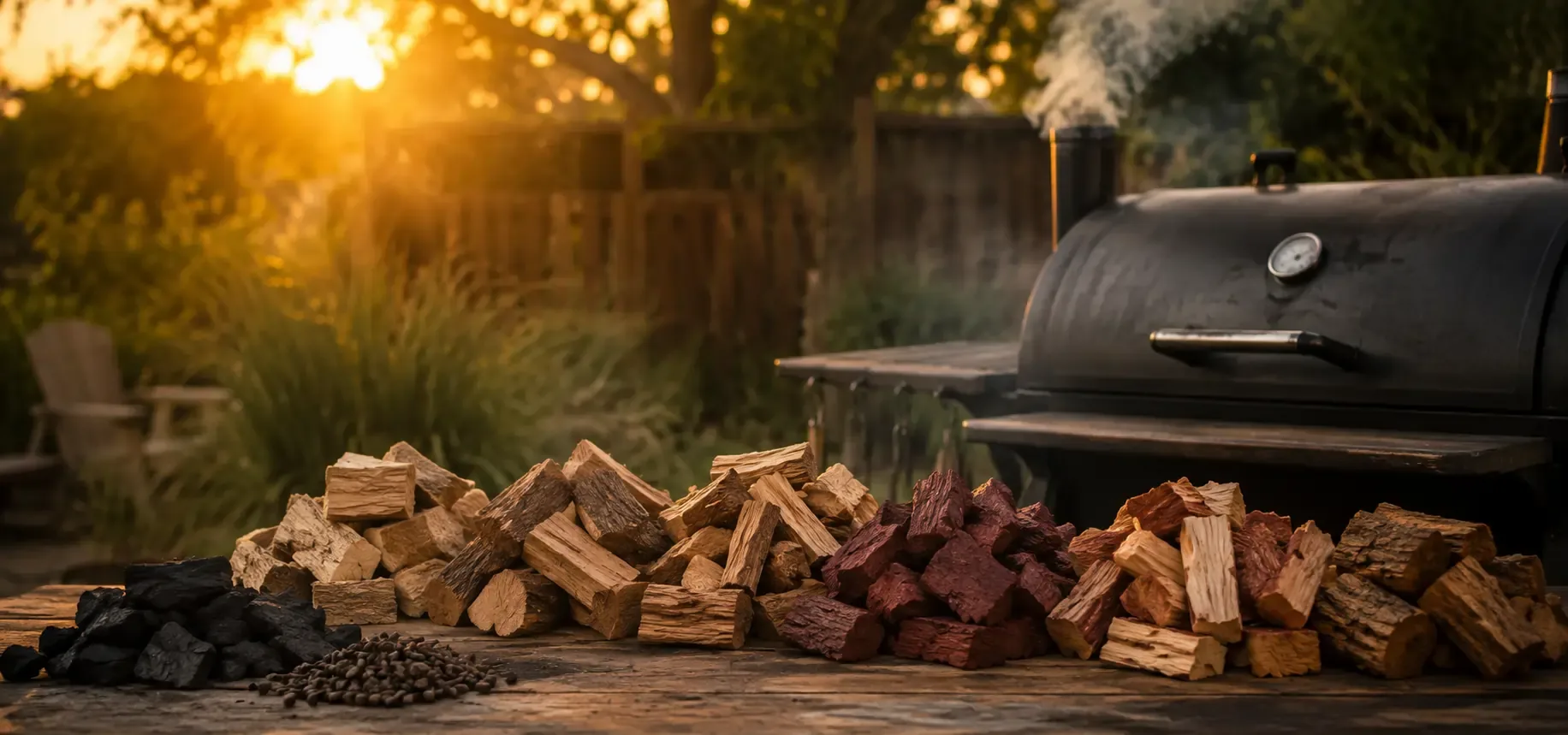
Oak is the most flexible starting point: it generally gives a moderate smoke profile and steady coal bed. Hickory is more assertive and is commonly paired with pork and beef. Mesquite is the strongest of the three and is easiest to overdo during a long cook; use it sparingly, blend it, or reserve it for short, hot cooks when you want a bold smoke presence.
In this guide
- Oak, hickory, or mesquite: the decision in one minute
- What oak contributes
- What hickory contributes
- What mesquite contributes
- Clean combustion matters more than the species name
- Chunks, splits, chips, and pellets change the comparison
- Pair wood strength with food, surface, and cook length
- How to run a useful backyard comparison
- Wood sourcing and safety boundaries
- Mistakes that make every wood taste worse
- Frequently asked questions
- Sources
Quick answer
Oak, hickory, or mesquite: the decision in one minute
Choose oak when you want a broad-use baseline, especially for a long cook or an unfamiliar recipe. Choose hickory when the food and seasoning can carry a fuller smoke profile, often pork ribs, pork shoulder, or beef. Choose mesquite when you deliberately want a forceful smoke note and can control dose and combustion. None of those choices rescues a smoldering, oxygen-starved fire.
Species is only one variable. A small amount of dry mesquite burning cleanly can be more pleasant than a pile of damp oak smoldering under a closed exhaust. Decide first how much smoke exposure the food needs, then choose species, quantity, and fuel form. In a charcoal cooker, one or two chunks may be enough. In an offset, the wood is also the heat source, so fire size and split dimensions become central.
What oak contributes
Oak is widely treated as a middle-strength smoking wood. It can support beef, pork, poultry, and vegetables without demanding that every rub or sauce compete with it. That makes it useful as a baseline when learning a cooker or comparing another variable. It also tends to be available as splits, chunks, and pellets, although the exact oak species and blend may not be clear on every package.
The label oak covers many species, so do not assume two bags or local firewood lots taste or burn identically. Density, moisture, split size, storage, and bark proportion matter. For a long offset cook, properly sized dry splits and a clean flame are more important than chasing a named regional oak. For charcoal, start with a modest chunk dose and add only if the first cook is too subtle.
What hickory contributes
Hickory is conventionally described as stronger and more recognizable than oak. It is frequently associated with pork, bacon-like smoke impressions, ribs, shoulder, and robust beef. Those descriptions are culinary shorthand, not a guarantee that every taster will perceive the same flavor. A long exposure or a restricted fire can push hickory from full to harsh.
Use hickory as a deliberate step up in smoke presence. On charcoal, begin with fewer or smaller chunks than you think you need, because smoke compounds accumulate during the cook. In an offset, consider blending hickory with oak so the fire can run cleanly without making every split equally assertive. Sauce, sugar, chile, and heavy rubs can mask or compete with smoke, so evaluate the finished plate rather than the empty-cooker aroma.
What mesquite contributes
Mesquite is the boldest choice in this three-way comparison. It is tied strongly to Southwestern cooking and can fit beef, burgers, steaks, and short hot cooks where smoke exposure is limited. On a long brisket or pork cook, an all-mesquite fire may dominate before the meat is tender, particularly if the fire smolders. That does not make mesquite bad; it makes dose control more important.
A practical first experiment is to blend one part mesquite with a milder base such as oak, or use a single small chunk in a charcoal cooker. Keep notes on food weight, wood quantity, exposure time, and whether the smoke stayed clean. If the result is too sharp, reduce mesquite before changing five other variables. If it is too subtle, increase in a small step rather than doubling blindly.
Clean combustion matters more than the species name
Bitter, acrid barbecue is often blamed on a strong wood when the deeper problem is incomplete combustion. Damp fuel, oversized splits, a cold firebox, restricted intake, or a choked exhaust can produce dense smoke and deposits regardless of species. Keep the exhaust open according to the cooker design, manage temperature with fuel size and intake, and let a new split ignite rather than smolder indefinitely.
Visible smoke is not a precise flavor meter. Lighting, weather, and background change what you see. Watch the fire itself: stable flame, adequate draft, and a clean-smelling exhaust are more useful than trying to create a constant white cloud. Never inhale smoke deliberately. If the exhaust stings sharply or the food surface darkens with sticky soot, correct the fire before adding more wood.
Chunks, splits, chips, and pellets change the comparison
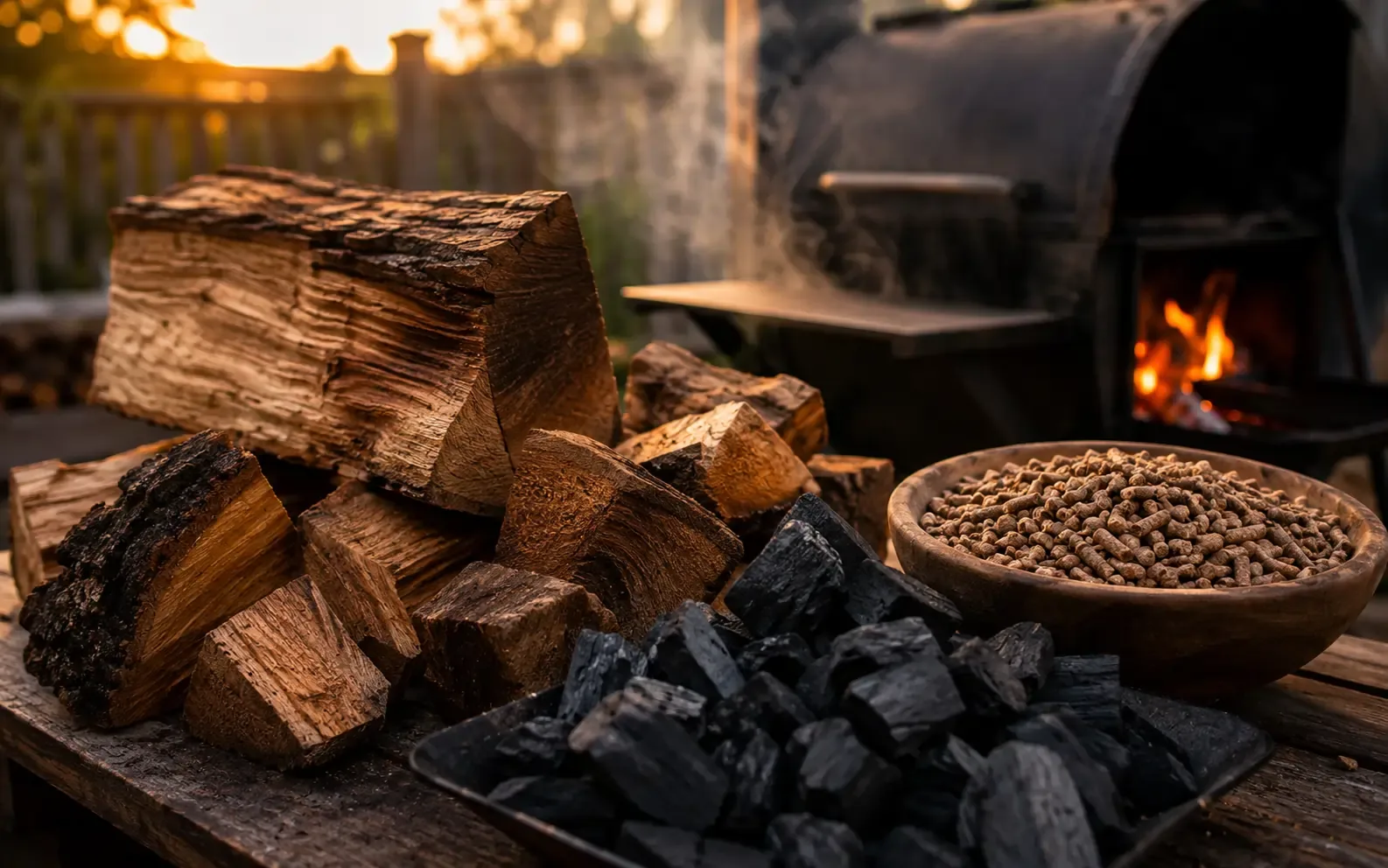
A species comparison is incomplete without fuel form. Chunks work well with charcoal because they smolder and ignite over time without needing constant feeding. Splits are sized for an offset fire and provide both heat and smoke. Chips ignite quickly and can disappear quickly; soaking them delays ignition but also adds a wet heating stage rather than creating magical slow smoke. Pellets are compressed fuel and may be single-species or blends.
Read packaging carefully. A hickory-flavor pellet may use another hardwood as a base. That can be sensible for burn performance, but it complicates a strict species comparison. Do not put chips, chunks, or improvised fuel into a pellet auger unless the manufacturer explicitly allows it. Match fuel form to the cooker before arguing about flavor strength.
Compare the stated species or blend and choose a package size you can store as directed. If the blend is not described clearly, treat its composition as unknown rather than assuming it is pure oak, hickory, or mesquite. Ask for clarification if that distinction matters to your comparison.
Pair wood strength with food, surface, and cook length
Delicate foods and small poultry pieces collect smoke quickly relative to their mass, so oak or a restrained hickory blend is a safer opening move than heavy mesquite. Pork belly can handle hickory, but its long exposed cook and sugary finish can make excessive smoke seem harsh. Beef can carry bolder smoke, yet a long brisket still accumulates exposure for many hours.
Think in terms of a smoke budget. Food size, surface moisture, bark development, wrapping time, and total duration all affect that budget. Wood does not need to smoke heavily for the entire cook. Once color and smoke presence are established, clean heat can finish the texture. The right pairing is the combination that supports the food rather than announcing the wood before every other flavor.
How to run a useful backyard comparison
Use the same cooker, food cut, seasoning, chamber temperature, and approximate weather. Change one wood variable. Weigh chunks or measure split dimensions rather than writing a vague note such as two pieces. Keep the exposure window the same and avoid adding sauce to one batch before tasting. If possible, label samples with neutral codes and ask more than one person for independent notes.
Record intensity, bitterness, sweetness, aftertaste, and whether the smoke supports or hides the food. A small household tasting is not a scientific panel, but a clear method is better than memory. Repeat any surprising result before declaring a winner. One clean hickory cook and one dirty oak cook compare fire management, not species.
Wood sourcing and safety boundaries
Use wood that is known, dry, sound, and intended for cooking or clean firewood use. Avoid painted, pressure-treated, glued, laminated, moldy, chemically contaminated, or driftwood material. Do not burn an unknown yard species because it smells familiar. Remove obvious debris and store fuel off wet ground with airflow.
Operate outdoors with the clearances and surface required by the smoker manual. Sparks and embers from an offset can travel. Keep children, pets, dry vegetation, and spare fuel away from the firebox. Dispose of ash only after it is completely cold in an appropriate noncombustible container. Flavor experimentation never overrides fire safety.
Mistakes that make every wood taste worse
Adding wood to force a visible smoke cloud, closing the exhaust to hold heat, using damp splits, and loading too much bark are common routes to harsh flavor. Another mistake is changing species, quantity, rub, sauce, and cooker temperature in the same cook, then attributing the result to wood alone. A third is assuming a regional name certifies seasoning or purity.
Start with clean heat and a small dose. Keep notes. If the food tastes bitter, reduce smoke exposure and inspect combustion before buying another species. If it tastes flat, check whether a heavy sauce or wrap shortened exposure. Good wood selection is a controlled decision, not a list of meat-to-tree rules.
Frequently asked questions
Is oak or hickory better for brisket?
Oak is a flexible long-cook baseline; hickory adds a stronger smoke presence. The better choice depends on dose, fire quality, seasoning, and preference. A controlled blend is a sensible first comparison.
Is mesquite too strong for smoking?
Not inherently, but it becomes dominant quickly. Use less, blend it with oak, or choose it for shorter cooks while maintaining clean combustion.
Can I mix oak, hickory, and mesquite?
Yes, if the fuel is appropriate for the cooker. Use oak as a base and add smaller amounts of hickory or mesquite so you can adjust intensity gradually.
Which wood is best for pork ribs?
Hickory is a traditional assertive pairing, while oak is milder and easier to control. Start with oak or a restrained oak-hickory blend if you do not know your preference.
Does white smoke mean the wood is bad?
Not by itself. Startup smoke can look white, and lighting affects appearance. Persistent dense, sharp-smelling smoke plus a smoldering fire suggests a combustion problem.
Should smoking wood have bark on it?
A small amount of clean bark is not automatically a problem, but loose, dirty, moldy, or heavily weathered bark adds uncertainty. Prioritize clean, dry, known wood.
Should I soak wood chips or chunks?
Soaking mainly delays heating and ignition. It does not make waterlogged wood produce inherently cleaner smoke. Follow the cooker manual and manage dose and airflow.
Can I use fireplace wood in a smoker?
Only when the species and treatment history are known and the wood is clean, dry, and uncontaminated. Avoid construction scraps, treated wood, painted wood, and unknown mixed bundles.
Evidence, methodology, and limitations
Evidence status: Research-backed; not hands-on tested
This comparison synthesizes established fuel-handling guidance, conventional U.S. barbecue pairing practices, and recurring non-Amazon community concerns about bitter smoke, oversized splits, green wood, and using too much fuel. Community material supplied the questions, not proof of flavor. BackyardBBQGuide did not run same-food, same-cooker blind comparisons of these species.
Limitations: Flavor is subjective and changes with regional species, seasoning, bark content, moisture, fire quality, fuel form, cooker airflow, food surface, rub, sauce, and exposure time. The rankings below are cautious starting hypotheses, not sensory test results. No images are included, and none should later be described as evidence without a documented cook.
Sources and review boundary
Official sources govern food safety, fire safety, and manufacturer-specific operation. Community discussions informed the recurring questions addressed here but are not proof that a technique works. Check the manual for your cooker and thermometer before use.