Thermometers

BBQ Thermometers & Temperature

Stop Guessing. Cook BBQ by Temperature and Texture.

Better backyard BBQ depends on knowing what is happening inside the smoker and inside the meat. Thermometers help you cook safer, manage temperature swings, understand doneness, and avoid ruining expensive cuts by cooking only by time.

Temperature Basics

BBQ temperature is more than one number.

01

Smoker Temperature

The temperature inside the cooker affects cooking speed, bark development, smoke absorption, moisture loss, and fat rendering.

02

Internal Temperature

The temperature inside the meat helps with food safety, doneness decisions, tenderness tracking, and consistency.

03

Probe Tenderness

Large BBQ cuts are not finished by temperature alone. Brisket and pork shoulder also need texture and tenderness checks.

04

Resting

Resting helps large cuts finish gently, retain moisture, and slice or pull better after the cook.

Why Temperature Matters

A thermometer is not a shortcut. It is feedback.

Backyard BBQ changes every time you cook. A thermometer helps you understand what your smoker and meat are actually doing instead of relying on guesswork, fixed cooking times, or random lid checks.

Instant-Read Thermometers

Fast checks for doneness and safety.

An instant-read thermometer is used to check internal temperature quickly. It is useful for chicken, burgers, steaks, pork chops, sausages, turkey, fish, and checking multiple spots in a large cut.

Instant-read thermometers are especially useful near the end of the cook when small temperature changes can affect food safety, texture, and serving quality.

  • Useful for fast internal temperature checks.
  • Helpful for checking multiple spots.
  • Important for chicken and other safety-sensitive foods.
  • Best used without leaving the lid open too long.

Leave-In Probes

Track long cooks without opening the smoker.

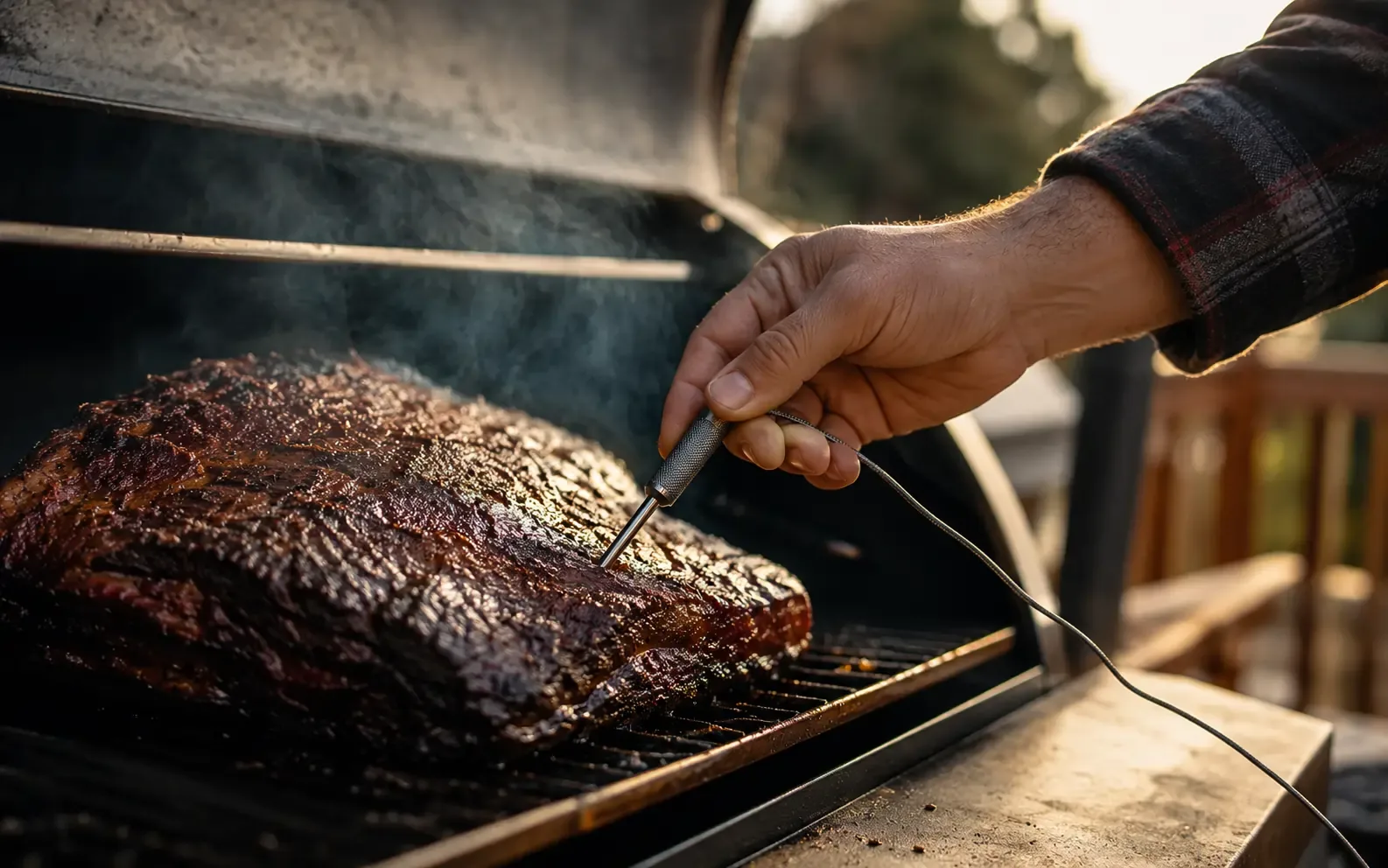
Leave-in probe thermometers stay in the meat during the cook. They are useful for brisket, pork shoulder, turkey, prime rib, pork loin, and other large cuts that benefit from temperature tracking over time.

Wireless probes, wired probes, and multi-probe thermometers can help monitor both meat temperature and cooker temperature during long BBQ sessions.

  • Useful for brisket, pork shoulder, and turkey.
  • Helps reduce unnecessary lid opening.
  • Can track temperature rise during the stall.
  • Should still be checked with texture and judgment.

Internal Temperature

Different meats need different decisions.

Chicken

Safety First

Chicken needs careful temperature decisions because undercooking can be unsafe and overcooking can dry it out quickly.

Brisket

Tenderness Matters

Brisket is usually judged by tenderness, probe feel, bark, rest, and slicing quality, not just a single internal temperature.

Ribs

Texture Cues

Ribs are often judged by bend, pullback, bark, moisture, and bite. Temperature alone does not tell the full story.

Pork Shoulder

Pulling Texture

Pork shoulder needs enough time for connective tissue to break down so it can pull cleanly after resting.

Doneness

Use temperature, but do not ignore texture.

Internal temperature is one of the most useful BBQ tools, but different cuts finish differently. Chicken, burgers, and sausages are more safety-driven. Brisket, ribs, pork shoulder, and beef ribs require more texture judgment.

This is why good BBQ cooks combine thermometer readings with visual cues, probe tenderness, bark development, moisture, rest time, and slicing or pulling behavior.

Carryover Cooking

Meat can keep cooking after it leaves the heat.

Carryover cooking happens when heat continues moving through the meat after it is removed from the smoker, grill, or oven. This can affect final internal temperature, moisture, and texture.

Large cuts often need a proper rest. Smaller cuts may need more careful timing so they do not overshoot after cooking.

Smoker Temperature

The cooker temperature shapes the whole result.

Smoker temperature affects cooking time, bark, smoke flavor, fat rendering, moisture loss, and how forgiving the cook feels. A stable cooker gives you a better chance of repeating results.

Temperature swings are not always a disaster, but constant overcorrection can make the cook harder to control.

  • Track grate-level temperature when possible.
  • Understand that built-in lid thermometers may read differently.
  • Give vent and fuel changes time to stabilize.
  • Avoid chasing every small temperature movement.

Probe Placement

Bad placement creates bad readings.

A thermometer is only useful if it is placed correctly. Hitting bone, fat pockets, air gaps, or placing the probe too shallow can give misleading readings.

Check thick areas, avoid bone when appropriate, and use multiple checks when cooking uneven cuts or serving guests.

  • Check the thickest part of the meat.
  • Avoid touching bone when measuring meat temperature.
  • Use more than one check on large cuts.
  • Clean thermometer probes between uses.

Common Temperature Mistakes

Most temperature problems are avoidable.

01

Cooking Only by Time

Cooking times are estimates. Meat size, smoker behavior, weather, fuel, and rest time can change everything.

02

Trusting One Spot

Large cuts can have different temperatures in different areas. One reading does not always tell the full story.

03

Ignoring Rest

Resting affects final texture, slicing quality, moisture, and how large cuts finish after cooking.

04

Overcorrecting Heat

Constant vent, fuel, and lid changes can create more instability than the original temperature swing.

Food Safety

Use reliable temperature guidance for safety-sensitive foods.

BBQ is practical, but food safety still matters. Poultry, ground meats, reheated foods, and large cuts should be handled carefully and checked with a reliable thermometer.

This hub explains how temperature thinking works. Detailed meat-specific temperature guides should be checked against reliable food safety sources and updated when needed.

Coming First

Initial temperature guides.

The first temperature articles will focus on the decisions backyard cooks search for most often.

  • Smoking meat temperature chart
  • Wireless vs instant-read thermometers
  • Brisket temperature guide
  • Chicken temperature guide
  • How to control smoker temperature

Temperature Hub

Temperature turns BBQ from guessing into learning.

BackyardBBQGuide.com connects thermometers, smoker temperature, internal temperature, doneness, texture, resting, and food safety so backyard cooks can make better decisions during the cook.