Brisket Guide
How to Smoke a Brisket: Beginner BBQ Brisket Guide
Learning how to smoke a brisket is one of the biggest steps in backyard BBQ. Brisket rewards patience, clean smoke, steady smoker temperature, proper trimming, bark development, enough rest, and careful slicing. This guide walks through the full process without pretending one exact time or temperature works for every brisket.
This how to smoke brisket guide is written for backyard cooks who want a repeatable process, not just a rough cooking time. The goal is to understand the full brisket system: smoker setup, trimming, seasoning, wood choice, bark, wrapping, internal temperature, resting, and slicing.
Quick navigation
What this brisket guide covers
Quick answer
How to smoke a brisket the simple way
To smoke a brisket, trim the fat cap, season the meat, set up the smoker for steady indirect heat, use clean smoke, cook until the bark sets, wrap if needed during the stall, cook until probe tender, rest the brisket, then slice across the grain.
The most important brisket rule is this: internal temperature is a guide, but tenderness is the decision. Many briskets finish somewhere around 195°F–205°F, but the brisket is ready when the probe slides in with very little resistance.
A good brisket cook is not only about time. It is about smoker temperature, clean smoke, bark, fat rendering, the stall, wrapping, internal temperature, resting, and slicing direction.
Brisket basics
What is brisket?
Brisket is a tough beef cut from the lower chest area of the animal. It contains connective tissue, fat, and muscle fibers that need time, heat, smoke, and patience to become tender.
A whole packer brisket usually includes two main sections: the flat and the point. The flat is leaner and slices more evenly. The point is fattier, richer, and often more forgiving. Because these sections behave differently, brisket is harder to cook than smaller, simpler BBQ cuts.
Brisket is not difficult because it is mysterious. It is difficult because it is large, uneven, fatty in some areas, lean in others, and sensitive to time, temperature, rest, and slicing direction.
Setup
Equipment and ingredients for smoked brisket
You do not need complicated ingredients to smoke brisket. You need a stable smoker, enough time, a thermometer, good airflow, clean fuel, and a plan.
Basic equipment
- Smoker or grill set up for indirect heat
- Wood, charcoal, or pellets depending on your cooker
- Meat thermometer or probe thermometer
- Sharp trimming knife
- Butcher paper or foil if wrapping
- Cutting board and slicing knife
Basic ingredients
- Whole packer brisket or brisket flat
- Kosher salt
- Coarse black pepper
- Optional garlic powder
- Optional binder such as mustard or hot sauce
- Optional beef tallow for wrapping or resting
Salt and pepper are enough for a classic brisket. The real flavor comes from beef, smoke, bark, rendered fat, and a clean fire.
Texas brisket
Texas style BBQ brisket basics
Texas style BBQ brisket is usually built around beef flavor, simple seasoning, clean smoke, strong bark, proper rendering, a long rest, and careful slicing. The classic approach is not complicated: use good brisket, season it simply, manage the fire well, and let time do the work.
For a backyard cook, Texas style brisket does not mean copying one rigid rule. It means respecting the basics: salt, pepper, smoke, steady heat, bark, tenderness, and slicing across the grain.
What makes it Texas style?
A simple rub, clean smoke, beef-forward flavor, dark bark, and tenderness without drowning the meat in sauce.
What beginners should avoid
Too much sugar, dirty smoke, constant lid opening, rushing the stall, slicing too early, or judging brisket only by time.
Trimming
How to trim brisket before smoking
Trimming helps the brisket cook more evenly and improves bark. Remove hard fat, thin edges that may burn, and loose pieces that will dry out during the cook.
- Place the brisket cold on a large cutting board.
- Remove any loose flaps of meat that may burn.
- Trim hard fat that will not render well.
- Shape the brisket so airflow can move around it evenly.
- Leave a moderate fat cap instead of removing every bit of fat.
Do not over-trim the brisket until it looks like a steak. Some fat protects the meat and helps the cook. The goal is a clean aerodynamic shape, not a perfectly bare surface.
When learning how to smoke a brisket, trimming matters because uneven edges can dry out before the thicker parts become tender.
Seasoning
How to season brisket
A simple brisket rub works well because brisket already has deep beef flavor. A classic starting point is kosher salt and coarse black pepper. Some cooks add garlic powder for a slightly rounder flavor.
| Rub style | Best use | Flavor profile | What to watch |
|---|---|---|---|
| Salt and pepper | Classic Texas style BBQ brisket | Beefy, smoky, simple | Use coarse pepper for better bark texture |
| Salt, pepper, garlic | Backyard all-purpose brisket | Savory and balanced | Avoid adding too much fine powder that cakes up |
| Sweeter BBQ rub | Personal preference or regional style | Sweeter bark | Sugar can darken faster over long cooks |
Season all sides evenly. Let the rub adhere before the brisket goes on the smoker. If using a binder, keep it light; the binder should help seasoning stick, not become the main flavor.
Wood and smoke
Best wood and smoke for brisket
Brisket can handle stronger smoke than lean poultry or fish. Oak is a classic brisket wood because it gives steady smoke without overpowering the beef. Hickory, pecan, and mesquite can also work, but stronger woods should be managed carefully so the flavor does not turn harsh.
| Wood | Flavor | Best use | Beginner note |
|---|---|---|---|
| Oak | Balanced, classic, beef-friendly | Texas style brisket and long cooks | Best starting point for most beginners |
| Hickory | Stronger, bacon-like smoke | Bold brisket flavor | Use clean smoke; too much can taste heavy |
| Pecan | Milder, nutty, slightly sweet | Balanced backyard brisket | Good if you want a softer smoke profile |
| Mesquite | Very strong and earthy | Shorter exposure or experienced fire control | Easy to overdo on long cooks |
Clean smoke matters more than simply adding more wood. Thick white smoke can create bitter flavor. Wait until the fire is burning cleanly before putting the brisket on the smoker.
Smoker temperature
Best smoker temperature for brisket
Many backyard cooks smoke brisket between 225°F and 275°F. A lower temperature gives a slower cook, while a slightly hotter range can help shorten the cook and build bark more efficiently.
| Smoker temperature | How it cooks | Best for | Watch out for |
|---|---|---|---|
| 225°F | Slow and traditional | Long cooks with more smoke exposure | Longer stall and longer total cook time |
| 250°F | Balanced low-and-slow | Most backyard brisket cooks | Still requires patience and rest |
| 275°F | Faster BBQ range | Shorter cooks and stronger bark development | Less margin for neglecting the cook |
The best smoker temperature is the one your cooker can hold cleanly. Dirty smoke, unstable airflow, and constant lid opening matter more than a 10-degree difference on the thermometer.
Cooking process
Step-by-step: how to smoke a brisket
- Trim the brisket. Remove hard fat, thin edges, and loose pieces.
- Season evenly. Use salt, pepper, and optional garlic powder.
- Preheat the smoker. Wait until the temperature is stable and the smoke is clean.
- Choose the wood. Oak is a strong beginner choice for brisket, while hickory, pecan, and mesquite need more judgment.
- Place brisket on the smoker. Put the thicker end toward the hotter side if your smoker has hot spots.
- Cook without constant lid opening. Let the bark develop before disturbing the meat.
- Watch the stall. The internal temperature may slow down as moisture evaporates.
- Use the Texas crutch if needed. Wrap when bark is set and the brisket has good color.
- Cook until probe tender. Start checking tenderness in the high 190s.
- Rest the brisket. Rest before slicing so heat and juices settle.
- Slice across the grain. Change slicing direction when moving from flat to point if needed.
- Serve with texture in mind. Slices should bend, hold together, and pull apart with gentle pressure.
The stall and wrap
When to use the Texas crutch for brisket
The Texas crutch is the technique of wrapping brisket during the cook, usually with butcher paper or foil, to push through the stall, protect the meat, and manage moisture. It is useful, but it should not be automatic.
The stall is the part of the cook where the brisket internal temperature slows down or seems to stop rising. This often happens because moisture evaporates from the surface and cools the meat as it cooks.
Wrap brisket when the bark has the color and texture you want, often somewhere around the stall. Do not wrap only because a number appeared on the thermometer. If the bark looks pale or soft, give it more time.
Butcher paper
Butcher paper protects the brisket while still letting it breathe more than foil. It can help preserve bark texture better than a tight foil wrap.
Foil
Foil holds moisture tightly and can speed up the cook, but it can also soften bark more aggressively. It is useful when tenderness and timing matter more than bark texture.
Use the Texas crutch as a tool, not a rule. If the bark is already dark and firm, wrapping can help protect the brisket. If the bark is not ready, wrapping too early can make it soft.
Internal temperature
Internal temperature for brisket
Internal temperature for brisket is useful because it tells you when to start checking tenderness. Many briskets finish somewhere around 195°F–205°F, but the exact number is less important than how the meat feels.
A brisket is done when the probe slides into the thick parts of the flat and point with little resistance. If the probe still feels tight, the connective tissue probably needs more time even if the number looks close.
| Internal temperature range | What it usually means | What to do |
|---|---|---|
| 150°F–170°F | The stall may begin or slow the cook down | Be patient; wait for bark before wrapping |
| 170°F–190°F | Bark may be set and the brisket may be wrapped if needed | Check color, bark texture, and moisture |
| 195°F–205°F | Common probe-tender range for many briskets | Check tenderness, not only the number |
FoodSafety.gov lists 145°F with 3 minutes of rest as a safe minimum for beef steaks, roasts, and chops, but brisket is usually cooked much higher for BBQ tenderness. That is the difference between food safety minimums and barbecue texture.
Safe does not always mean tender. Brisket needs enough time for connective tissue and fat to soften. That is why many briskets finish far above the basic safe minimum temperature.
Resting and slicing
How long should brisket rest before slicing?
Rest brisket before slicing. A short rest is usually not enough for a large brisket. Many backyard cooks rest brisket for at least 1 hour, and longer rests are common for big cooks when the brisket is held safely.
Resting lets the brisket settle after the long cook. It also makes slicing easier and helps the final texture feel more controlled.
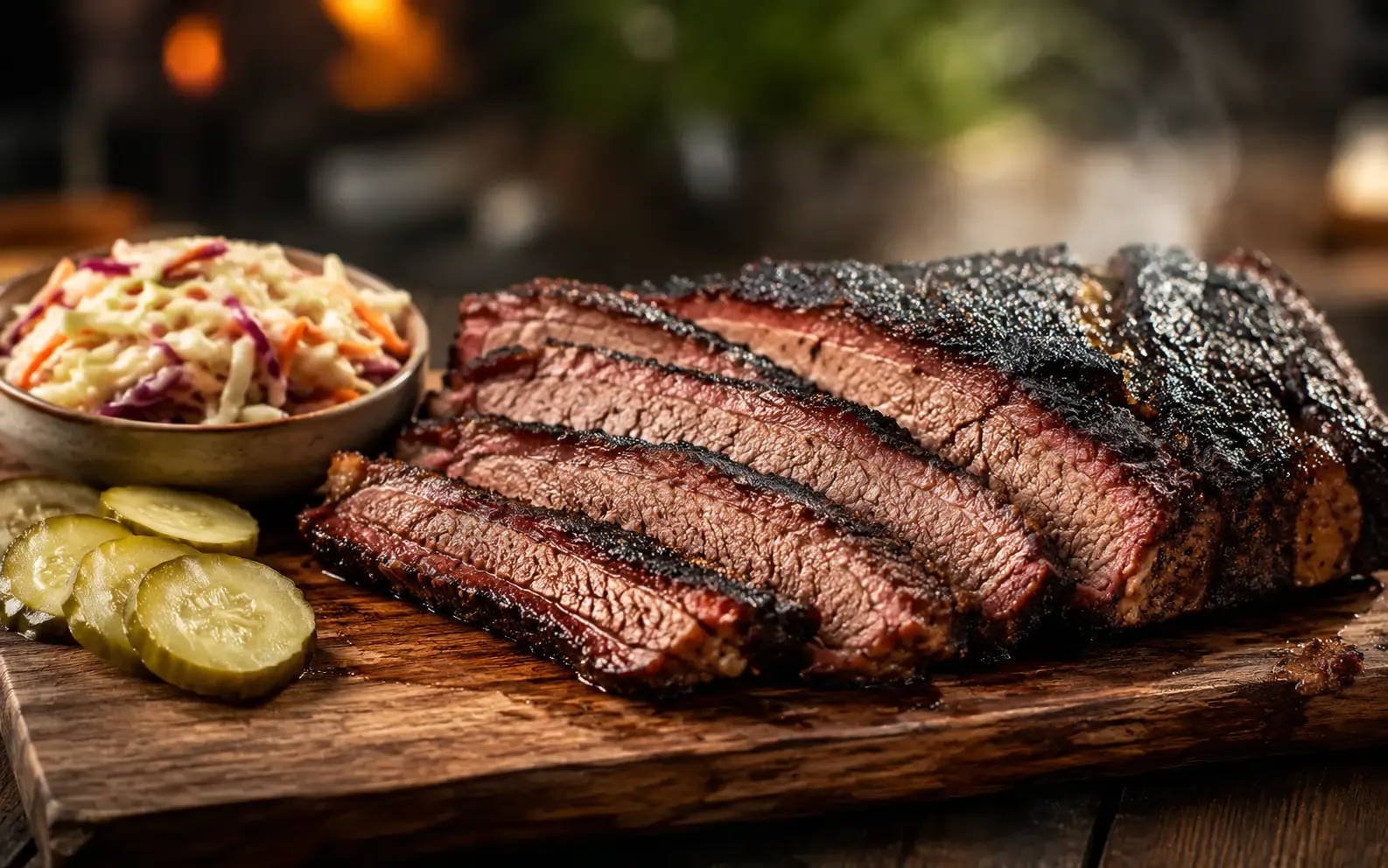
How to slice brisket
Slice brisket across the grain. The flat and point can have different grain directions, so you may need to rotate the brisket or change your slicing angle as you move through the cut.
- Use a long sharp slicing knife.
- Slice the flat into pencil-thick slices.
- Cut across the grain, not with it.
- Keep slices intact but tender enough to pull apart gently.
- Change slicing direction when moving from the flat to the point if the grain changes.
- Chop or cube fattier point pieces if you prefer a richer texture.
If the brisket was cooked well but sliced with the grain, it can still feel chewy. Slicing direction is part of brisket doneness.
Common mistakes
Brisket mistakes beginners make
Pulling brisket too early
The brisket may look done before it feels done. If the probe still meets resistance, the connective tissue probably needs more time.
Slicing too soon
Cutting into brisket immediately after cooking can hurt texture and moisture. Resting is part of the cook.
Over-trimming the fat
Removing too much fat can make the brisket less forgiving. Trim hard fat and messy edges, but keep enough protection for the long cook.
Using dirty smoke
Heavy white smoke can create harsh flavor. Let the fire burn clean and give the smoker time to stabilize before adding the brisket.
Wrapping too early
Wrapping before the bark is set can trap moisture and soften the bark. Use the Texas crutch when it helps the cook, not before the brisket has developed color.
Judging brisket only by time
Brisket timing changes with size, thickness, fat content, smoker temperature, wrapping, weather, and rest. Use time as a planning tool, not the final decision.
Food safety source
Use a thermometer for safe cooking decisions
BackyardBBQGuide.com explains BBQ doneness, tenderness, bark, resting, and slicing. For official safe minimum internal temperature guidance, use FoodSafety.gov.
External source: FoodSafety.gov safe minimum internal temperatures
FAQ
How to smoke a brisket questions
What is the easiest way to learn how to smoke a brisket?
The easiest way to learn how to smoke a brisket is to focus on the main system: trim the brisket, season it simply, run a stable smoker, wait for clean smoke, cook until the bark sets, wrap only when needed, check for probe tenderness, rest the brisket, and slice across the grain.
How long does it take to smoke brisket?
Brisket timing depends on size, thickness, smoker temperature, wrapping, weather, and rest time. Plan for a long cook instead of relying on an exact clock. A whole packer brisket can take many hours, and the rest is part of the process.
What temperature should I smoke brisket at?
Many backyard cooks smoke brisket between 225°F and 275°F. Around 250°F is a useful balanced starting point because it supports bark, smoke, and a reasonable cook time.
What internal temperature is brisket done?
Brisket is often done around 195°F–205°F, but tenderness matters more than the exact number. Start checking with a probe in the high 190s and cook until the probe slides in with little resistance.
What is the best internal temperature for brisket?
There is no single perfect internal temperature for brisket. Many briskets become tender somewhere around 195°F–205°F, but the best final test is probe tenderness in the flat and point.
What is the Texas crutch for brisket?
The Texas crutch is wrapping brisket during the cook, usually with butcher paper or foil, to help push through the stall, protect the meat, and manage moisture.
When should I wrap brisket?
Wrap brisket when the bark has set and the color looks right. Many cooks wrap during the stall, but bark quality should guide the decision more than a fixed internal temperature.
Should I wrap brisket in butcher paper or foil?
Butcher paper helps protect the brisket while preserving more bark texture. Foil can speed up the cook and hold moisture tightly, but it may soften bark more.
How long should brisket rest?
Rest brisket at least 1 hour when possible. Large briskets often benefit from a longer controlled rest before slicing.
Why is my brisket dry?
Brisket can turn dry from over-trimming, cooking too hot, slicing too soon, not resting enough, choosing a very lean flat, using harsh smoke, or slicing with the grain instead of across it.
Do you smoke brisket fat side up or down?
It depends on where the heat comes from in your smoker. Many cooks place the fat side toward the strongest heat to protect the meat. Learn how your smoker moves heat and adjust from there.
What is the best wood for smoking brisket?
Oak is a classic beginner-friendly wood for brisket because it gives balanced smoke and works well with beef. Hickory, pecan, and mesquite can also work, but stronger woods should be used with clean fire control.
Related BBQ guides
Build the full brisket system.
Brisket is easier when temperature, smoke, fuel, rest, and slicing all work together. Use these related guides to connect the whole process.