Chicken Thighs Guide
How to Get Crispy Skin on Smoked Chicken Thighs: 7 Easy Fixes
Rubbery skin is one of the most common problems with smoked chicken thighs. The fix is not just cooking longer. Crispy skin comes from drying the surface, using enough heat, managing sauce timing, and finishing the chicken hot enough to tighten and render the skin.
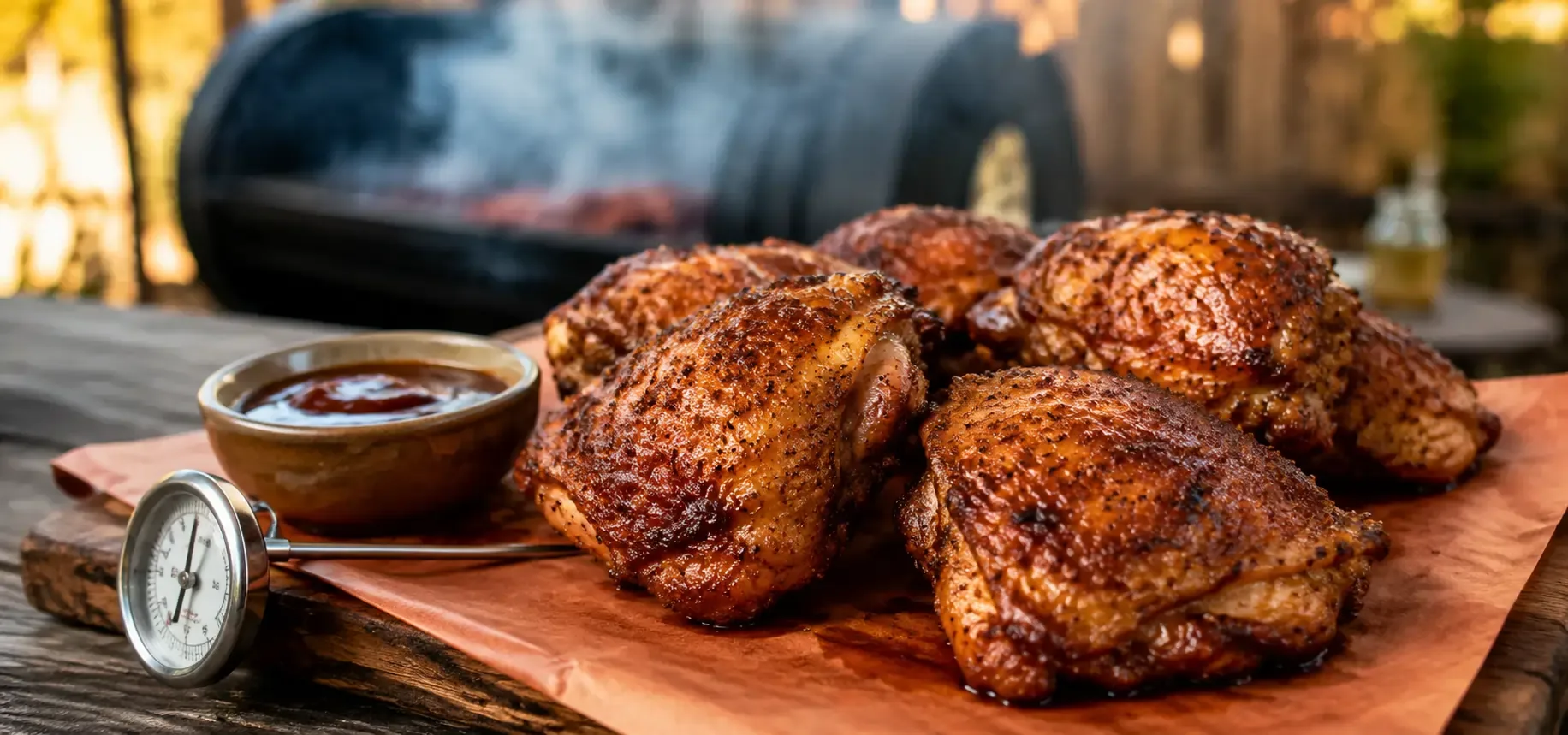
This guide explains how to get crispy skin on smoked chicken thighs by controlling moisture, smoker temperature, finishing heat, sauce timing, and internal temperature. The goal is juicy dark meat with better skin texture, not soft rubbery skin or dried-out chicken.
Quick navigation
What this crispy smoked chicken thighs guide covers
Quick answer
How to get crispy skin on smoked chicken thighs: quick answer
To get crispy skin on smoked chicken thighs, start with dry skin, season lightly, smoke hotter than traditional low-and-slow BBQ, and finish over higher heat. A good target is smoking around 275°F to 300°F, then using a hot grill, broiler, cast iron pan, or hotter smoker finish to crisp the skin without overcooking the meat.
The big idea is simple: chicken thigh meat can handle smoke and heat, but the skin needs dryness and finishing heat. If the skin stays wet and cooks too low the whole time, it often turns rubbery.
This is not a separate full recipe for smoked chicken thighs. It is a troubleshooting guide for fixing soft, rubbery, or bite-through chicken skin. For the full cook, use the smoked chicken thighs guide.
Skin texture
Why smoked chicken thigh skin turns rubbery
Smoked chicken thigh skin turns rubbery when the skin stays moist for too long and never gets enough heat to render and tighten. This usually happens when chicken thighs are cooked too low, the skin goes on wet, sauce is added too early, or the smoker produces a damp cooking environment.
Chicken thighs are forgiving because dark meat can handle more heat than lean chicken breast. The skin is less forgiving. If the skin sits in low heat and moisture for the entire cook, it can stay soft even when the meat tastes good.
Low-and-slow is great for ribs, pork shoulder, and brisket. Chicken skin usually needs a different playbook: dry surface, moderate smoker heat, and a hotter finish.
Preparation
Start with dry chicken skin before smoking
Dry skin is the first step if you want to get crispy skin on smoked chicken thighs. If chicken thighs go into the smoker with wet skin, surface moisture has to evaporate before the skin can tighten. That slows down browning and makes rubbery skin more likely.
How to dry chicken thigh skin
- Remove the chicken thighs from the package.
- Pat the skin and meat dry with paper towels.
- Trim loose skin or excess fat if needed.
- Leave the thighs uncovered in the refrigerator for a few hours if you have time.
- Season the skin lightly instead of burying it under wet rub or sauce.
- Avoid adding sauce early in the cook.
You do not need complicated tricks. The goal is simple: get the surface as dry as practical before smoke and heat start working on it.
Smoker temperature
Smoke chicken thighs hotter than low-and-slow barbecue
For crispy skin, smoked chicken thighs usually perform better around 275°F to 300°F than at 225°F. That higher smoker temperature helps render fat under the skin and gives the skin a better texture.
This does not mean you should blast the chicken from start to finish with uncontrolled heat. It means chicken thighs need a different strategy than brisket or pork shoulder. Use steady heat, clean smoke, and enough temperature to help the skin.
| Smoker temperature | Skin result | Best use | What to watch |
|---|---|---|---|
| 225°F | Often soft or rubbery | More smoke exposure | Usually needs a hot finish |
| 250°F | Better than very low heat | Moderate smoke flavor | Skin can still stay soft |
| 275°F | Better skin texture | Good balance for smoked chicken thighs | Watch color and internal temperature |
| 300°F | More skin rendering | Useful when crispy skin is the goal | Sauce can burn if added too early |
| High-heat finish | Best chance of crisp skin | Grill, broiler, pan, or hotter smoker finish | Skin can go from crisp to burned fast |
Finishing heat
Use a hot finish to crisp smoked chicken skin
A hot finish is one of the most reliable ways to get crispy skin on smoked chicken thighs. Once the thighs are close to done, move them to higher heat for a short finish. This helps tighten the skin and improve the bite.
Finish on a hot grill
Move the thighs skin side down over a hotter grill zone for a short finish. This can create better skin texture, but watch carefully so the skin does not burn.
Finish under a broiler
A broiler can crisp the skin after smoking. Place the thighs on a tray, keep the skin facing up, and watch closely because broilers work fast.
Finish in cast iron
A hot cast iron pan can help crisp the skin side after the smoke phase. Use short contact time and avoid overcrowding the pan.
Finish in a hotter smoker
If your smoker can climb higher, raise the temperature near the end. This is convenient, but it may not crisp as aggressively as direct grill heat.
Start thinking about the finish before the chicken is already overcooked. The goal is crispy skin and juicy dark meat, not dry chicken with good-looking skin.
Sauce timing
When to sauce smoked chicken thighs for crispy skin
Sauce timing matters when learning how to get crispy skin on smoked chicken thighs. If you add BBQ sauce too early, the moisture and sugar can keep the skin soft. Sauce can also burn if it sits over high heat for too long.
For better skin, smoke the chicken thighs first, crisp the skin, then add sauce near the end if you want a glazed finish. Let the sauce tack up briefly instead of drowning the skin early.
For crispier skin
Keep the thighs dry-rubbed during most of the cook. Crisp the skin first, then sauce lightly near the end or serve sauce on the side.
For a glazed finish
Brush sauce on during the final minutes. Let it set briefly, but do not leave sugary sauce over high heat too long.
Internal temperature
Internal temperature and food safety
Crispy skin should never replace food safety. Chicken thighs should reach a safe internal temperature of 165°F measured with a food thermometer. Check the thickest part of the thigh without touching bone.
For chicken thighs, many backyard cooks prefer the texture when dark meat cooks higher than the minimum, but the minimum safety target remains 165°F. Use internal temperature as the safety baseline, then use texture and skin quality to decide how to finish the cook.
Do not judge poultry doneness by color, time, or skin texture alone. Use a thermometer.
Common mistakes
Common mistakes that keep smoked chicken skin soft
Starting with wet skin
Wet skin delays browning and makes rubbery texture more likely. Pat the thighs dry before seasoning.
Smoking too low the whole time
Very low heat can cook the meat but leave the skin soft. Chicken thighs need more heat than classic low-and-slow cuts.
Saucing too early
Early sauce adds moisture and sugar. Add sauce near the end after the skin has already started to tighten.
Skipping the hot finish
If the skin is still soft near the end, a short hot finish can make the difference between rubbery and crisp.
7-step method
7 easy steps to get crispy skin on smoked chicken thighs
Use this practical flow when crispy skin matters more than maximum smoke time.
- Pat the chicken thighs dry. Remove surface moisture before seasoning.
- Season the skin lightly. Avoid heavy wet seasoning on the skin.
- Preheat the smoker to about 275°F to 300°F. Use steady heat and clean smoke.
- Smoke the thighs until they are close to done. Monitor internal temperature.
- Finish over higher heat. Use a hot grill, broiler, pan, or hotter smoker stage.
- Add sauce near the end if using it. Let it set briefly without burning.
- Confirm the thickest part reaches at least 165°F. Use a food thermometer.
This 7-step method gives the skin a better chance to crisp while keeping the chicken thigh meat juicy and flavorful.
Food safety source
Use official poultry temperature guidance
BackyardBBQGuide.com explains BBQ technique, smoke flavor, skin texture, sauce timing, resting, and serving. For official safe minimum internal temperature guidance, use FoodSafety.gov.
External source: FoodSafety.gov safe minimum internal temperatures
FAQ
Crispy smoked chicken thighs questions
Why is my smoked chicken thigh skin rubbery?
Smoked chicken thigh skin usually turns rubbery because the skin stayed too wet, the smoker temperature was too low, sauce was added too early, or the thighs never received a hot finish.
What temperature makes chicken skin crispy on a smoker?
Chicken skin crisps better when the smoker is hotter than traditional low-and-slow BBQ. A range around 275°F to 300°F works better than 225°F, and a short high-heat finish can help even more.
Can you crisp smoked chicken thighs after smoking?
Yes. You can crisp smoked chicken thighs after smoking by finishing them skin side down on a hot grill, under a broiler, in a hot pan, or in a hotter smoker. Watch closely so the skin does not burn.
Should you smoke chicken thighs skin side up or down?
Many cooks smoke chicken thighs skin side up during the main cook to protect the skin, then finish skin side down over higher heat to crisp it. The best choice depends on your smoker and heat source.
Should you sauce chicken thighs before or after smoking?
For crispier skin, sauce chicken thighs near the end of the cook. Adding sauce too early can soften the skin and make it harder to crisp.
Do smoked chicken thighs need to reach 165°F?
Yes. Chicken thighs should reach at least 165°F internally for food safety. Use a food thermometer and check the thickest part of the thigh without touching bone.
Is 225°F too low for crispy smoked chicken thigh skin?
It is usually too low if crispy skin is the main goal. You can start low for smoke flavor, but the skin often needs a hotter cook or a high-heat finish to improve texture.
Can baking powder help crispy chicken skin?
A small amount of baking powder can help dry the skin surface and improve texture, but it should be used lightly. Too much can create an unpleasant taste.
How do you get crispy skin on smoked chicken thighs without drying them out?
Use dry skin, moderate smoker heat, and a short hot finish instead of cooking the thighs too long. The goal is to crisp the skin near the end while keeping the dark meat juicy.
Related BBQ guides
Build the full smoked chicken thighs system.
Crispy skin is only one part of better smoked chicken thighs. For the full process, connect this technique with seasoning, smoker setup, wood choice, internal temperature, sauce timing, and resting.