Beef Ribs Recipe
Smoked Beef Ribs: Bark, Smoke, Tenderness, Resting & Slicing
Smoked beef ribs are one of the most impressive backyard BBQ cooks because they deliver deep beef flavor, heavy bark, rendered fat, clean smoke, and a rich bite when cooked with patience.
This smoked beef ribs guide is written for backyard cooks who want tender beef ribs with better bark, steady smoker temperature, clean smoke, proper internal temperature, enough rest, and clean slicing. The goal is not just to cook ribs until they are safe. The goal is to cook them until they are tender.
Quick navigation
What this smoked beef ribs recipe covers
Quick answer
How to make smoked beef ribs the simple way
To make smoked beef ribs, trim loose fat if needed, season the ribs with salt, pepper, or BBQ rub, smoke them over steady indirect heat, cook until the bark is dark and the meat is probe tender, rest the ribs, then slice between the bones.
The most important smoked beef ribs rule is this: internal temperature is a guide, but tenderness is the decision. Beef ribs are usually ready when a probe slides into the meat with very little resistance.
This smoked beef ribs recipe focuses on the full BBQ system: beef rib cut, seasoning, smoker temperature, clean smoke, bark, internal temperature, resting, slicing, and tenderness.
Beef rib cuts
Best beef ribs to smoke
The best beef ribs for smoking are usually plate ribs or chuck short ribs. They have enough meat, fat, and connective tissue to handle a long smoke and become tender.
| Beef rib cut | What it is | How it cooks | Best for |
|---|---|---|---|
| Plate ribs | Large beef short ribs with thick meat over the bones | Rich, fatty, dramatic, and excellent for long smoking | Texas-style smoked beef ribs |
| Chuck short ribs | Short ribs from the chuck area | Meaty and flavorful, often easier to find than plate ribs | Backyard smoked beef ribs |
| Back ribs | Ribs from near the prime rib area | Can be flavorful but often have less meat on top | Shorter cooks and lighter beef rib servings |
For a serious smoked beef ribs cook, look for ribs with a thick layer of meat above the bones. Thin, mostly bare bones will not give the same rich BBQ result.
Setup
Equipment and ingredients for smoked beef ribs
Smoked beef ribs do not need complicated ingredients. Beef, salt, pepper, smoke, steady heat, and patience can produce excellent results.
Basic equipment
- Smoker or grill set up for indirect heat
- Charcoal, wood, or pellets depending on your cooker
- Meat thermometer or probe thermometer
- Sharp trimming knife
- Butcher paper or foil if wrapping
- Cutting board and slicing knife
Basic ingredients
- Beef plate ribs, chuck short ribs, or meaty beef ribs
- Kosher salt
- Coarse black pepper
- Optional garlic powder
- Optional beef rub
- Optional beef tallow for wrapping or resting
Preparation
How to prep beef ribs before smoking
Start by checking the meat side of the ribs. Trim loose pieces, hard fat, or ragged edges that may burn. Leave enough fat and meat structure to protect the ribs during the long cook.
- Remove the beef ribs from the package.
- Pat the surface dry with paper towels.
- Trim loose fat or thin flaps if needed.
- Leave the meat side mostly intact for better bark and moisture.
- Decide whether to remove any thick membrane on the bone side.
- Season the ribs evenly on all exposed meat surfaces.
Do not over-trim beef ribs. The long cook needs fat, meat thickness, and time. Removing too much protection can make the ribs less forgiving.
Seasoning
How to season smoked beef ribs
Beef ribs work extremely well with a simple seasoning approach. Kosher salt and coarse black pepper are enough for a Texas-style profile. Garlic powder can add a rounder savory flavor without taking over.
Season generously because beef ribs are large and rich. The bark becomes a major part of the final flavor, especially when the meat is sliced and served from the bone.
| Seasoning style | Flavor profile | Best use | What to watch |
|---|---|---|---|
| Salt and pepper | Classic, beefy, bark-focused | Texas-style smoked beef ribs | Use coarse pepper for better bark texture |
| Salt, pepper, garlic | Savory, balanced, backyard-friendly | Most home smoked beef ribs | Avoid too much fine powder that cakes on the surface |
| Beef BBQ rub | Bold, smoky, seasoned | Richer BBQ flavor | Avoid rubs that are too sweet for long beef cooks |
Smoker temperature
Best smoker temperature for smoked beef ribs
Many backyard cooks smoke beef ribs between 250°F and 275°F. Beef ribs can handle a slightly hotter low-and-slow range because they are thick, fatty, and rich.
| Smoker temperature | How it cooks | Best for | Watch out for |
|---|---|---|---|
| 225°F | Slower and gentler | Longer smoke exposure | Longer cook time and slower bark formation |
| 250°F | Balanced low-and-slow range | Most smoked beef ribs | Still needs enough time for tenderness |
| 275°F | Faster bark and rendering | Thick plate ribs or chuck short ribs | Requires attention so edges do not dry out |
The best smoker temperature is the one your cooker can hold cleanly. Steady airflow, clean smoke, and patience matter more than chasing one perfect number.
Smoke wood
Best wood for smoked beef ribs
Beef ribs work well with oak, post oak, hickory, pecan, and small amounts of mesquite. Oak is one of the best all-purpose choices because it gives clean, steady smoke without overpowering the beef.
| Wood | Smoke strength | Best use | Flavor note |
|---|---|---|---|
| Oak | Medium | Most smoked beef ribs | Clean, balanced, beef-friendly smoke |
| Post oak | Medium | Texas-style beef ribs | Classic steady smoke for beef BBQ |
| Hickory | Medium to strong | Bolder beef rib flavor | Can become heavy if overused |
| Pecan | Medium | Richer, slightly nutty smoke | Softer than hickory but still flavorful |
| Mesquite | Strong | Small amounts or shorter beef cooks | Can overpower long cooks quickly |
For beginners, oak is the safest starting point. Add hickory, pecan, or cherry later if you want a stronger or more layered smoke profile.
Cooking process
Step-by-step: smoked beef ribs
- Prep the ribs. Pat dry and trim loose fat or ragged edges.
- Season generously. Use salt, pepper, garlic, or a beef-focused rub.
- Preheat the smoker. Wait for stable heat and cleaner smoke.
- Place ribs on the smoker. Cook over indirect heat with the meat side exposed to smoke.
- Build bark. Let the surface darken and set before wrapping.
- Watch the texture. Beef ribs need time for fat and connective tissue to soften.
- Wrap if needed. Wrap in butcher paper or foil if the bark is set and the ribs need protection.
- Cook until probe tender. Start checking when the ribs are in the high 190s.
- Rest the ribs. Let the ribs settle before slicing.
- Slice between the bones. Serve with bark, rendered fat, and tender meat intact.
This smoked beef ribs process gives you structure without forcing every rack into the same timer. Rib thickness, smoker temperature, wrapping, weather, and rest time all affect the final cook.
Internal temperature
What temperature are smoked beef ribs done?
Smoked beef ribs are often ready somewhere around the high 190s to low 200s, but the exact number is not the final decision. The ribs are done when the meat is probe tender and the fat has rendered enough for a rich, soft bite.
FoodSafety.gov lists 145°F with 3 minutes of rest as a safe minimum for beef steaks, roasts, and chops, but smoked beef ribs are normally cooked much higher for BBQ tenderness.
Safe does not always mean tender. Beef ribs need extra time for connective tissue and fat to soften. That is why BBQ beef ribs usually finish well beyond the basic safe minimum temperature.
Resting and slicing
How long should smoked beef ribs rest?
Rest smoked beef ribs before slicing. A short rest helps, but thick beef ribs often benefit from a longer controlled rest because the meat is rich, fatty, and dense.
Resting lets heat settle and helps the meat slice more cleanly. If you slice too soon, the ribs may lose more moisture and feel less controlled on the plate.
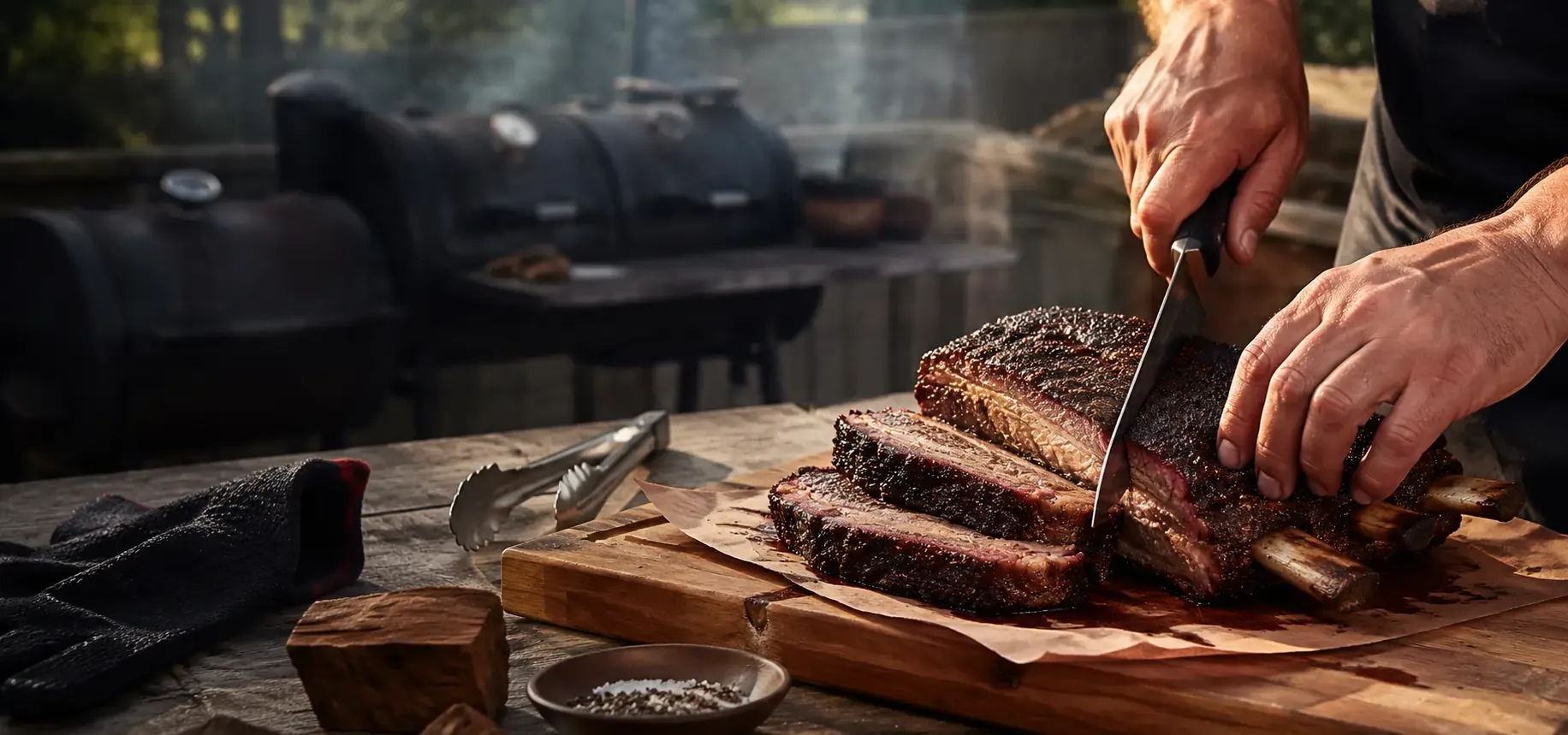
How to slice smoked beef ribs
- Use a sharp slicing knife.
- Slice between the bones.
- Keep bark attached when possible.
- Serve each rib as a large bone-in portion or slice meat from the bone.
- Add finishing salt only if the ribs need it after slicing.
Common mistakes
Smoked beef ribs mistakes beginners make
Buying ribs with too little meat
Thin beef back ribs may taste good, but they do not cook like thick plate ribs. Look for ribs with real meat above the bones.
Pulling the ribs too early
Beef ribs can look dark and finished before they are tender. Probe tenderness matters more than color alone.
Using too much strong smoke
Beef can handle smoke, but dirty smoke or too much mesquite can make the ribs taste harsh.
Skipping the rest
Resting is part of the cook. Cutting too soon can make the final texture less juicy and less controlled.
Food safety source
Use safe internal temperature guidance
BackyardBBQGuide.com explains BBQ doneness, bark, smoke flavor, tenderness, resting, and slicing. For official safe minimum internal temperature guidance, use FoodSafety.gov.
External source: FoodSafety.gov safe minimum internal temperatures
FAQ
Smoked beef ribs questions
What are smoked beef ribs?
Smoked beef ribs are beef ribs cooked with indirect heat and smoke until the bark develops and the meat becomes tender. Plate ribs and chuck short ribs are common choices for serious BBQ beef ribs.
What are the best beef ribs to smoke?
Plate ribs and chuck short ribs are usually the best beef ribs to smoke because they have more meat, fat, and connective tissue than many beef back ribs.
What temperature should I smoke beef ribs at?
Many backyard cooks smoke beef ribs between 250°F and 275°F. This range helps build bark, render fat, and cook the ribs until tender.
What internal temperature are smoked beef ribs done?
Smoked beef ribs are often ready in the high 190s to low 200s, but tenderness matters more than one exact number. The probe should slide into the meat with very little resistance.
Should smoked beef ribs be wrapped?
Wrapping is optional. Wrap smoked beef ribs when the bark is set and the ribs need protection or help moving through the final stage of the cook.
What wood is best for smoked beef ribs?
Oak and post oak are excellent choices for smoked beef ribs. Hickory, pecan, and small amounts of mesquite can also work when used carefully.
Why are my smoked beef ribs tough?
Beef ribs are usually tough when they are pulled too early, cooked too cool for too short a time, or sliced before they have rested properly.
How long should smoked beef ribs rest?
Smoked beef ribs should rest before slicing. Thick beef ribs often benefit from a longer controlled rest than small ribs because the meat is dense and rich.
Related BBQ guides
Build the full smoked beef ribs system.
Smoked beef ribs get better when beef rib cut, seasoning, smoker temperature, wood choice, internal temperature, bark, resting, and slicing all work together.