Pulled Pork Recipe
Smoked Pulled Pork: Pork Shoulder, Bark, Stall, Resting & Shredding
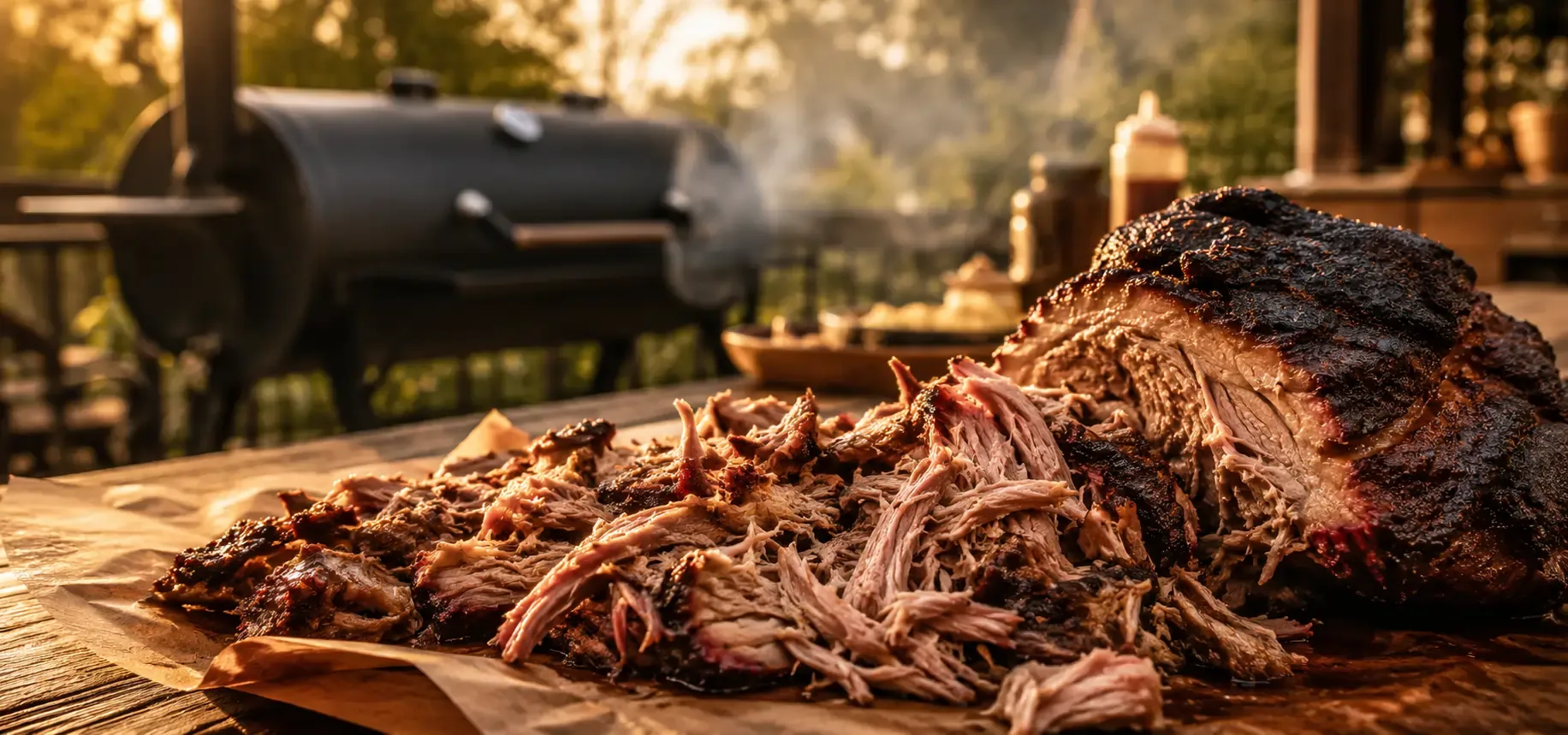
Smoked pulled pork is one of the most forgiving and satisfying backyard BBQ cooks. A pork shoulder can handle long smoke, bold seasoning, bark development, wrapping, resting, and shredding better than many leaner cuts.
This smoked pulled pork guide is written for backyard cooks who want tender pork shoulder with better bark, cleaner smoke, proper fat rendering, and a repeatable process. The goal is not just to reach a number on a thermometer. The goal is pork that pulls easily, tastes smoky, and stays moist.
Quick navigation
What this smoked pulled pork guide covers
Quick answer
How to make smoked pulled pork the simple way
To make smoked pulled pork, season a pork shoulder or pork butt, run the smoker in a steady low-and-slow range, cook until bark forms, wrap if needed during the stall, continue cooking until the meat is probe tender, rest it, then shred it while it is still warm.
The most important smoked pulled pork rule is this: temperature is a guide, but tenderness is the decision. Pork shoulder is usually ready to pull when it feels soft, the bone moves easily, and the meat shreds without fighting you.
This smoked pulled pork recipe focuses on the full BBQ system: pork shoulder, rub, smoker temperature, clean smoke, bark, stall, wrapping, internal temperature, resting, shredding, and serving.
Pork shoulder basics
Best cut for smoked pulled pork
The best cut for smoked pulled pork is usually pork shoulder, often sold as pork butt or Boston butt. It has enough fat, connective tissue, and size to handle a long smoke and still become tender enough to shred.
Pork shoulder is forgiving because it has internal fat and collagen that soften during a long cook. That is why it works better for pulled pork than lean cuts like pork loin, which can dry out before they become shreddable.
| Cut | Best use | How it cooks | What to watch |
|---|---|---|---|
| Pork butt / Boston butt | Classic pulled pork | Forgiving, fatty, and shreddable | Needs enough time to become tender |
| Pork shoulder picnic | Traditional pulled pork or chopped pork | Can include skin and different muscle structure | May require more trimming and attention |
| Pork loin | Not ideal for pulled pork | Lean and easy to dry out | Better sliced than shredded |
When learning smoked pulled pork, start with pork butt. It gives you the best chance of getting tender, juicy shredded pork without needing advanced technique.
Setup
Equipment and ingredients for smoked pulled pork
Smoked pulled pork does not need complicated equipment, but it does need stable heat, clean smoke, and enough time for the pork shoulder to become tender.
Basic equipment
- Smoker or grill set up for indirect heat
- Wood, charcoal, or pellets depending on your cooker
- Meat thermometer or probe thermometer
- Foil or butcher paper if wrapping
- Drip pan if needed
- Large tray, gloves, or forks for shredding
Basic ingredients
- Pork butt or pork shoulder
- Kosher salt
- Black pepper
- BBQ rub
- Optional mustard or hot sauce binder
- Optional apple juice, vinegar, or sauce for finishing
Preparation
How to prep pork shoulder before smoking
Start by removing the pork shoulder from the package and patting it dry. Trim loose pieces, hard fat, or thin edges that may burn, but do not remove every bit of fat. Pork shoulder needs fat and connective tissue for the final pulled texture.
- Remove the pork shoulder from the package.
- Pat the surface dry with paper towels.
- Trim loose flaps or hard fat if needed.
- Leave enough fat to protect the meat during the long cook.
- Apply a light binder if using one.
- Season evenly on all sides.
Do not trim pork shoulder like a lean roast. Smoked pulled pork needs time, fat, bark, and rendering. Over-trimming can make the cook less forgiving.
Seasoning
How to season smoked pulled pork
Pork shoulder can handle bold seasoning. Salt, pepper, paprika, garlic, onion, chile powder, and a little sweetness all work well for smoked pulled pork.
Season heavily enough to build bark because much of the finished pork will be shredded and mixed together. A strong bark helps spread smoky, seasoned flavor through the final pulled pork.
| Seasoning style | Flavor profile | Best use | What to watch |
|---|---|---|---|
| Salt and pepper | Simple, smoky, pork-forward | Clean pulled pork flavor | May need sauce or finishing seasoning later |
| Sweet BBQ rub | Classic backyard BBQ flavor | Sandwiches, sliders, family-style pulled pork | Sugar can darken if heat runs too high |
| Spicy rub | Bold, peppery, savory | Rich pork that needs balance | Keep heat balanced so it does not overpower the pork |
After seasoning, let the rub sit long enough to adhere to the surface before the pork shoulder goes on the smoker.
Smoker temperature
Best smoker temperature for pulled pork
Many backyard cooks smoke pork shoulder between 225°F and 275°F. A lower temperature gives a slower cook and more time in smoke. A slightly hotter range can help move through the cook faster while still giving time for bark and tenderness.
| Smoker temperature | How it cooks | Best for | Watch out for |
|---|---|---|---|
| 225°F | Slow low-and-slow cook | Long smoke exposure and gentle cooking | Longer stall and longer total cook time |
| 250°F | Balanced backyard BBQ range | Most smoked pulled pork cooks | Still requires enough time for tenderness |
| 275°F | Faster BBQ range | Shorter cooks and stronger bark development | Less margin if the smoker runs dry or unstable |
The best smoker temperature is the one your cooker can hold cleanly. Stable airflow and clean smoke matter more than forcing the smoker to sit on one exact number for the entire cook.
Cooking process
Step-by-step: smoked pulled pork
- Prep the pork shoulder. Pat dry, trim loose pieces, and leave enough fat for a forgiving cook.
- Season generously. Coat all sides with BBQ rub.
- Preheat the smoker. Wait for steady temperature and cleaner smoke.
- Place the pork shoulder on the smoker. Keep it away from direct flame or harsh hot spots.
- Build bark. Let the surface darken and set before wrapping.
- Watch the stall. The internal temperature may slow down for a while.
- Wrap if needed. Wrap when bark is set and you want to protect moisture or speed the cook.
- Cook until probe tender. Start checking texture in the high 190s.
- Rest the pork shoulder. Let it settle before shredding.
- Shred and season to taste. Mix bark, meat, and juices for better flavor.
This smoked pulled pork process gives you structure without forcing every pork shoulder into the same exact timing. Size, smoker temperature, wrapping, weather, and rest time all affect the cook.
The stall
The pulled pork stall and when to wrap
Pork shoulder can hit a stall where the internal temperature slows down or seems to stop rising. This is normal during long BBQ cooks. Moisture evaporating from the surface can cool the meat and slow the temperature climb.
You can wait out the stall, raise the smoker temperature slightly, or wrap the pork shoulder once the bark is set. Wrapping can help protect moisture and speed up the cook, but wrapping too early can soften the bark before it develops.
Butcher paper
Butcher paper protects the pork shoulder while letting it breathe more than foil. It can help preserve bark texture better than a tight foil wrap.
Foil
Foil holds moisture tightly and can speed up the cook. It is useful when tenderness and timing matter more than keeping the bark firm.
Internal temperature
What temperature is smoked pulled pork done?
Smoked pulled pork is usually ready when the pork shoulder reaches the high 190s or low 200s and the meat feels tender enough to shred. The exact number matters less than probe tenderness, bone movement, and how easily the meat pulls apart.
FoodSafety.gov lists 145°F with 3 minutes of rest as a safe minimum for pork steaks, roasts, and chops, but pork shoulder for pulled pork is normally cooked much higher for BBQ tenderness and shredding texture.
Safe does not always mean shreddable. Pork shoulder needs time for fat and connective tissue to soften. That is why smoked pulled pork is usually cooked far beyond the basic safe minimum temperature.
Resting and shredding
How long should pulled pork rest before shredding?
Rest pork shoulder before shredding so heat and juices settle. A short rest is better than no rest, but a larger pork shoulder often benefits from a longer controlled rest.
Shred the pork while it is still warm. Remove large pieces of unrendered fat, mix bark into the meat, and taste before adding sauce. A little finishing seasoning or vinegar-based sauce can help balance the richness.
How to shred pulled pork
- Let the pork rest before shredding.
- Use gloved hands, meat claws, or forks.
- Remove the bone if using bone-in pork shoulder.
- Discard large pieces of unrendered fat.
- Mix bark into the shredded meat.
- Add sauce lightly so the pork still tastes smoky.
Serving
How to serve smoked pulled pork
Smoked pulled pork works well in sandwiches, sliders, tacos, rice bowls, nachos, baked potatoes, and BBQ plates. Because the meat is rich, it pairs well with acid, crunch, pickles, slaw, onions, and lighter sides.
- Serve on buns with slaw and pickles.
- Use vinegar sauce to cut through richness.
- Keep some bark pieces mixed into the meat.
- Add sauce in layers instead of drowning the pork.
- Save leftovers for tacos, breakfast hash, or sandwiches.
Common mistakes
Smoked pulled pork mistakes beginners make
Pulling it too early
Pork shoulder can be food-safe before it is shreddable. If it resists the probe or does not pull apart easily, it likely needs more time.
Wrapping before bark sets
Wrapping too early can trap moisture before the bark develops. Wait until the color and surface texture look right.
Not resting enough
Shredding immediately can make the final texture less controlled. Resting helps the pork settle before pulling.
Drowning it in sauce
Sauce can help, but too much sauce hides smoke, bark, and pork flavor. Add sauce gradually and taste as you go.
Food safety source
Use a thermometer for safe cooking decisions
BackyardBBQGuide.com explains BBQ doneness, bark, fat rendering, resting, shredding, and texture. For official safe minimum internal temperature guidance, use FoodSafety.gov.
External source: FoodSafety.gov safe minimum internal temperatures
FAQ
Smoked pulled pork questions
What is smoked pulled pork?
Smoked pulled pork is pork shoulder cooked with indirect heat and smoke until the meat becomes tender enough to shred. It is usually made with pork butt or Boston butt.
What is the best cut for smoked pulled pork?
Pork butt or Boston butt is usually the best cut for smoked pulled pork because it has enough fat and connective tissue to become tender during a long BBQ cook.
What temperature should I smoke pulled pork at?
Many backyard cooks smoke pulled pork between 225°F and 275°F. Around 250°F is a useful balanced range for bark, smoke, and reasonable cook time.
What internal temperature is smoked pulled pork done?
Smoked pulled pork is usually ready in the high 190s or low 200s, but tenderness matters more than one exact number. The meat should shred easily and feel probe tender.
Should I wrap pork shoulder?
Wrap pork shoulder if the bark is set and you want to protect moisture or move through the stall faster. Do not wrap too early if the bark still looks pale or soft.
How long should pulled pork rest?
Pulled pork should rest before shredding. A short rest helps, but larger pork shoulders often benefit from a longer controlled rest before pulling.
Why is my pulled pork tough?
Pulled pork is usually tough because it was pulled too early, cooked too cool for too short a time, not rested enough, or not cooked until the connective tissue softened.
Do you sauce pulled pork before or after shredding?
Sauce is usually easier to control after shredding. Shred the pork, mix in bark and juices, taste it, then add sauce gradually.
Related BBQ guides
Build the full pulled pork BBQ system.
Smoked pulled pork gets better when smoker temperature, wood choice, bark, internal temperature, resting, and shredding all work together. Use these related guides to connect the full BBQ process.