Salmon Recipe
Smoked Salmon: Clean Smoke, Flaky Texture, Brining, Resting & Serving
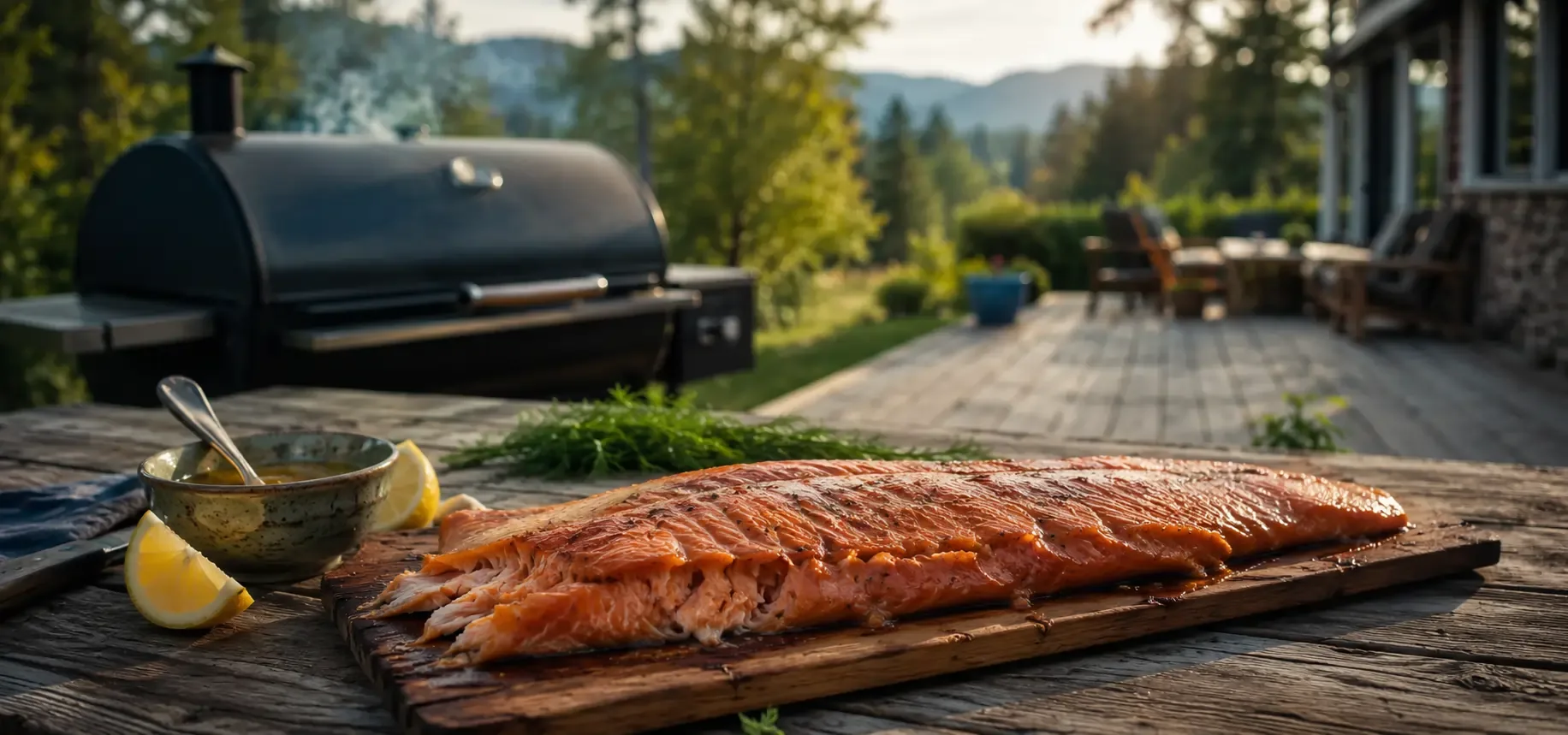
Smoked salmon is one of the best backyard BBQ recipes when you want clean smoke, tender flakes, rich flavor, and a shorter cook than brisket, ribs, or pork shoulder. The key is gentle heat, balanced seasoning, mild smoke, and careful internal temperature.
This smoked salmon guide is written for backyard cooks who want salmon that tastes smoky without becoming dry, bitter, or overcooked. You will learn how to season or brine salmon, choose wood, control smoker temperature, check doneness, rest the fish, and serve it cleanly.
Quick navigation
What this smoked salmon recipe covers
Quick answer
How to make smoked salmon the simple way
To make smoked salmon, start with a salmon fillet, season or brine it, let the surface dry slightly if possible, smoke it with mild wood over gentle indirect heat, cook until the salmon reaches safe internal temperature and flakes easily, rest briefly, then serve warm or chilled.
The most important smoked salmon rule is this: do not treat salmon like brisket. Fish is delicate, cooks faster, and can dry out quickly if the smoker runs too hot or the fillet stays on too long.
This smoked salmon recipe focuses on moisture, clean smoke, mild wood, internal temperature, flaky texture, resting, and serving.
Salmon basics
Why smoke salmon?
Salmon works well on a smoker because it has enough natural fat to carry smoke flavor while still cooking much faster than large BBQ cuts. A good smoked salmon fillet should taste rich, clean, lightly smoky, and tender.
The challenge is control. Salmon can move from tender to dry faster than pork shoulder, ribs, or beef ribs. That means smoker temperature, wood choice, and internal temperature matter a lot.
Great smoked salmon should flake gently. It should not feel raw in the center, but it should also not be cooked until dry and chalky.
Setup
Equipment and ingredients for smoked salmon
Smoked salmon does not need complicated equipment, but it does need clean smoke, gentle heat, and a thermometer so you do not overcook the fish.
Basic equipment
- Smoker or grill set up for indirect heat
- Charcoal, pellets, or wood depending on your cooker
- Meat thermometer or instant-read thermometer
- Wire rack, cedar plank, or foil-lined tray
- Cutting board
- Fish spatula or wide spatula
Basic ingredients
- Salmon fillet, skin-on if possible
- Kosher salt
- Black pepper
- Brown sugar or maple syrup if desired
- Lemon
- Optional dill, garlic, paprika, or BBQ rub
Moisture and flavor
Should you brine salmon before smoking?
Brining salmon can improve seasoning, moisture, and surface texture. A dry brine is simple and useful for backyard BBQ because it seasons the fish and helps the surface become slightly tacky before smoking.
| Method | How it works | Best for | What to watch |
|---|---|---|---|
| Dry brine | Salt and sugar sit on the surface before smoking | Better seasoning and surface texture | Too much time can make the fish too salty |
| Wet brine | Salmon soaks in seasoned salt water | Moisture support and deeper seasoning | Needs drying before smoking |
| No brine | Salmon is seasoned and smoked directly | Quick weeknight-style cooks | More risk of bland or uneven seasoning |
For a simple dry brine, use kosher salt with a little brown sugar. After brining, pat the salmon lightly and let the surface dry before it goes on the smoker.
Preparation
How to prep salmon before smoking
Start with a clean salmon fillet and check for pin bones. Skin-on salmon is easier to handle because the skin helps protect the bottom of the fish during the cook.
- Remove the salmon from the package.
- Pat the surface dry with paper towels.
- Check for pin bones and remove them if needed.
- Trim very thin edges if they may overcook.
- Season or brine the salmon.
- Let the surface dry slightly before smoking.
A slightly tacky surface helps smoke adhere better. Wet salmon can cook unevenly and may not take smoke as cleanly.
Seasoning
How to season smoked salmon
Salmon works with simple seasoning. Salt, pepper, lemon, dill, garlic, maple, brown sugar, and light BBQ rubs can all work, but the seasoning should not hide the fish.
If using sugar or maple syrup, keep heat controlled. Sweet glazes can darken quickly if the smoker runs too hot.
| Seasoning style | Flavor profile | Best use | What to watch |
|---|---|---|---|
| Salt and pepper | Clean, simple, salmon-forward | Classic smoked salmon flavor | Do not under-season thick fillets |
| Brown sugar dry brine | Sweet, salty, lightly glazed | Backyard smoked salmon | Can get too sweet if overdone |
| Lemon and dill | Fresh, bright, clean | Lighter serving style | Add delicate herbs carefully so they do not burn |
| Maple glaze | Sweet, glossy, rich | Finishing glaze | Add near the end to avoid scorching |
Smoker temperature
Best smoker temperature for smoked salmon
Many backyard cooks smoke salmon at a lower temperature than ribs or pulled pork because fish is delicate. A gentle smoker temperature helps the salmon cook evenly and absorb smoke without drying out too fast.
| Smoker temperature | How it cooks | Best for | Watch out for |
|---|---|---|---|
| 180°F–200°F | Gentle and smoke-focused | More delicate smoked salmon texture | Longer cook time and more need for temperature control |
| 200°F–225°F | Balanced low smoke range | Most backyard smoked salmon cooks | Can still dry out if left too long |
| 250°F+ | Faster cooking | Quick grilled-smoked salmon style | Higher risk of dry edges and overcooking |
The best smoker temperature depends on the texture you want. Lower heat gives more control. Higher heat cooks faster but leaves less room for error.
Smoke wood
Best wood for smoked salmon
Salmon usually works best with mild or medium smoke. Alder is a classic fish wood. Apple, cherry, maple, and light oak can also work well when used carefully.
| Wood | Smoke strength | Best use | Flavor note |
|---|---|---|---|
| Alder | Mild | Classic smoked salmon | Light, clean, delicate smoke |
| Apple | Mild | Softer backyard salmon flavor | Light and slightly sweet |
| Cherry | Mild to medium | Color and smooth smoke | Can add warmer color and gentle sweetness |
| Maple | Mild to medium | Maple-glazed salmon | Soft, rounded, slightly sweet smoke |
| Oak | Medium | Balanced BBQ-style salmon | Use lightly so it does not overpower the fish |
Avoid heavy smoke on salmon. Strong smoke can overpower the fish and make the flavor bitter, especially on thinner fillets.
Cooking process
Step-by-step: smoked salmon
- Prep the salmon. Pat dry and remove pin bones if needed.
- Season or brine. Use salt, pepper, sugar, herbs, or a light glaze.
- Let the surface dry. A slightly tacky surface helps smoke adhere.
- Preheat the smoker. Wait for stable heat and clean smoke.
- Place salmon on the smoker. Use skin-side down when possible.
- Smoke gently. Keep heat controlled so the fish does not dry out.
- Check internal temperature. Use a thermometer in the thickest part.
- Rest briefly. Let the salmon settle before slicing or serving.
- Serve warm or chilled. Use the salmon in plates, sandwiches, salads, or appetizers.
This smoked salmon process gives you structure without forcing every fillet into the same timer. Thickness, smoker temperature, wood choice, and desired texture all affect the cook.
Internal temperature
What internal temperature should smoked salmon reach?
FoodSafety.gov lists 145°F as the safe minimum internal temperature for fish, or cooking until the flesh is no longer translucent and separates easily with a fork. For smoked salmon, use a thermometer in the thickest part of the fillet.
Salmon can dry out if it is pushed too far past the safe temperature. The goal is safe, flaky, moist fish with clean smoke flavor.
Do not rely only on color. Smoke, seasoning, and glaze can change the surface appearance. Internal temperature gives you a better safety check.
Resting and serving
How long should smoked salmon rest?
Smoked salmon only needs a brief rest compared with large BBQ cuts. Let the fillet rest for a few minutes before slicing or flaking so the texture settles.
Serve smoked salmon warm, room temperature, or chilled depending on your recipe. It works well on toast, salads, rice bowls, bagels, crackers, sandwiches, and BBQ plates.
How to serve smoked salmon
- Flake it gently with a fork.
- Slice thicker fillets into clean portions.
- Serve with lemon, dill, capers, pickles, or a light sauce.
- Use leftovers in salads, sandwiches, eggs, or rice bowls.
- Keep chilled leftovers refrigerated and reheat gently if needed.
Common mistakes
Smoked salmon mistakes beginners make
Using too much smoke
Salmon is delicate. Heavy smoke can overpower the fish and turn the flavor bitter.
Cooking too hot
High heat can dry the edges before the center reaches the texture you want. Gentle heat gives more control.
Skipping the thermometer
Fish can look done before it is safely cooked, or look darker because of smoke and glaze. Use internal temperature.
Over-brining
Too much salt or too much brine time can make smoked salmon overly salty. Keep the brine controlled.
Food safety source
Use safe seafood temperature guidance
BackyardBBQGuide.com explains BBQ technique, smoke flavor, seasoning, resting, and serving. For official safe minimum internal temperature guidance, use FoodSafety.gov.
External source: FoodSafety.gov safe minimum internal temperatures
FAQ
Smoked salmon questions
What is smoked salmon?
Smoked salmon is salmon cooked with indirect heat and smoke until it becomes flavorful, tender, and flaky. Backyard smoked salmon is usually hot-smoked rather than cold-smoked.
What internal temperature should smoked salmon reach?
Smoked salmon should reach 145°F internally, or cook until the flesh is no longer translucent and separates easily with a fork. Use a thermometer in the thickest part of the fillet.
What temperature should I smoke salmon at?
Many backyard cooks smoke salmon around 180°F to 225°F for gentle heat and clean smoke. Higher heat cooks faster but gives less room for error.
Should you brine salmon before smoking?
Brining can help smoked salmon stay seasoned and moist. A dry brine with salt and a little sugar is simple and useful for backyard smoking.
What wood is best for smoked salmon?
Alder is a classic wood for smoked salmon. Apple, cherry, maple, and light oak also work well when used gently.
Do you smoke salmon skin side up or down?
Skin side down is common because the skin helps protect the bottom of the fillet and makes the salmon easier to handle.
Why is my smoked salmon dry?
Smoked salmon is usually dry because it was cooked too hot, left on too long, pushed too far past safe temperature, or not protected with enough moisture or fat.
Can smoked salmon be served cold?
Yes. Hot-smoked salmon can be served warm or chilled after cooking and cooling safely. It works well in salads, sandwiches, bagels, and appetizers.
Related BBQ guides
Build the full smoked salmon system.
Smoked salmon gets better when seasoning, brining, wood choice, smoker temperature, internal temperature, resting, and serving all work together.