Chicken Thigh Wood Guide
Best Wood for Smoked Chicken Thighs
Apple or cherry is the safest starting point for a mild smoke profile on chicken thighs. Pecan or oak adds more depth without usually dominating. Use hickory lightly, especially on long cooks, and treat mesquite as a small blend component or short-cook option. The clean burn and the amount of wood matter more than chasing one universal best species.
In this guide
- The practical wood shortlist
- Apple and cherry for mild smoke
- Pecan and oak for more depth
- Hickory and mesquite: when bold becomes too bold
- Match wood form to the cooker
- Control wood dose and exposure time
- Account for rub, sauce, and skin
- Run a useful thigh comparison at home
- Food safety is a separate checkpoint
- Wood-choice mistakes to avoid
- Frequently asked questions
- Sources
Quick answer
The practical wood shortlist
Start with apple or cherry when the seasoning is light, the thighs are small, or you want smoke to stay in the background. Choose pecan for a fuller nutty profile or oak for a neutral-to-moderate baseline that works across many sauces. Use hickory as an accent when the rub is robust. Use mesquite sparingly because a small poultry piece can collect a forceful smoke impression before the skin and connective tissue are ready.
That order is a starting framework, not a universal taste ranking. Chicken thighs tolerate more heat and flavor than breast meat, but their surface-area-to-mass ratio is still high. A strong wood, a long low-temperature cook, and a sugary sauce can produce a muddy or bitter result even when each choice seems reasonable alone.
Apple and cherry for mild smoke
Apple is commonly chosen when cooks want a light, slightly sweet smoke association that leaves room for poultry seasoning. Cherry is also mild-to-moderate and is often selected for color as well as aroma. Neither species ensures sweetness or mahogany skin; combustion, rub ingredients, and lighting affect what you perceive and see.
Use one or two modest chunks in a charcoal cooker rather than burying the coals. In a pellet grill, the bag may use a base hardwood with apple or cherry flavor wood, so compare labels carefully. If sauce is the star, mild fruit wood can keep the plate from becoming too busy. If the first batch has almost no smoke presence, increase exposure or dose slightly before jumping directly to mesquite.
Pecan and oak for more depth
Pecan is related to hickory but is often described as softer and rounder in barbecue use. It can fit chicken thighs seasoned with pepper, chile, or savory herbs. Oak is the flexible baseline: it burns as a heat source in offsets and works as chunks or pellets in other cookers. It is a useful control wood when you want to learn how smoke dose changes the food.
Regional species and packaging matter. Oak is not one identical product, and pecan wood can vary in seasoning and bark. Do not use an unknown yard branch. Use clean, dry, known wood and keep records of fuel form and quantity. A moderate species burned dirty will still taste harsher than a stronger species burned cleanly and used with restraint.
Hickory and mesquite: when bold becomes too bold
Hickory can complement bacon, barbecue sauce, and assertive rubs, but it accumulates on the skin and exposed edges. Start as a minority of an oak or fruit-wood blend. Mesquite is more aggressive and is easier to overshoot on a long thigh cook. It can fit a short, hot Southwestern-style cook, but use a small amount and keep the fire lively.
If the result tastes bitter, do not assume the species alone is guilty. Check whether the wood smoldered, the exhaust was restricted, the chunks were damp, or too much fuel was added at once. Reduce one variable at a time. A blend should make adjustment easier, not hide a dirty fire.
Match wood form to the cooker
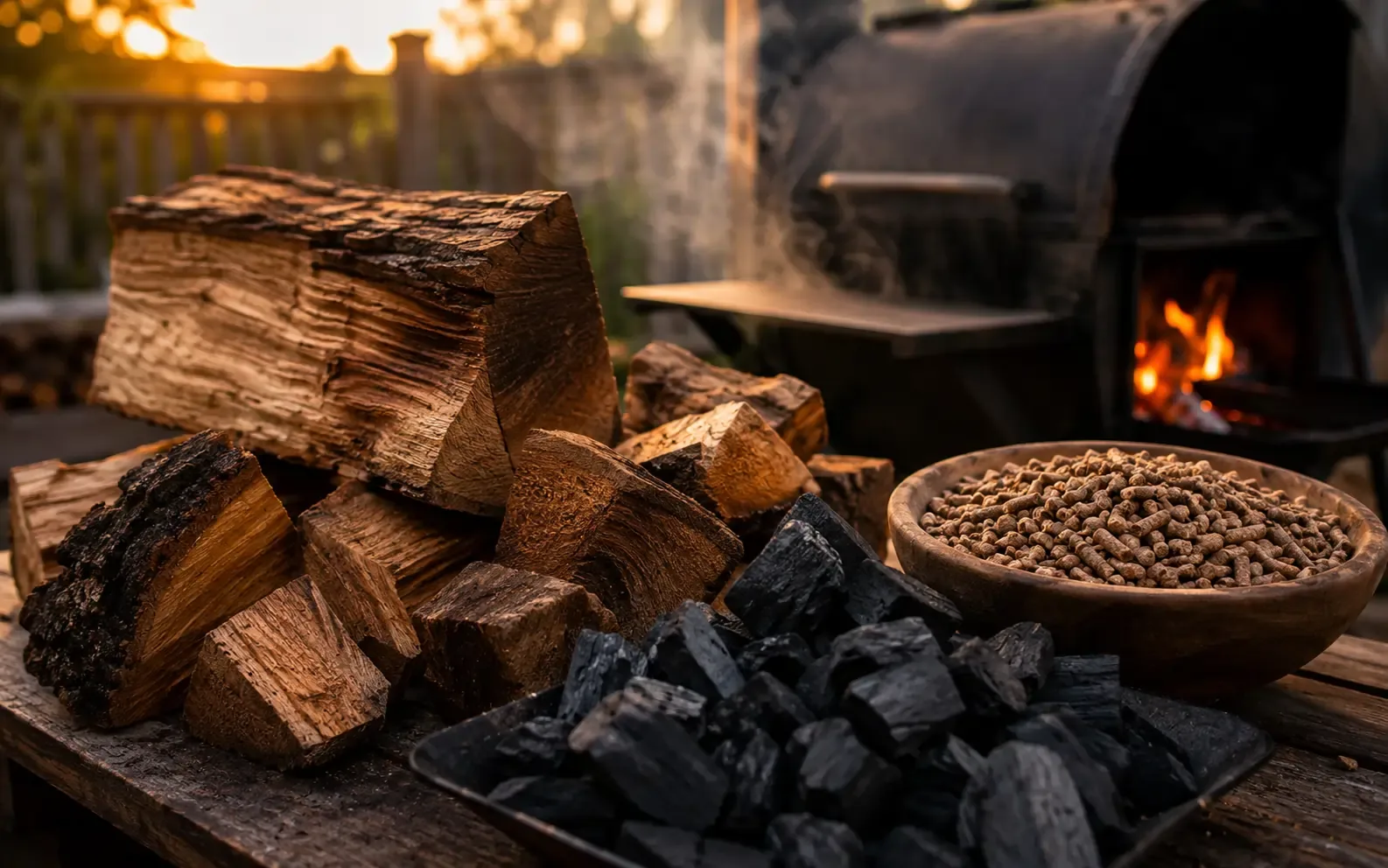
On a charcoal grill or bullet smoker, use dry chunks placed so they ignite progressively. Chips burn quickly and can create a short burst; follow the cooker manual rather than soaking by habit. In an offset, properly sized splits provide both heat and smoke, so species choices influence the whole fire. A clean oak base with a smaller fruit or hickory split can simplify control.
Pellet and electric smokers have approved fuel forms. Never put chips or chunks into a pellet hopper. Electric smokers may specify a chip tray and maximum amount; overloading it can smolder fuel without improving flavor. The correct form and airflow come before species. Manufacturer instructions override generic advice.
Control wood dose and exposure time
Record wood by mass when possible, or at least by chunk dimensions and count. Put a note beside total cook time and the period when smoke fuel was actively burning. Chicken does not need visible smoke for the entire cook. Once the surface has taken color and aroma, clean heat can finish the thighs. Wrapping is rarely needed for ordinary thighs and can soften the skin.
If you cook at a low chamber temperature for a long period, reduce strong-wood dose. If you cook hotter and faster, the shorter exposure may tolerate a bolder accent. Do not compensate for weak airflow by adding more wood. Correct the fire, then evaluate flavor.
Account for rub, sauce, and skin
Sweet rubs and thick barbecue sauce can amplify darkening and hide subtle fruit wood. Chile, cumin, black pepper, and savory rubs can carry oak, pecan, or restrained hickory. Sauce should usually go on late so its sugar does not scorch and so you can judge the smoked surface first. If you want to compare woods, taste an unsauced piece before glazing.
Wood choice does not create crisp skin. Rubbery skin is mainly a heat, surface moisture, and rendering problem. Dry the skin, avoid excessive low-temperature time, and use an appropriate hotter finish if needed. Keep that variable separate from smoke strength so a skin fix is not misread as a flavor result.
Run a useful thigh comparison at home
Buy thighs of similar size from the same package. Apply the same measured salt and seasoning. Cook on the same device with the same chamber target, changing only the wood species or blend. If the cooker has hot spots, rotate positions or use separate repeated cooks and document weather. Keep sauce off until after tasting.
Label samples neutrally and ask tasters to score smoke intensity, bitterness, balance with chicken, and preference. Record the number of tasters and whether samples were served blind. One small batch is a household observation, not proof for every cook. Repeat the winner against your baseline before adopting a permanent best claim.
Food safety is a separate checkpoint
Official U.S. guidance lists 165°F for poultry. Measure representative thighs in the thickest edible muscle without touching bone. Dark meat may be cooked beyond the minimum for texture, but that is a culinary choice, not a different safety rule. Smoke color, clear juices, skin crispness, and time in the smoker do not replace a thermometer.
Keep raw poultry cold, avoid washing it, separate raw and cooked utensils, and clean thermometer stems between uses. Wood provenance and clean combustion matter, but neither makes unsafe handling acceptable. If using a hot finishing grill, watch flare-ups from rendered fat and keep the food over controlled heat.
Wood-choice mistakes to avoid
The biggest mistakes are using unknown or treated wood, adding too much strong wood, restricting exhaust to trap smoke, and assuming a bag label describes a pure species. Another is choosing a mild wood, applying a heavy sauce, then declaring the wood useless. A third is trying to fix pale rubbery skin with more smoke instead of more appropriate heat and drying.
Begin with a mild or moderate baseline, record fuel amount, and make one change. If the smoke is weak, increase dose modestly. If it is harsh, inspect combustion and reduce exposure. A useful best wood is the one that fits your cooker, seasoning, and preferred intensity under a repeatable process.
Frequently asked questions
Is apple or cherry better for chicken thighs?
Both are mild starting points. Apple is often chosen for subtle smoke; cherry may contribute a stronger color association. Compare them with the same seasoning and dose.
Can I use hickory for smoked chicken thighs?
Yes, but start lightly or blend it with oak or fruit wood. Thighs can collect a strong smoke profile during a long cook.
Is mesquite too strong for chicken?
It can be if used heavily or for a long exposure. Use a small amount, blend it, or reserve it for a shorter hot cook with clean combustion.
How many wood chunks should I use?
There is no universal count because chunk size, species, cooker, and airflow differ. Start with a modest measured dose and record the result.
Do wood pellets taste the same as splits?
Not necessarily. Pellets are compressed and may be blends, while splits burn as part of an offset fire. Fuel form and combustion change the experience.
Does smoking wood make chicken skin crispy?
No. Crispness depends mainly on surface dryness, rendering, and sufficient heat. Smoke can add flavor and color but does not replace a hot finish.
What wood works with barbecue-sauced thighs?
Apple, cherry, pecan, or oak can leave room for sauce. With bold peppery sauce, restrained hickory may fit. Taste before glazing when comparing.
What internal temperature is safe for chicken thighs?
Current U.S. consumer guidance lists 165°F for poultry. Measure the thickest edible muscle away from bone and treat higher texture targets separately.
Evidence, methodology, and limitations
Evidence status: Research-backed; not hands-on tested
This guide combines established clean-fuel guidance, the governed smoking-wood hub, conventional poultry pairings, and recurring community concerns about bitter smoke, rubbery skin, heavy sauce, and too many chunks. Community material was synthesized without quotations or identities and was not treated as sensory evidence. No matched thigh batches or blind tasting were performed.
Limitations: Flavor preference is subjective, and packages may contain species blends. Wood moisture, fuel mass, thigh size, skin condition, cooker airflow, charcoal, rub, sauce, and smoke time can change the result. Because no comparative cook exists, the page remains a decision framework rather than a validated ranking. Food safety and skin texture are separate from wood choice. Repeatable comparison is still required.
Sources and review boundary
Official sources govern food safety, fire safety, and manufacturer-specific operation. Community discussions informed the recurring questions addressed here but are not proof that a technique works. Check the manual for your cooker and thermometer before use.