Research-backed backyard BBQ guide
Best Wood for Smoked Turkey Breast: Start Mild
This guide compares smoke intensity, food-safe fuel choices, and practical wood pairings so you can season smoked turkey breast without overpowering it.
Quick navigation
What this guide covers
- Decision checklist
- Why turkey breast needs restraint
- Apple and cherry: forgiving fruitwoods
- Pecan, maple, and oak: middle ground
- When hickory or mesquite is too much
- Match wood to cooker and seasoning
- Turn a general wood recommendation into your own answer
- Before relying on this guide
- Official safety guidance vs. barbecue texture
- What community questions add—and what they do not
Quick answer
Decision checklist
Concise answer: Apple, cherry, pecan, and maple are forgiving starting woods for smoked turkey breast because their smoke is generally described as mild to medium. Oak is a neutral step stronger; use hickory more sparingly. The “best” choice depends on pellet composition, wood quantity, cooker airflow, brine, skin, and seasoning. Start with less smoke, keep combustion clean, and record what you used.
- Apple: mild and easy to pair with savory or lightly sweet rubs.
- Cherry: mild-to-medium profile and often chosen when a darker exterior is welcome; color is not proof of doneness.
- Pecan: rounder and somewhat stronger than fruitwood without jumping straight to hickory.
- Maple: restrained choice for herb, butter, or lightly sweet profiles.
- Oak: balanced baseline or blending wood; hickory: stronger accent, especially on a small breast.
Why turkey breast needs restraint
Turkey breast is lean, relatively mild, and often smaller than a whole bird. That leaves less mass and less cooking time to absorb smoke before the meat reaches its safety endpoint. A wood load that tastes balanced on pork shoulder can dominate turkey breast. Skin, bone, brining, rub, cooker airflow, and whether the breast is tied or spread out all change the surface exposed to smoke.
“Best” therefore means best fit for the meal, not a scientifically ranked winner. Mild wood gives a beginner room to learn. Clean smoke at a modest dose is more useful than a cloud of smoldering wood. If you cannot identify the tree species or the wood is painted, treated, moldy, contaminated, or resinous softwood, do not cook with it. Use cooking fuel of known provenance and only in the form approved for the cooker.
Apple and cherry: forgiving fruitwoods
Apple is a practical default when the rub contains herbs, pepper, citrus, or modest sweetness. Its reputation is mild, but “mild” does not mean impossible to overuse. Multiple chunks in a small sealed cooker can still create a heavy flavor. Cherry occupies similar territory with a somewhat richer profile. Cooks often choose it when they want a deeper exterior color, but color depends on seasoning, surface moisture, heat, and smoke chemistry; it cannot confirm safety or smoke quality.
Fruitwood names on pellet bags do not always mean the bag is made from that species alone. Some products use a base hardwood plus flavor wood. Read the label and compare like with like. If moving from pellets to chunks, do not assume the same volume creates the same smoke dose. Fuel form, controller cycle, and airflow are part of the result.
Pecan, maple, and oak: middle ground
Pecan is commonly treated as a medium choice: fuller than apple but usually less assertive than hickory. It can suit pepper-forward rubs, Thanksgiving herbs, or a light glaze. Maple is a restrained alternative that makes sense when the rest of the plate is subtle. Oak is useful when you want a steady baseline or need a clean-burning structural fuel in an offset; it can also blend with a smaller amount of fruitwood.
Blending is not automatically better. A beginner learns more by cooking once with one clearly labeled wood and recording the dose. On the next cook, add a small portion of a second wood if a specific change is desired. Without a side-by-side tasting, statements such as “cherry is sweeter than apple” are editorial conventions and reported impressions, not measured facts.
When hickory or mesquite is too much
Hickory can work with turkey, especially for diners who expect a traditional robust smoke note, but the margin for error narrows on a small breast. Use less than you would for beef or pork and stop adding wood once the surface has taken the profile you want. Mesquite is more assertive still; it is rarely the most forgiving first choice for lean poultry. That is a flavor recommendation, not a safety judgment.
A bitter result is not always “the wrong species.” Smoldering fuel, restricted exhaust, damp wood, too much fuel, or grease combustion can create harshness with any species. Solve combustion before buying another bag. Thin, nearly invisible smoke can still add flavor; billowing white smoke is not the goal.
Match wood to cooker and seasoning
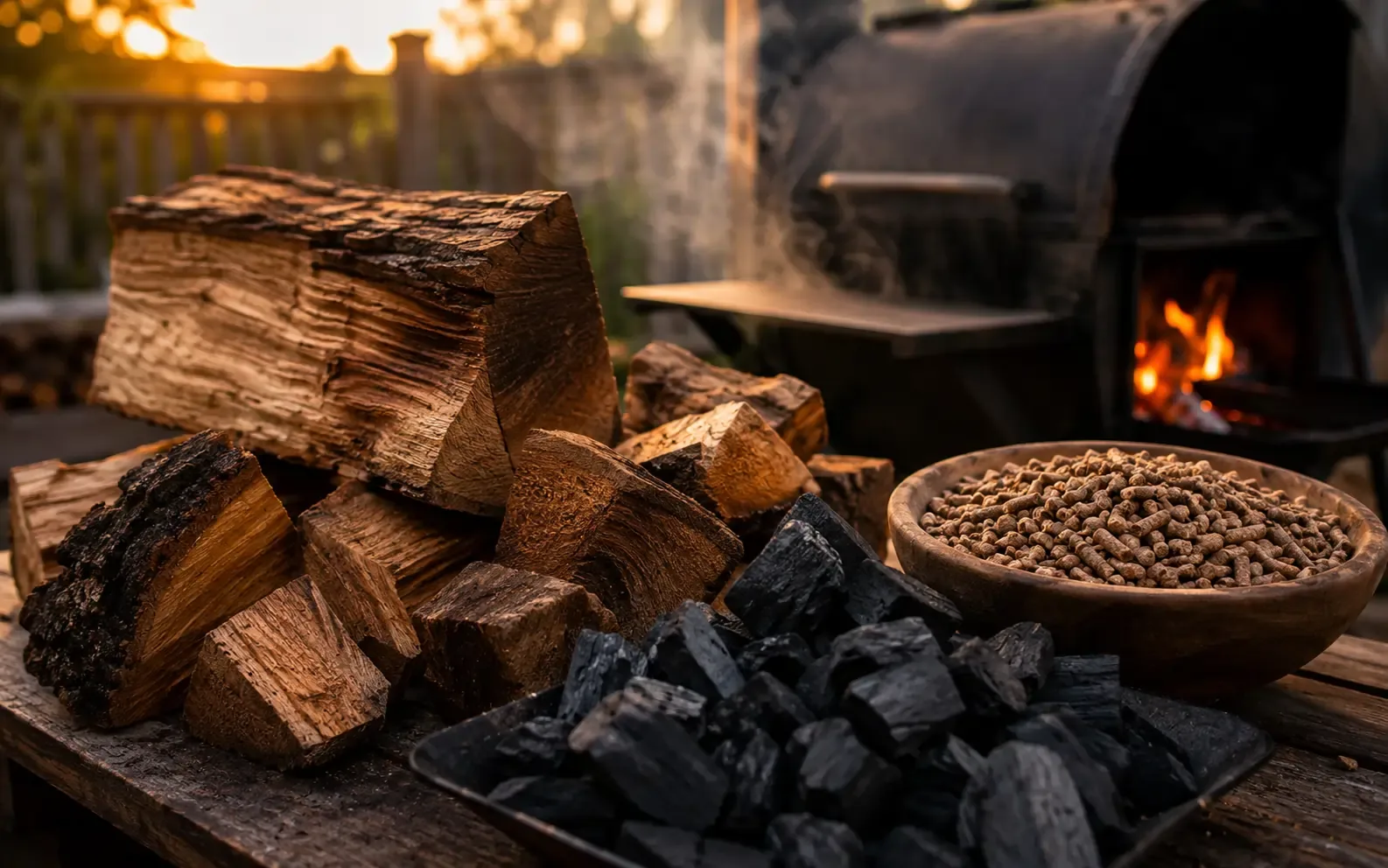
A pellet grill meters compressed fuel for both heat and smoke, so the species label, blend composition, temperature setting, and controller behavior interact. A charcoal cooker normally uses a few chunks as flavor fuel. An offset may burn splits as the main heat source and requires seasoned wood sized for the firebox. An electric smoker may specify chips. Follow the manual rather than forcing a preferred fuel form into the appliance.
Pairing also works backward from the seasoning. Apple or maple stays out of the way of sage, thyme, citrus, and butter. Cherry can support a paprika-forward exterior. Pecan or restrained oak can stand beside pepper, garlic, or a savory gravy. Strong sauce can tolerate a little more smoke, but smoke should not be used to hide an overcooked breast. Moisture depends primarily on meat handling and endpoint, not wood species.
Turn a general wood recommendation into your own answer
Run a small comparison before calling any wood your winner. Use matched portions from the same package, the same salt or brine, the same surface-drying time, and the same cooker position. Change only the wood species or blend. Weigh or count the fuel consistently, note whether it is pellets, chunks, chips, or splits, and record the label exactly. If two samples cannot cook at the same time without sharing smoke, use repeat cooks and disclose that weather and fuel cycles were not identical.
Judge the samples after the same rest and at the same serving temperature. Use a simple rubric: smoke intensity, harshness, whether the meat or fish remains recognizable, fit with the seasoning, and overall preference. Identify how many people tasted and whether they knew which sample was which. A two-person backyard tasting can guide the next family cook, but it is not a universal ranking. Keep the losing result and limitations in the notes rather than rewriting the experiment as a clean success.
Also log combustion. Record cooker, setpoint and grate temperature, ambient conditions, fuel age and storage, exhaust behavior, and when smoke was added. If one sample receives dirty smoke, the comparison is about combustion as much as species. Repeat the useful pair before making a strong public claim. Until those records exist, this guide deliberately uses “starting point,” “mild,” and “stronger” rather than “tested best.”
Before relying on this guide
Confirm the variables this research cannot see. Read the manual for the exact cooker and accessory, inspect the food label and cut, verify that fuel is intended for cooking, and check the thermometer before the cook. Build extra schedule margin so a late finish does not force a higher temperature, premature pull, unsafe hold, or skipped rest. Keep raw-food tools separate from serving tools and prepare a clean tray before the food leaves the cooker.
During the cook, treat a surprising smell, error code, flameout, grease fire, prolonged temperature loss, or uncertain food handling as a stop-and-assess event—not content for a clever workaround. Manufacturer instructions govern the appliance; current official guidance governs safety. This article can organize decisions, but it cannot inspect your equipment or food.
For editorial release, a human reviewer should verify the official source on the review date, identify who takes responsibility for the article, and add only real evidence. If a cook log is later added, it must name the cooker, fuel, food, conditions, measurements, result, and limitations. Keep this research label unless that complete evidence record is reviewed. An attractive illustration or a successful-looking final photo does not upgrade the evidence level.
Official safety guidance vs. barbecue texture
Official safety: USDA lists 165°F for all poultry, including turkey breast. Measure the thickest part without touching bone. Wood choice affects aroma and color, not pathogen safety. A pink smoke ring or dark skin is not a doneness test.
Texture and preference: Texture cues, smoke strength, bark, flaking, and tenderness are quality decisions. They do not replace an official safe minimum, clean handling, or a calibrated thermometer.
What community questions add—and what they do not
Public cooking discussions often ask whether hickory will overpower turkey, whether cherry “makes it pink,” and whether fruitwood pellets are really fruitwood. The useful synthesis is to start mild, read the fuel label, separate exterior color from doneness, and change one variable per cook. Community preference is not a controlled taste test.
Evidence status: Research-backed; not hands-on tested This article synthesizes official safety guidance, extension or manufacturer material where applicable, the governed live-site architecture, and recurring public community questions. No cook, taste test, equipment test, photograph, timing result, or flavor ranking was performed for this draft.
Frequently asked questions
Is apple or cherry better for turkey breast?
Neither is universally better. Apple is a restrained default; cherry is also mild and often chosen for a darker exterior. Pick based on seasoning and test one at a time.
Can I mix apple and hickory?
Yes, if your cooker allows both fuel forms. Keep hickory the smaller component for a first turkey-breast cook.
Is pecan too strong for turkey?
Usually it is treated as medium rather than very strong, but dose and combustion matter as much as the species name.
Can I use mesquite?
You can use food-grade mesquite sparingly, but its assertive profile makes it less forgiving for a small, lean turkey breast.
What pellets are best for turkey breast?
Choose food-grade cooking pellets with a clearly described blend. Apple, cherry, pecan, maple, or a mild competition-style blend are reasonable starting points.
Does cherry wood make turkey unsafe-looking pink?
Smoke can influence exterior color, but color cannot determine safety. Verify 165°F in the thickest part with a food thermometer.
How much wood should I use?
There is no cross-cooker amount. Follow the manual, start with a modest dose, and record fuel form, quantity, and cook duration.
Can I use wood from my yard?
Only if the species and treatment history are certain and it is appropriate, seasoned cooking wood. Avoid unknown, treated, painted, moldy, or contaminated wood.
Methodology and limitations
Methodology. We matched this page to one search intent in the approved Master Plan, checked it against the live governed URL inventory, reviewed the project’s non-Amazon audience synthesis, and used primary or official sources for safety and model-boundary claims. Community language was paraphrased at pattern level; no username, quote, or distinctive comment was copied.
Limitations. This is E0 research synthesis, not first-hand evidence. We did not run the procedure, compare woods, log a cooker, measure weather, calibrate a probe, photograph stages, or convene a tasting panel. Cooker model, food thickness, fuel composition, airflow, ambient conditions, and personal texture preference can change the result. Generated editorial art, if later assigned, must be labeled illustration and cannot serve as proof.
Sources
- USDA FSIS Safe Temperature Chart (checked 2026-08-01)
- USDA FSIS Smoking Meat and Poultry (checked 2026-08-01)
Access note: USDA/FSIS pages returned HTTP 403 to the automated research client on 2026-08-01; the official URLs are retained for human safety review before any CMS draft. The University of Alaska Fairbanks fish-smoking source returned HTTP 200 where used. Manufacturer material is model-specific operating guidance, not independent product testing.