Charcoal Grill Guide
Charcoal Grill Basics: Direct Heat, Indirect Heat, Vents, Coals & Smoke
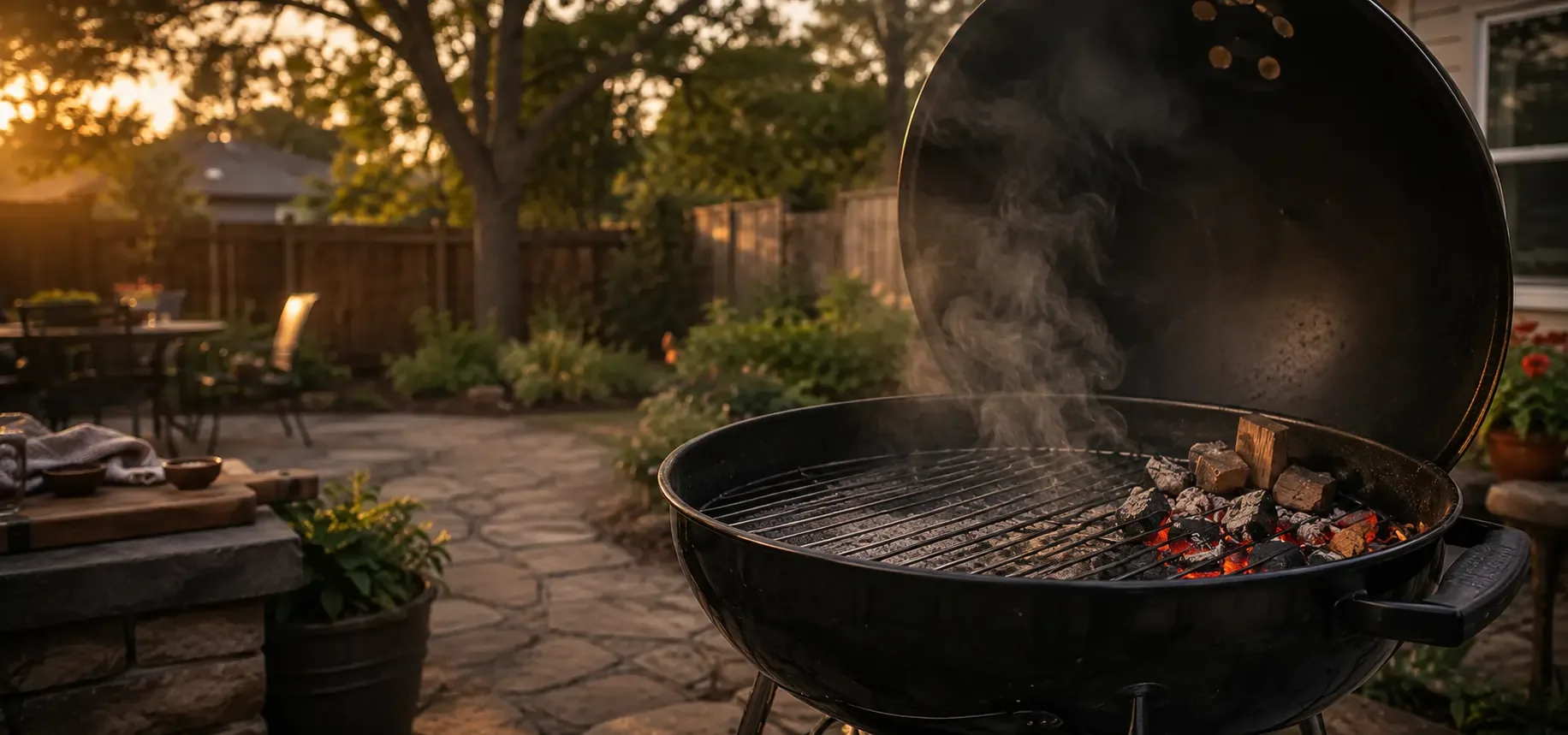
Charcoal grill basics are the foundation of backyard BBQ. Once you understand direct heat, indirect heat, airflow, vents, charcoal placement, wood chunks, and temperature control, a simple charcoal grill becomes much more powerful.
This charcoal grill basics guide explains how charcoal grills work, how to build a two-zone fire, how to use vents, how to control heat, when to add wood chunks, how to avoid dirty smoke, and how beginners can cook better BBQ without overcomplicating the process.
Quick navigation
What this charcoal grill guide covers
Quick answer
Charcoal grill basics in simple terms
A charcoal grill cooks with burning charcoal, airflow, and radiant heat. You control the grill by choosing where the coals go, how much charcoal you light, how open the vents are, whether the lid is on, and whether you cook over direct or indirect heat.
The fastest way to improve on a charcoal grill is to stop spreading hot coals everywhere. Build a two-zone fire with hot coals on one side and a cooler indirect zone on the other side.
The most important charcoal grill basics are simple: use enough airflow, keep the exhaust open, manage the bottom vent, build zones, avoid dirty smoke, and cook meat by internal temperature instead of guessing by time.
Charcoal grill basics
What is a charcoal grill?
A charcoal grill is an outdoor cooker that uses charcoal as the main fuel. Charcoal burns hotter and cleaner than raw wood when managed correctly, making it useful for grilling, searing, roasting, and low-and-slow BBQ.
The most common charcoal grill setup includes a lower charcoal area, a cooking grate, intake vents, exhaust vents, and a lid. The lid turns the grill into a more controlled cooking chamber instead of only an open-fire grill.
A charcoal grill can cook burgers, steaks, chicken wings, ribs, pork shoulder, vegetables, sausages, and even brisket-style cooks when set up for indirect heat.
How it works
How does a charcoal grill work?
A charcoal grill works by burning charcoal and controlling oxygen. More airflow usually makes the fire burn hotter. Less airflow usually slows the fire down. The lid, intake vents, exhaust vents, and charcoal arrangement all affect temperature.
- Charcoal provides heat. Lit coals create direct radiant heat and warm the cooking chamber.
- Airflow feeds the fire. Oxygen enters through the intake vents and exits through the exhaust vents.
- The lid traps heat. With the lid on, the grill can roast, smoke, and cook indirectly.
- Coal placement creates zones. Coals on one side create a hot zone and a cooler zone.
- Wood chunks add smoke. A small amount of hardwood can add BBQ flavor.
- Vent changes control temperature. Small changes can make a big difference after a few minutes.
Good charcoal cooking is mostly fire management. The food matters, but the grill becomes easier once the fire is stable and the smoke is clean.
Heat zones
Direct heat vs indirect heat on a charcoal grill
Direct heat means the food sits over the coals. Indirect heat means the food sits away from the coals while the lid traps heat and smoke around it.
| Heat type | How it works | Best for | What to watch |
|---|---|---|---|
| Direct heat | Food cooks directly over the coals | Burgers, steaks, hot dogs, quick vegetables, searing | Can burn food quickly if the fire is too hot |
| Indirect heat | Food cooks away from the coals with the lid closed | Chicken, ribs, pork shoulder, thicker cuts, smoking | Needs lid control, airflow, and more patience |
| Two-zone cooking | One hot side and one cooler side | Most backyard grilling and BBQ | Beginners often forget to move food between zones |
If you only cook directly over the coals, you have less control. Two-zone cooking gives you a safety zone where food can finish without burning.
Two-zone setup
How to set up a two-zone charcoal grill
A two-zone fire is one of the most useful charcoal grill basics. It gives you a hot side for searing and a cooler side for indirect cooking, resting, or finishing food more gently.
- Light the charcoal with a chimney starter or safe lighting method.
- Wait until the coals are partly ashed over and burning steadily.
- Pour the hot coals onto one side of the grill.
- Leave the other side mostly empty for indirect heat.
- Place the cooking grate back on the grill.
- Put the lid on and let the grill stabilize.
- Use the hot side for searing and the cool side for finishing.
The cool side is not wasted space. It is your control zone. When food flares, browns too fast, or needs more time, move it to the indirect side.
Airflow
How to use charcoal grill vents
Grill vents control airflow. The bottom vent usually controls how much oxygen feeds the fire. The top vent lets heat and smoke leave the grill. Together, they shape temperature and smoke movement.
| Vent setting | What it does | Best use | Beginner note |
|---|---|---|---|
| More open | More oxygen, hotter fire | Lighting, searing, recovering temperature | Can overshoot if left open too long |
| Partly closed | Less oxygen, slower fire | Low-and-slow BBQ or steady indirect cooking | Make small adjustments and wait |
| Fully closed | Starves the fire | Shutting down the grill | Can create dirty smoke if used during cooking |
In most cooks, avoid choking the exhaust vent completely. Smoke needs to move through the cooker. Trapped smoke can become stale and harsh.
Fuel choice
Lump charcoal vs briquettes
Lump charcoal and briquettes both work, but they behave differently. Lump charcoal is irregular and can burn hot. Briquettes are uniform and can be easier to manage for steady cooks.
| Charcoal type | How it behaves | Best for | What to watch |
|---|---|---|---|
| Lump charcoal | Lights fast and can burn hot | Searing, grilling, cooks where natural charcoal flavor matters | Piece size varies, so temperature can be less predictable |
| Briquettes | Uniform shape and steady burn | Longer cooks, two-zone cooking, beginner control | Some brands produce more ash than lump charcoal |
| Charcoal plus wood chunks | Charcoal provides heat, wood adds smoke | Ribs, chicken, pork shoulder, backyard BBQ | Too much wood can make smoke harsh |
For beginners, briquettes can be easier because they are consistent. Lump charcoal is useful when you want hotter, more responsive fire, but it may require more attention.
Smoke flavor
How to use wood chunks on a charcoal grill
Wood chunks add smoke flavor to a charcoal grill. Charcoal provides the main heat, and wood chunks provide smoke. You do not need a lot of wood to get BBQ flavor.
- Use dry cooking hardwood, not treated or painted wood.
- Start with one or two small chunks for most backyard cooks.
- Place wood near the lit coals so it smolders cleanly.
- Use fruit woods for milder smoke on chicken and pork.
- Use oak or hickory for stronger BBQ flavor.
- Avoid heavy white smoke before adding food.
More wood does not mean better BBQ. Clean smoke is better than thick, bitter smoke.
Temperature control
Charcoal grill temperature control
Charcoal grill temperature control comes from fuel amount, vent position, lid position, coal placement, and time. The grill will not respond instantly, so make small changes and wait before making more changes.
| Temperature goal | Setup | Best use | Control tip |
|---|---|---|---|
| High heat | More lit coals, vents open | Searing steaks, burgers, quick grilling | Use the indirect side if food browns too fast |
| Medium heat | Moderate coal bed, lid on or off depending on food | Chicken pieces, sausages, vegetables | Move food between direct and indirect zones |
| Low-and-slow | Small controlled fire, vents partly closed, lid on | Ribs, pork shoulder, longer BBQ cooks | Keep airflow steady and avoid constant lid opening |
If the grill is too hot, close the intake vent slightly and give it time. If the grill is too cool, open the intake vent, check fuel, and make sure ash is not blocking airflow.
Cooking process
Step-by-step charcoal grill workflow
A simple workflow helps beginners avoid most charcoal grill problems. The details change by food, but the basic system stays the same.
- Clean the grate. Start with a clean cooking surface.
- Light the charcoal. Use a chimney starter or safe lighting method.
- Build zones. Place coals on one side for direct and indirect cooking.
- Add wood if smoking. Use a small amount of hardwood for clean smoke.
- Preheat with the lid on. Let the grill stabilize before adding food.
- Cook with a plan. Use direct heat for searing and indirect heat for finishing.
- Control airflow. Adjust vents gradually instead of making extreme changes.
- Use a thermometer. Check internal temperature instead of guessing.
- Rest food when needed. Larger cuts and many meats improve after resting.
- Shut down safely. Close vents after cooking and let ash cool fully before disposal.
Cleaning
Charcoal grill cleaning and ash management
Ash management matters because ash can block airflow. If the fire cannot breathe, the grill becomes harder to control and the smoke can turn dirty.
- Clean the cooking grate before or after each cook.
- Remove old ash once it is fully cool.
- Do not let ash block the bottom vents.
- Check the charcoal grate for buildup.
- Keep grease from accumulating heavily inside the grill.
- Store charcoal dry so it lights and burns properly.
Never dispose of hot ash in plastic, paper, dry grass, or anything flammable. Let ash cool completely and handle it safely.
Common mistakes
Charcoal grill mistakes beginners make
Spreading coals everywhere
A full bed of coals gives you less control. A two-zone setup gives you a hot side and a safer indirect side.
Closing vents too much
Choking the fire can create dirty smoke and unstable heat. Make smaller vent changes and give the grill time to respond.
Adding too much wood
Too much wood can create bitter smoke. Start with less wood and focus on clean smoke instead of heavy smoke.
Cooking only by time
Time is only a guide. Use internal temperature, texture, color, and doneness cues to decide when food is ready.
Food safety source
Charcoal heat is not the same as food temperature
BackyardBBQGuide.com explains charcoal grill basics, airflow, vents, two-zone cooking, wood smoke, and fire control. For official safe minimum internal temperature guidance, use FoodSafety.gov.
External source: FoodSafety.gov safe minimum internal temperatures
FAQ
Charcoal grill basics questions
What are charcoal grill basics?
Charcoal grill basics include lighting charcoal, building direct and indirect heat zones, using vents, controlling airflow, adding wood chunks, managing ash, and cooking food by internal temperature.
How do you control temperature on a charcoal grill?
Control temperature with charcoal amount, vent position, lid position, coal placement, and time. Open vents usually make the fire hotter, while partly closed vents slow the fire down.
Should charcoal grill vents be open or closed?
Vents should usually stay open enough for the fire to breathe. The bottom vent controls oxygen to the fire, while the top vent helps heat and smoke move through the grill.
What is two-zone cooking on a charcoal grill?
Two-zone cooking means placing hot coals on one side of the grill and leaving the other side cooler. This gives you direct heat for searing and indirect heat for finishing food.
Is lump charcoal or briquettes better for beginners?
Briquettes are often easier for beginners because they are uniform and predictable. Lump charcoal can burn hotter and respond faster, but the pieces vary in size.
Can you smoke meat on a charcoal grill?
Yes. Use indirect heat, add a small amount of hardwood, control airflow, and cook with the lid on. A charcoal grill can smoke ribs, chicken, pork shoulder, and other BBQ foods.
How much wood should you add to a charcoal grill?
Start with one or two small wood chunks for most backyard cooks. Too much wood can create heavy, bitter smoke.
Why is my charcoal grill smoking too much?
Heavy smoke can come from wet wood, too much wood, poor airflow, grease burning, or a fire that is struggling. Use dry hardwood and keep airflow moving through the grill.
How do you shut down a charcoal grill?
After cooking, close the vents and let the coals and ash cool completely. Dispose of ash safely only when it is fully cold.
Related BBQ guides
Build the full charcoal BBQ system.
A charcoal grill becomes easier when heat zones, vents, charcoal, wood chunks, internal temperature, and clean smoke all work together.