Pellet Smoker Guide
Pellet Smoker Basics: Hopper, Auger, Fire Pot, Pellets & Temperature Control
Pellet smoker basics are easier to understand once you know how the cooker feeds pellets, burns fuel, moves air, controls temperature, and creates smoke. A pellet smoker can make backyard BBQ more convenient, but it still rewards good setup, clean pellets, proper temperature control, and smart cooking decisions.
This pellet smoker basics guide explains the hopper, auger, fire pot, controller, fan, drip tray, wood pellets, startup, shutdown, temperature swings, smoke flavor, cleaning, and the habits that help beginners cook better BBQ.
Quick navigation
What this pellet smoker guide covers
Quick answer
Pellet smoker basics in simple terms
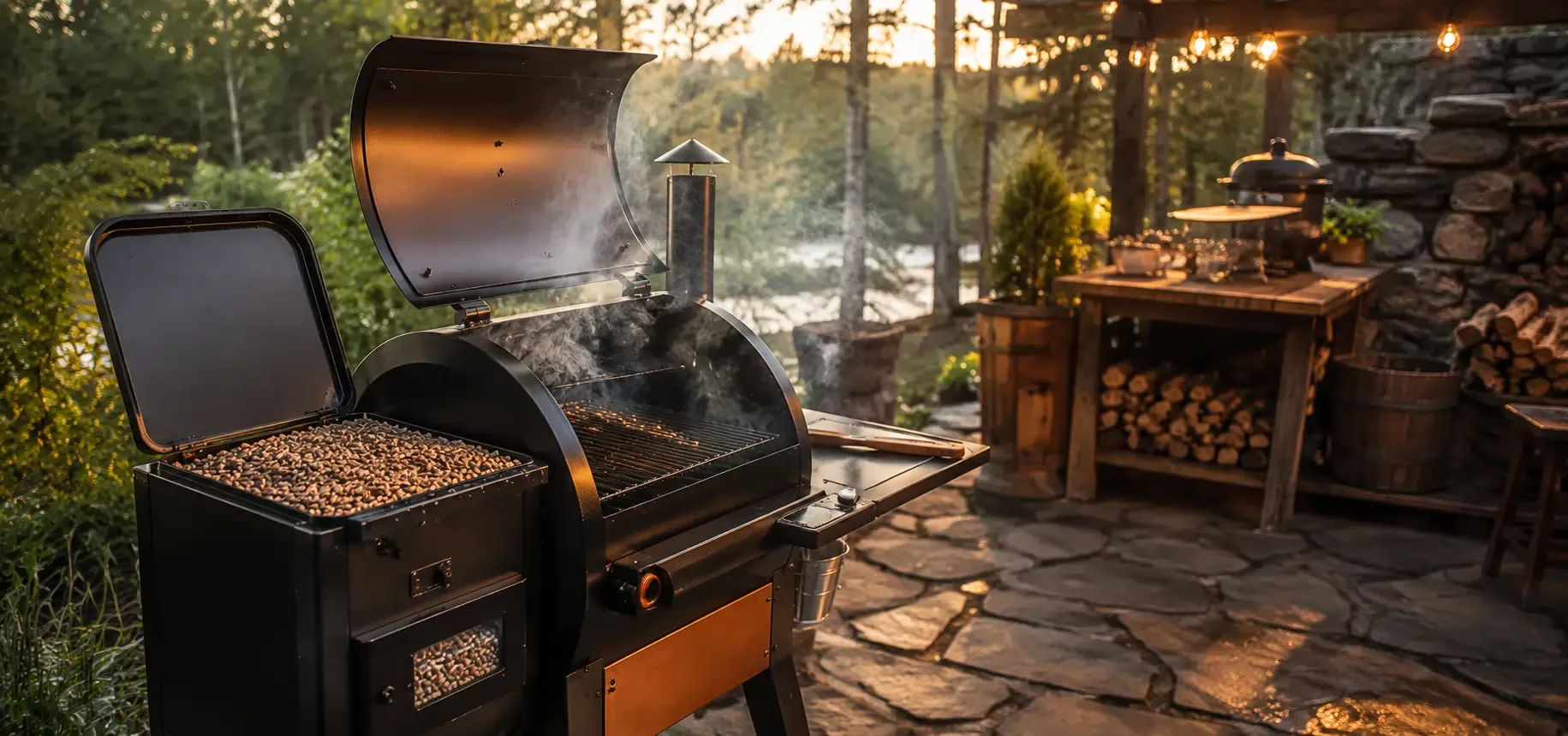
A pellet smoker burns compressed wood pellets to create heat and smoke. Pellets sit in a hopper, move through an auger, drop into a fire pot, ignite, and burn while a controller and fan help manage temperature.
A pellet smoker is convenient because it automates fuel feeding, but it is not magic. Pellet quality, probe placement, airflow, grease buildup, weather, lid openings, and cleaning still affect the final BBQ.
The easiest way to understand pellet smoker basics is to think of the cooker as a controlled wood-burning oven. It gives you steady heat and smoke, but you still need to cook by internal temperature, texture, smoke quality, and doneness cues.
Pellet smoker basics
What is a pellet smoker?
A pellet smoker is an outdoor cooker that uses wood pellets as fuel. It combines parts of a smoker, grill, convection oven, and wood-fired cooker. Instead of manually adding charcoal or logs, you fill a hopper with pellets and set a target temperature.
The cooker feeds pellets into a fire pot, where they burn and create heat plus smoke. A fan moves air through the cooker, and a controller adjusts pellet feeding to help maintain the temperature.
Pellet smokers are popular because they reduce the amount of manual fire management. They are useful for ribs, pulled pork, brisket, chicken wings, turkey, pork belly, burgers, and many backyard BBQ cooks.
How it works
How does a pellet smoker work?
A pellet smoker works by automatically moving pellets from the hopper to the fire pot. The controller reads temperature information and tells the auger and fan when to feed more fuel or adjust airflow.
- Pellets go into the hopper. This is the storage bin for the wood pellets.
- The auger moves pellets. The auger slowly feeds pellets toward the fire pot.
- The fire pot burns pellets. Pellets ignite and create heat and smoke.
- The fan moves air. Airflow helps the pellets burn and moves heat through the chamber.
- The controller manages temperature. It adjusts the feed cycle to stay near the target temperature.
- The drip system manages grease. Drip trays and grease channels help move fat away from the fire.
This system makes pellet smokers easier for beginners, but it also means the cooker depends on electricity, clean pellets, working sensors, and a reasonably clean fire pot.
Main parts
Pellet smoker parts beginners should understand
Learning the main parts makes pellet smoker basics much easier. When something goes wrong, the issue usually connects to fuel, airflow, temperature sensing, grease, or cleaning.
| Part | What it does | Why it matters | Common issue |
|---|---|---|---|
| Hopper | Stores wood pellets | Feeds the smoker during the cook | Wet pellets, dust, or running empty |
| Auger | Moves pellets from hopper to fire pot | Controls how much fuel reaches the fire | Pellet jams or poor fuel feed |
| Fire pot | Burns pellets | Creates heat and smoke | Ash buildup or failed ignition |
| Igniter | Starts the pellets burning | Helps startup happen automatically | Slow startup or no flame |
| Fan | Moves air through the fire and cooker | Supports combustion and heat movement | Poor airflow or uneven burning |
| Controller | Manages pellet feed and temperature | Helps hold the selected temperature | Temperature swings or bad readings |
| Temperature probe | Reads cooker temperature | Tells the controller what is happening | Grease, soot, or bad placement can affect readings |
| Drip tray | Moves grease away from the fire | Helps reduce flare-up and grease problems | Grease buildup or poor cleanup |
Startup
How to start a pellet smoker
Every pellet smoker model has its own startup instructions, so follow the manufacturer’s manual first. In general, the goal is to start with a clean fire pot, enough dry pellets, proper airflow, and time for the smoker to stabilize before adding food.
- Check that the pellet smoker is clean enough to run safely.
- Make sure the fire pot is not overloaded with ash.
- Fill the hopper with dry cooking pellets.
- Plug in the smoker and start the ignition cycle.
- Wait for the first startup smoke to clear.
- Set your target temperature.
- Let the cooker preheat and stabilize.
- Add food after the smoker is running steadily.
Do not load food the moment the smoker starts producing heavy startup smoke. Let the fire stabilize first so the smoke flavor is cleaner.
Temperature control
Pellet smoker temperature control
Pellet smokers are designed to hold a set temperature, but small swings are normal. The controller feeds pellets in cycles, the fan moves air, and the cooker reacts to weather, food load, lid openings, and pellet quality.
| Temperature range | Best use | What it does well | What to watch |
|---|---|---|---|
| 180°F–225°F | More smoke exposure | Slow cooking and smoke flavor | Longer cook times and softer bark development |
| 225°F–250°F | Low-and-slow BBQ | Ribs, pork shoulder, brisket-style cooks | May need time for bark and tenderness |
| 250°F–275°F | Balanced backyard BBQ | Good mix of smoke, bark, and speed | Watch lean cuts so they do not dry out |
| 300°F+ | Finishing and hotter cooks | Chicken skin, faster roasting, crisping | Less smoke flavor and faster drying risk |
Pellet smoker temperature control is easier when you stop chasing every small change. A cooker drifting a little above or below the target is usually normal. Large swings, flameouts, or repeated failure to recover usually point to fuel, airflow, cleaning, probe, or controller issues.
Wood pellets
Pellets and smoke flavor
Wood pellets are both the fuel and the smoke source in a pellet smoker. Pellet quality matters because dusty, wet, broken, or poor-quality pellets can affect burn consistency, smoke quality, and temperature stability.
Pellet flavor also matters. Oak is a balanced all-purpose choice. Hickory is stronger and classic for pork. Apple and cherry are milder for chicken, ribs, and pork. Pecan can give a richer, slightly nutty smoke.
| Pellet type | Smoke strength | Best use | Beginner note |
|---|---|---|---|
| Oak pellets | Medium | Beef, pork, ribs, all-purpose BBQ | A strong default choice |
| Hickory pellets | Medium to strong | Pork, ribs, bold BBQ flavor | Can become heavy if overused |
| Apple pellets | Mild | Chicken, pork, turkey | Good for lighter smoke flavor |
| Cherry pellets | Mild to medium | Chicken, ribs, pork, color | Useful for smooth smoke and warm color |
| Pellet blends | Varies | General backyard cooking | Easy option when you want balanced smoke |
Smoke profile
Do pellet smokers make enough smoke?
Pellet smokers usually create a cleaner and lighter smoke profile than some charcoal or offset smokers. That can be good for beginners because the smoke is less likely to become harsh, but some BBQ cooks want a stronger smoke flavor.
Lower pellet smoker temperatures often produce more visible smoke, while higher temperatures usually burn cleaner and create less smoke flavor. That is why some cooks start low for smoke exposure and then raise the temperature later for cooking speed or texture.
How to get better smoke flavor on a pellet smoker
- Use fresh, dry, good-quality pellets.
- Start at a lower temperature for part of the cook when appropriate.
- Avoid opening the lid too often.
- Keep the fire pot clean enough for good combustion.
- Use a wood flavor that matches the meat.
- Do not assume more smoke is always better.
Cooking process
Step-by-step pellet smoker workflow
A simple workflow helps beginners avoid most pellet smoker problems. The details change by recipe, but the basic system stays the same.
- Check pellets. Make sure they are dry and suitable for the food.
- Check the fire pot. Remove excess ash if needed.
- Start the smoker correctly. Follow the manufacturer’s startup process.
- Preheat fully. Let startup smoke clear and temperature stabilize.
- Add food. Place food with enough room for airflow.
- Use a thermometer. Track internal temperature instead of guessing.
- Avoid constant lid opening. Let the cooker recover and run steadily.
- Finish based on texture and temperature. Use doneness cues, not only time.
- Shut down properly. Follow the shutdown cycle and clean when cool.
Cleaning
Pellet smoker cleaning and maintenance basics
Pellet smokers need cleaning because ash, grease, soot, and pellet dust can affect performance. A dirty fire pot can make ignition harder. Grease buildup can create safety problems. A dirty temperature probe can affect readings.
- Vacuum ash from the fire pot when the smoker is fully cool.
- Clean grease from drip trays and channels.
- Empty or check the grease bucket regularly.
- Wipe the internal temperature probe carefully when needed.
- Keep pellets dry and protected from moisture.
- Inspect the hopper for pellet dust or swelling pellets.
Moisture is the enemy of pellets. Wet pellets can swell, crumble, jam the auger, and burn poorly.
Common mistakes
Pellet smoker mistakes beginners make
Using wet pellets
Wet pellets can swell, crumble, jam, and burn poorly. Keep pellets sealed, dry, and away from humidity.
Not cleaning the fire pot
Too much ash can cause ignition problems, poor combustion, temperature swings, or flameouts.
Opening the lid too often
A pellet smoker can recover temperature, but constant lid opening makes the controller work harder and can extend the cook.
Cooking only by time
Pellet smokers make cooking convenient, but meat is still done by internal temperature, tenderness, texture, and rest.
Food safety source
Pellet smoker temperature is not the same as food temperature
BackyardBBQGuide.com explains pellet smoker basics, temperature control, pellets, clean smoke, startup, and cleaning. For official safe minimum internal temperature guidance, use FoodSafety.gov.
External source: FoodSafety.gov safe minimum internal temperatures
FAQ
Pellet smoker basics questions
What are pellet smoker basics?
Pellet smoker basics include understanding the hopper, auger, fire pot, fan, controller, pellets, temperature swings, startup process, cleaning, and how to use internal temperature when cooking meat.
How does a pellet smoker work?
A pellet smoker feeds wood pellets from a hopper through an auger into a fire pot. Pellets burn to create heat and smoke while a controller and fan help manage temperature.
Are pellet smokers good for beginners?
Pellet smokers are beginner-friendly because they automate fuel feeding and temperature control. Beginners still need to learn food temperature, smoke flavor, cleaning, and basic BBQ technique.
Do pellet smokers make enough smoke?
Pellet smokers usually create cleaner, lighter smoke than some charcoal or offset smokers. Use good pellets, lower smoke-stage temperatures when useful, and clean fire management for better flavor.
Why does my pellet smoker temperature swing?
Pellet smoker temperature can swing because of pellet feed cycles, wind, cold weather, lid openings, dirty fire pots, poor pellets, or probe issues. Small swings are normal.
What pellets should beginners use?
Oak or a balanced pellet blend is a good beginner choice. Apple and cherry are milder for poultry and pork, while hickory is stronger and more classic for bold BBQ flavor.
Can you grill on a pellet smoker?
Some pellet smokers can grill better than others, especially models with direct-flame access or higher temperature settings. Many pellet smokers are strongest as smokers and outdoor convection cookers.
How often should you clean a pellet smoker?
Cleaning frequency depends on how often you cook and what you cook. Keep the fire pot, grease system, drip tray, and temperature probe clean enough for safe and stable operation.
Do pellet smokers need electricity?
Yes. Pellet smokers usually need electricity to power the controller, auger, igniter, and fan.
Related BBQ guides
Build the full pellet smoker system.
Pellet smokers become easier when pellets, airflow, temperature control, cleaning, internal meat temperature, and smoke flavor all work together.