Smoked Salmon Guide
Why Is My Smoked Salmon Dry? Diagnose and Fix It
Smoked salmon gets dry when heat, time, salt, surface drying, and internal temperature are not working together. The fix is not just adding more glaze. Dry smoked salmon usually comes from smoking too hot, cooking too long, skipping brine, skipping the pellicle stage, or reheating it badly.
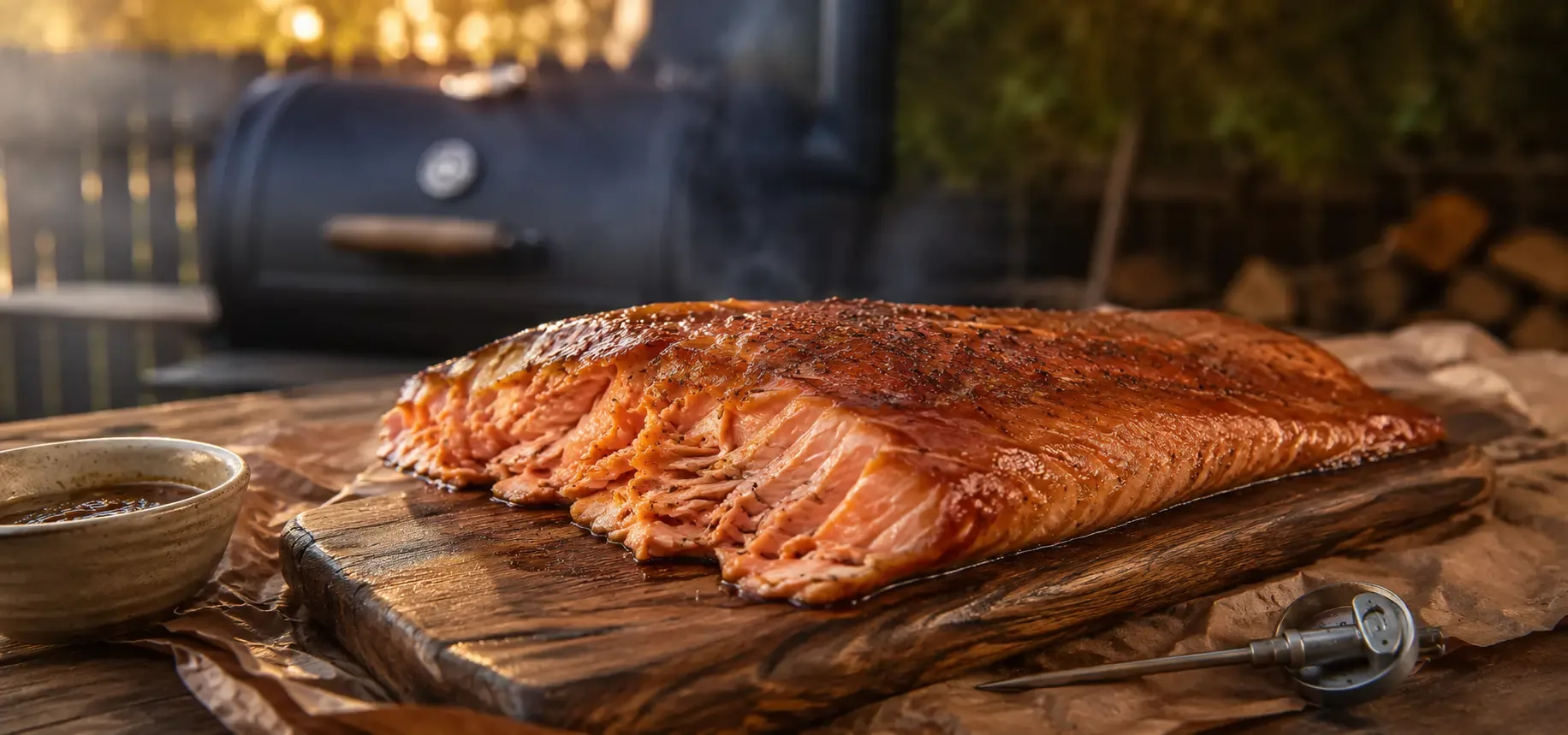
This guide explains why smoked salmon gets dry and how to keep smoked salmon moist with better brining, proper surface drying, lower smoker heat, internal temperature control, careful resting, and smarter reheating.
Quick navigation
What this dry smoked salmon guide covers
Quick answer
Why Is My Smoked Salmon Dry? Quick Answer
If your hot-smoked salmon is dry or chalky, the most likely cause is too much heat or too much cooking time; thin sections and high-heat reheating can make it worse. Lost moisture cannot be fully restored, but you can flake the salmon into a moist dish or serve it with a sauce.
Next time, start with an even fillet, follow the brining time and proportions of a tested method, dry the surface until tacky, keep the smoker temperature steady, and check the thickest part early with a food thermometer. FoodSafety.gov lists 145°F for fish, or cooking until the flesh is no longer translucent and separates easily with a fork.
This troubleshooting guide covers hot-smoked salmon. For the complete cooking method, use the full hot-smoked salmon recipe.
Salmon texture
Why smoked salmon dries out so easily
Smoked salmon dries out easily because fish has a delicate structure and loses moisture quickly when exposed to too much heat. A thick brisket can handle hours of smoke, stall behavior, and long resting. Salmon cannot. It needs a lighter touch.
Dry smoked salmon usually comes from stacking several small mistakes: no brine, weak surface drying, smoker heat that runs too high, cooking by time instead of temperature, slicing too early, or reheating leftovers uncovered.
If your smoked salmon is dry, the problem is usually not one tiny detail. It is usually heat, time, salt, surface drying, and carryover cooking working against you.
Heat control
Do not smoke salmon too hot
One of the fastest ways to make smoked salmon dry is running the smoker too hot. High heat can push the fish past its best texture before the smoke flavor has time to develop.
Hot-smoked salmon still uses heat, but the cook needs control. If your smoker runs high or swings aggressively, the outside can firm up while the inside moves quickly toward a dry, flaky texture.
| Smoker behavior | Effect on salmon | Best move | What to watch |
|---|---|---|---|
| Very low and controlled | Gentler cook | Good for delicate texture | Food safety and total time still matter |
| Moderate steady heat | Balanced smoke and cooking | Useful for backyard hot-smoked salmon | Monitor internal temperature closely |
| High heat | Faster drying risk | Use only with close monitoring | Fish can overcook quickly |
| Temperature swings | Uneven texture | Stabilize airflow and fuel | Thin edges may dry first |
Moisture prep
Use brine or dry brine before smoking salmon
Brining helps smoked salmon hold seasoning and moisture. A wet brine or dry brine gives salt time to work before the fish goes into the smoker. That salt time helps reduce bland, dry, uneven results.
Dry brine smoked salmon
A dry brine uses salt, often with sugar or spices, directly on the salmon. It is simple, clean, and good when you want a firmer surface before smoking.
Wet brine smoked salmon
A wet brine uses saltwater with optional sugar, herbs, or aromatics. It can season evenly, but the salmon must stay cold and food-safe during the brine.
Brine is not a shield against overcooking. It helps, but smoked salmon can still turn dry if the smoker runs too hot or the fish cooks too long.
Surface drying
Let the salmon dry and form a pellicle
After brining, salmon should be dried before smoking. This helps form a tacky surface called a pellicle. The pellicle helps smoke adhere better and supports a better final texture.
If salmon goes into the smoker wet, surface moisture has to evaporate first. That can interfere with smoke adhesion and lead to uneven texture. The result can feel wet in some places and dry in others.
How to build a better pellicle
- Remove the salmon from the brine.
- Pat the surface dry gently.
- Place the salmon on a rack.
- Let the surface air-dry in the refrigerator until tacky.
- Keep the salmon cold while drying.
- Move it to the smoker once the surface is no longer wet.
Do not confuse a wet shiny surface with moisture protection. For smoked salmon, a tacky dried surface usually works better than a wet surface.
Internal temperature
Watch smoked salmon internal temperature, not just time
Time is only a rough estimate for smoked salmon. Fillet thickness, smoker behavior, starting temperature, fat content, airflow, and cut size all change the cook. Internal temperature gives you a better signal than the clock.
For food safety, official guidance lists fish and seafood at 145°F internal temperature, or until the flesh is opaque and separates easily with a fork. For texture, many cooks prefer to avoid pushing salmon far beyond its best eating point, because the fish can become firm and dry quickly.
| Internal temperature zone | Texture trend | Moisture risk | Best practice |
|---|---|---|---|
| Below safe guidance | May be underdone depending on method | Safety concern | Use official guidance and a thermometer |
| Around 145°F | Firm, fully cooked fish | Can be drier if pushed longer | Safe minimum reference for fish |
| Above 145°F | Progressively firmer and drier | Higher dry texture risk | Avoid overshooting when moisture matters |
Do not sell texture preferences as universal safety rules. Use official fish temperature guidance for safety, then manage heat and time to avoid drying the salmon out.
Fish selection
Choose the right salmon thickness and cut
Thin salmon pieces dry faster than thick, even fillets. If one end of the salmon is much thinner than the other, the thin edge can become dry before the thicker center reaches the texture you want.
Better for smoking
Thicker, even salmon pieces are easier to smoke without drying out. They give you more time to build flavor and control internal temperature.
Higher dry risk
Very thin tail pieces, uneven fillets, and small cuts can dry quickly. Use gentler heat and check them earlier.
If your smoked salmon keeps coming out dry, the cut may be part of the problem. Fixing technique helps, but starting with a better-shaped piece makes the cook easier.
After cooking
How to fix dry smoked salmon after cooking
You cannot fully reverse overcooked salmon, but you can make dry smoked salmon easier to eat. The goal is to add moisture, fat, acid, or sauce without pretending the texture will become fresh again.
Add fat
Use cream cheese, sour cream, olive oil, butter, mayo, or a rich sauce to make dry salmon feel less harsh.
Add acid
Lemon juice, pickles, capers, vinegar-based sauce, or a bright salad can balance dry, smoky fish.
Use it in another dish
Flake dry smoked salmon into pasta, rice bowls, dips, salads, omelets, tacos, or spreads where moisture comes from other ingredients.
Avoid more dry heat
Do not try to fix dry salmon by blasting it with more heat. That usually makes the texture worse.
Leftovers
How to reheat smoked salmon without drying it out
To reheat smoked salmon without drying it out, use gentle heat and add moisture or fat if needed. High dry heat can push the fish from slightly firm to chalky fast.
Gentle covered reheating
Reheat salmon gently in a covered dish with a small amount of butter, olive oil, broth, or sauce. Stop as soon as it is warm enough.
Serve cold or room temperature
Smoked salmon often works well cold or gently warmed. If it is already dry, avoiding extra heat can be the better move.
Leftover smoked salmon is usually better in moist dishes than reheated plain. Use it where sauces, spreads, eggs, rice, or pasta can help the texture.
Common mistakes
Common mistakes that make smoked salmon dry
Skipping the brine
Salmon can smoke without brine, but skipping salt time gives you less moisture and texture insurance.
Smoking too hot
High smoker heat can dry salmon before smoke flavor develops properly.
Skipping the pellicle
Wet salmon does not smoke as cleanly. A tacky surface helps smoke adhesion and texture.
Cooking by time only
Time is not enough. Salmon thickness, smoker temperature, airflow, and starting temperature all matter.
Using thin pieces
Thin tail pieces and uneven cuts dry faster than thick, even fillets.
Reheating uncovered
High dry reheating makes leftover smoked salmon even drier.
7-step method
7 easy steps to prevent dry smoked salmon
Use this simple workflow when you want smoked salmon that stays moist instead of chalky or tough.
- Start with an even salmon fillet. Thicker, even pieces are easier to control.
- Use a brine or dry brine. Give salt time to season and support moisture.
- Dry the surface. Let the salmon form a tacky pellicle before smoking.
- Stabilize the smoker. Avoid harsh heat and big temperature swings.
- Monitor internal temperature. Do not rely only on time.
- Stop before the salmon gets chalky. Avoid pushing the fish far past its best texture.
- Reheat gently if needed. Use moisture, fat, or serve it cold in another dish.
This 7-step method helps you prevent smoked salmon from drying out without turning the cook into a science project.
Food safety source
Use official fish temperature guidance
BackyardBBQGuide.com explains BBQ technique, smoke flavor, brining, pellicle formation, texture, resting, and reheating. For official safe minimum internal temperature guidance, use FoodSafety.gov and FDA food safety guidance.
External sources: FoodSafety.gov fish and shellfish safety and FDA safe food handling
FAQ
Dry smoked salmon questions
Why is my smoked salmon dry?
Smoked salmon usually gets dry because it was smoked too hot, cooked too long, not brined, not dried into a pellicle, sliced too thin, or reheated with high dry heat.
How do you keep smoked salmon moist?
Use a brine or dry brine, let the salmon form a pellicle, smoke with controlled heat, monitor internal temperature, and avoid reheating with high dry heat.
Can you overcook smoked salmon?
Yes. Salmon overcooks quickly compared with large BBQ cuts. Once it goes too far, the texture can become firm, dry, chalky, or crumbly.
Does brining keep smoked salmon moist?
Brining helps smoked salmon hold seasoning and moisture, but it does not prevent dryness if the fish is cooked too hot or too long.
Should smoked salmon form a pellicle?
Yes. A tacky pellicle helps smoke adhere to the salmon and supports better texture. Wet salmon usually smokes less evenly.
What internal temperature should smoked salmon be?
For safety, official guidance lists fish at 145°F internal temperature or until the flesh is opaque and separates easily with a fork. Use a food thermometer when possible.
Can you fix dry smoked salmon?
You cannot fully reverse overcooked salmon, but you can make it better by adding fat, acid, sauce, or using it in moist dishes like dips, pasta, rice bowls, salads, or spreads.
How do you reheat smoked salmon without drying it out?
Reheat smoked salmon gently in a covered dish with a small amount of butter, olive oil, broth, or sauce. Avoid high dry heat, especially with thin pieces.
Is dry smoked salmon safe to eat?
Dry texture alone does not prove smoked salmon is unsafe, but safety depends on handling, storage, and proper cooking. Use official seafood safety guidance and discard fish that smells spoiled or was stored improperly.
Related BBQ guides
Build the full smoked salmon system.
Smoked salmon stays better when brining, surface drying, smoker temperature, internal temperature, wood choice, resting, and reheating all work together.