Charcoal Grill Guide
How to Control Temperature on a Charcoal Grill: 7 Easy Fixes
Charcoal grill temperature control starts with airflow. If you understand how oxygen, vents, lid position, charcoal amount, and heat zones work together, you can raise heat, lower heat, stabilize a two-zone fire, and stop chasing the temperature like the grill has a personal problem with you.
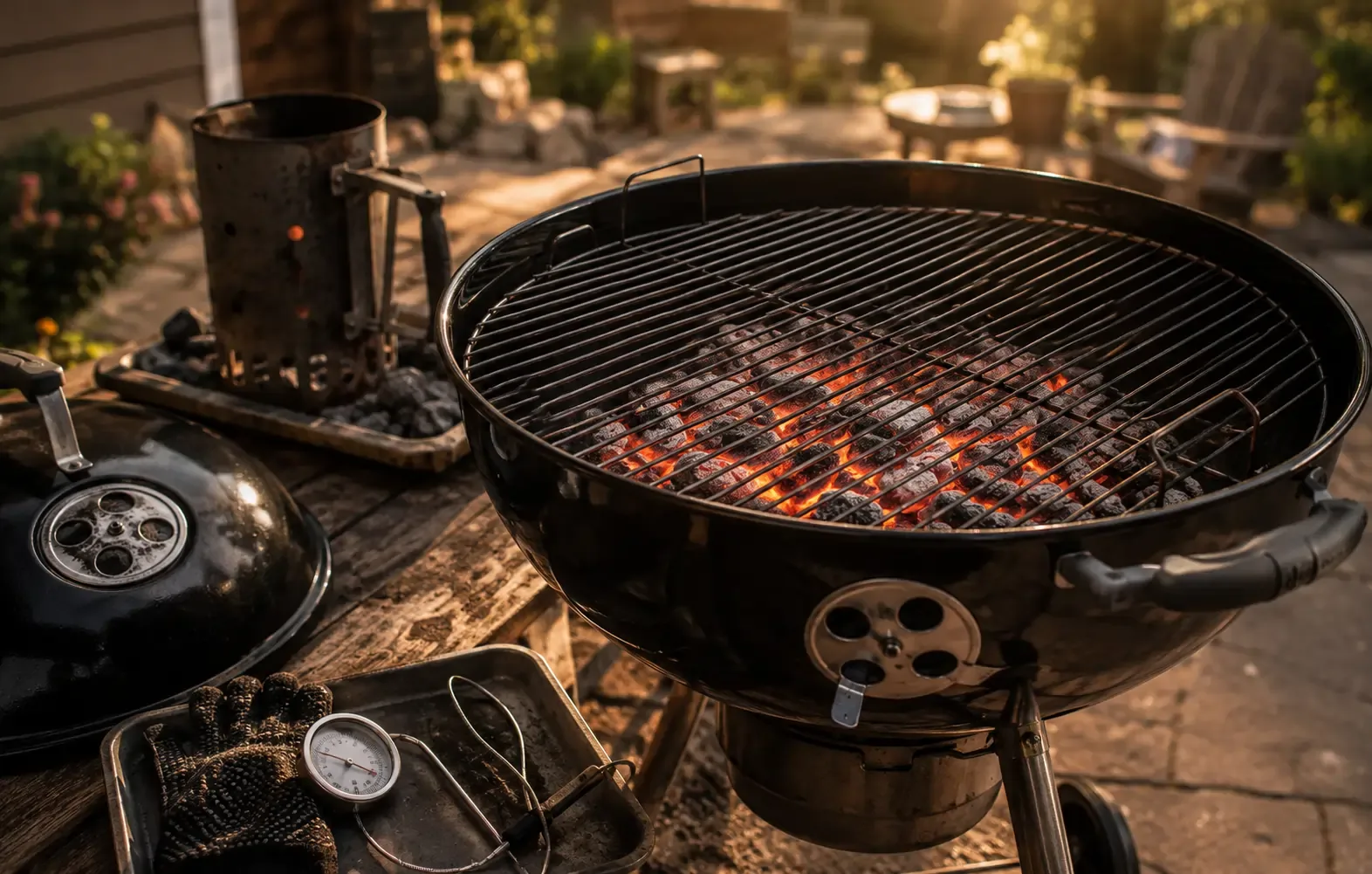
This guide explains how to control temperature on a charcoal grill using bottom vents, top vents, direct heat, indirect heat, charcoal layout, chimney starter timing, lid control, thermometer placement, ash management, and weather protection.
Quick navigation
What this charcoal grill temperature guide covers
- Quick answer
- Why charcoal grill temperature changes
- How to use charcoal grill vents
- How to raise temperature on a charcoal grill
- How to lower temperature on a charcoal grill
- Direct and indirect heat zones
- Charcoal amount and fuel layout
- Lid open vs. lid closed
- Thermometers and grate temperature
- Weather, ash, and airflow problems
- Common mistakes
- 7 easy fixes
- FAQ
Quick answer
How to control temperature on a charcoal grill: quick answer
To control temperature on a charcoal grill, control airflow first. Open the vents to give the coals more oxygen and raise heat. Close the vents partially to reduce oxygen and lower heat. Use the lid to turn the grill into a controlled cooking chamber, arrange charcoal for direct or indirect heat, and measure temperature at the grate instead of guessing from flame size.
Beginner rule: charcoal temperature is not controlled by panic. It is controlled by oxygen, fuel, distance from heat, and time.
A charcoal grill is a live fire cooker. It will not behave like a microwave or a digital pellet grill. But once you learn the vents, fuel layout, and lid position, the grill becomes much easier to control.
Fire basics
Why charcoal grill temperature changes so fast
Charcoal grill temperature changes because the fire is reacting to oxygen, fuel, ash, wind, lid position, and how the charcoal is arranged. More oxygen makes the coals burn hotter and faster. Less oxygen slows the fire down.
The same pile of charcoal can cook very differently depending on whether the lid is open, the bottom vent is wide open, the top vent is restricted, ash is choking the fire, or the coals are spread across the whole grill instead of banked to one side.
More oxygen
More airflow feeds the coals and raises heat. This is useful for searing, preheating, and recovering after the lid has been open.
Less oxygen
Less airflow slows the burn and lowers heat. This is useful for low-and-slow cooking, indirect heat, and preventing flare-ups.
More lit charcoal
More lit fuel creates more heat. A full chimney starter burns hotter than a small half chimney.
More distance from coals
Food farther from the charcoal cooks more gently. This is the idea behind indirect heat and two-zone grilling.
Vents and airflow
Use charcoal grill vents as your temperature control system
Charcoal grill vents are the main temperature control system. The bottom vent controls how much fresh oxygen enters the grill. The top vent, also called the exhaust vent or lid damper, controls how heat and smoke leave the grill.
For most charcoal cooking, keep the top vent at least partially open so smoke and combustion gases can move through the grill. Use the bottom vent for major heat changes, then make smaller adjustments once the grill is near your target temperature.
| Vent setup | Temperature effect | Best use | What to watch |
|---|---|---|---|
| Bottom vent open, top vent open | Hotter, faster-burning fire | Preheating, searing, raising temperature | Can overshoot quickly |
| Bottom vent half open, top vent open | Moderate controlled heat | Most grilling and indirect cooking | Adjust slowly and wait |
| Bottom vent mostly closed, top vent partially open | Lower, slower heat | Low-and-slow, ribs, chicken, longer cooks | Do not choke the fire completely |
| Both vents closed | Fire eventually dies down | Shutting down after cooking | Not for active cooking unless your manual says otherwise |
Make vent changes in small moves, then wait several minutes. Charcoal reacts slower than your anxiety.
More heat
How to raise temperature on a charcoal grill
To raise temperature on a charcoal grill, give the fire more oxygen, add more lit charcoal, spread the coals for more direct heat, or close the lid with vents open so the grill can build heat like an outdoor oven.
If the grill is not hot enough, do not immediately dump random charcoal everywhere. First check whether ash is blocking airflow, whether the bottom vent is open, whether the lid vent is open, and whether the coals are actually lit well.
Open the vents
Open the bottom vent to feed the coals more oxygen. Keep the top vent open so heat and smoke can move through the cooker.
Add lit charcoal
If the fuel bed is weak, add lit charcoal from a chimney starter. Lit charcoal raises temperature faster than unlit charcoal.
Use a tighter coal bed
Concentrating coals creates stronger heat for searing, burgers, steaks, chops, wings, and hot-and-fast grilling.
Close the lid correctly
With vents open, closing the lid helps trap heat and create a hotter cooking chamber.
If the grill is cold because the charcoal was not fully lit, vent tricks will only do so much. Start with a strong, clean fire.
Less heat
How to lower temperature on a charcoal grill
To lower temperature on a charcoal grill, reduce airflow, move food away from direct heat, spread coals out less aggressively, use an indirect zone, or remove some fuel if it is safe to do so with proper tools.
The safest first move is usually vent control and zone control. Partially close the bottom vent, keep the top vent from being fully choked, and move food to the cooler side of the grill.
| Problem | Likely cause | Best fix |
|---|---|---|
| Charcoal grill too hot | Too much oxygen or too much lit fuel | Partially close bottom vent and move food indirect |
| Food burning outside | Too much direct heat | Move food to cooler zone and close lid |
| Flare-ups | Fat dripping onto coals | Move food away from flames and reduce airflow |
| Temperature overshoot | Vents too open after preheat | Adjust vents earlier and wait for stabilization |
Do not pour water onto active charcoal during normal cooking unless you are dealing with an emergency or your grill manual instructs it. Water can create ash mess, steam, and thermal stress.
Heat zones
Use direct and indirect heat zones
Direct and indirect heat zones make charcoal grilling easier. Direct heat means the food sits over the coals. Indirect heat means the food sits away from the coals and cooks with circulating heat.
A two-zone fire is one of the best beginner setups because it gives you a hot side and a cooler side. You can sear over direct heat, then move food to indirect heat to finish without burning.
| Zone setup | How it works | Best for | Temperature control benefit |
|---|---|---|---|
| Direct heat | Food sits over coals | Steaks, burgers, thin chops, quick searing | Fast browning and grill marks |
| Indirect heat | Food sits away from coals | Chicken pieces, ribs, roasts, thicker cuts | Gentler cooking with fewer flare-ups |
| Two-zone fire | Coals on one side, empty cooler side on the other | Most beginner charcoal cooks | Gives you a safety zone when heat gets aggressive |
| Charcoal baskets | Coals stay contained in a focused area | Kettle grills and repeatable setups | Makes airflow and fuel placement more predictable |
Fuel management
Control charcoal amount and fuel layout
Charcoal amount controls how much heat potential you have. Airflow controls how fast that fuel burns. Both matter. If you use too much fully lit charcoal, the grill may run too hot even with careful vent adjustments. If you use too little, the grill may never reach target temperature.
Briquettes usually burn more predictably and evenly, while lump charcoal can burn hotter and respond quickly but may vary more in piece size. Either can work. The key is learning how your fuel behaves in your grill.
Chimney starter
A chimney starter helps you light charcoal evenly without guessing. A full chimney gives strong heat. A half chimney gives a more moderate fire.
Briquettes
Briquettes are uniform and predictable, which makes them beginner-friendly for stable charcoal grill temperature control.
Lump charcoal
Lump charcoal can burn hot and clean, but large and small pieces may behave differently. Sort pieces if you need a more predictable cook.
Unlit charcoal
For longer cooks, adding unlit charcoal beside lit coals can extend the burn, but the setup needs good airflow and clean ignition.
Fuel layout options for charcoal temperature control
- Spread-out coals: hotter direct grilling across more grate space.
- Banked coals: two-zone cooking with one hot side and one cooler side.
- Charcoal baskets: focused heat and easier cleanup in kettle grills.
- Snake method: slower, longer burn for low-and-slow cooks.
- Minion-style setup: lit coals slowly ignite unlit coals for longer smoking sessions.
Lid control
Use the lid correctly on a charcoal grill
The lid changes everything. With the lid open, the grill behaves more like an open fire. With the lid closed and vents adjusted, the grill behaves more like a controlled oven with smoke and radiant heat.
For thick cuts, chicken pieces, ribs, pork shoulder, roasts, and indirect cooking, the lid helps stabilize temperature and cook food more evenly. For quick searing, leaving the lid open can give you direct access to fast heat, but it also changes airflow and fuel burn.
| Lid position | Heat behavior | Best use | What to watch |
|---|---|---|---|
| Lid open | More direct open-air grilling | Quick searing and active flipping | Coals can burn fast and flare-ups are easier |
| Lid closed, vents open | Builds chamber heat | Preheating, roasting, indirect grilling | Temperature can climb quickly |
| Lid closed, vents adjusted | Controlled cooking chamber | Low-and-slow and steady BBQ | Make small changes and wait |
| Lid closed, vents choked | Fire slows or dies | Shutdown after cooking | Can create dirty smoke during active cooking |
Stop opening the lid every minute to “check the temperature.” Every peek changes the temperature you are trying to control.
Temperature readings
Use a thermometer instead of guessing
Charcoal grill temperature control gets much easier when you stop guessing. Flame height, hand tests, lid thermometers, and vibes from the BBQ gods are not enough when you are trying to cook consistently.
A grill lid thermometer may sit high above the cooking grate and read a different zone than where the food actually sits. A grate-level thermometer shows the temperature closer to the food. A meat thermometer tells you what is happening inside the food.
Lid thermometer
Useful as a rough reference, but it may not match grate temperature. Do not treat it as the only truth.
Grate thermometer
Helpful for indirect cooking, smoking ribs, chicken, turkey breast, pork shoulder, and longer charcoal cooks.
Instant-read thermometer
Best for checking food doneness quickly without leaving the lid open too long.
Leave-in probe
Useful for larger cuts and long cooks where opening the lid constantly would hurt temperature stability.
Outdoor variables
Weather, ash, and airflow can make temperature unstable
A charcoal grill cooks outdoors, so wind, cold air, rain, direct sun, humidity, and ash buildup can all affect temperature. If your grill suddenly stops responding normally, look for airflow problems before blaming your technique.
Ash can block the bottom vent and choke the fire. Wind can force too much air into the grill or steal heat from the cooking chamber. Cold weather can require more fuel and longer preheat time.
| Problem | Temperature effect | Beginner fix |
|---|---|---|
| Ash buildup | Fire gets weak or uneven | Clean ash safely when the grill is cool |
| Wind | Can overfeed or cool the fire | Use a safe wind-protected outdoor location |
| Cold weather | Grill needs more fuel and time | Preheat longer and use enough charcoal |
| Direct sun | Can heat the grill body and affect readings | Use shade if safe and practical |
| Grease flare-ups | Sudden heat spikes | Move food indirect and reduce oxygen |
Airflow is the whole game. A clean bottom vent and a clear exhaust path matter more than most beginners think.
Common mistakes
Common charcoal grill temperature control mistakes
Changing vents too aggressively
Big vent changes create big temperature reactions. Make small adjustments and wait before changing again.
Closing every vent during the cook
Choking the fire can create dirty smoke or kill the coals. Use restriction, not suffocation.
Using too much lit charcoal
If the grill starts with too much fully lit fuel, it may run too hot no matter how carefully you adjust vents.
Ignoring indirect heat
Cooking everything directly over coals causes burning, flare-ups, and dry food. Use a cooler zone.
Trusting only the lid thermometer
Lid temperature can differ from grate temperature. For serious control, measure where the food cooks.
Letting ash block airflow
Ash buildup can make a good charcoal setup act weak, dirty, and unstable.
7-step method
7 easy fixes to control temperature on a charcoal grill
Use this practical workflow when your charcoal grill is too hot, not hot enough, or swinging more than expected.
- Start with the right amount of charcoal. Use more fuel for hot grilling and less fuel for gentle indirect cooks.
- Light the charcoal properly. Use a chimney starter and wait until the coals are ready before cooking.
- Build a two-zone fire. Keep one hot side and one cooler side so you always have control.
- Use the bottom vent for major heat changes. More open means more oxygen and more heat. More closed means less oxygen and lower heat.
- Keep the top vent working as an exhaust. Let heat and smoke move through the grill instead of trapping dirty smoke.
- Measure grate temperature. Use a thermometer near the food instead of guessing from the lid gauge alone.
- Adjust slowly and wait. Charcoal responds over minutes, not seconds.
This 7-step method helps you control charcoal grill temperature for burgers, steaks, chicken, ribs, pork, turkey, vegetables, and low-and-slow backyard BBQ.
Safety and technique sources
Use official safety guidance and manufacturer instructions
BackyardBBQGuide.com explains charcoal grill technique, airflow, vents, fuel layout, direct heat, indirect heat, thermometer placement, and beginner BBQ troubleshooting. For safety, always follow your grill manual and use charcoal grills outdoors only.
Charcoal produces carbon monoxide when burning, so it should never be used indoors, inside vehicles, tents, garages, or enclosed spaces. Keep your grill outside, ventilated, stable, and away from structures according to the manufacturer’s instructions.
External sources: Kingsford charcoal grill temperature control , Weber charcoal grill temperature control , CDC carbon monoxide poisoning basics and CPSC charcoal grill indoor warning
FAQ
Charcoal grill temperature control questions
How do you control temperature on a charcoal grill?
Control temperature on a charcoal grill by adjusting airflow with the bottom and top vents, managing charcoal amount, using the lid correctly, creating direct and indirect heat zones, and measuring temperature at the grate.
Do you open or close vents to make a charcoal grill hotter?
Open the vents to make a charcoal grill hotter. More airflow gives the coals more oxygen, which makes them burn hotter and faster.
Do you open or close vents to lower charcoal grill temperature?
Partially close the vents to lower charcoal grill temperature. Reduce airflow slowly, but avoid choking the fire completely during active cooking.
Should the top vent be open or closed on a charcoal grill?
During most cooking, the top vent should stay at least partially open so heat, smoke, and combustion gases can move through the grill. Use the bottom vent for bigger temperature adjustments.
Why is my charcoal grill too hot?
A charcoal grill is usually too hot because there is too much lit charcoal, too much airflow, food is directly over the coals, or the vents were left wide open after preheating.
Why is my charcoal grill not hot enough?
A charcoal grill may not be hot enough because the charcoal is not fully lit, there is too little fuel, the vents are closed, ash is blocking airflow, or wind and cold weather are stealing heat.
How do you keep a charcoal grill at 225°F?
Use a small controlled charcoal fire, indirect heat, partially restricted bottom airflow, an open or partially open top vent, and a grate-level thermometer. Make small vent changes and wait for the grill to respond.
How do you keep a charcoal grill at 350°F?
Use more lit charcoal, keep the vents more open, close the lid to build chamber heat, and measure grate temperature. Adjust airflow slowly once the grill approaches 350°F.
Is direct heat or indirect heat better for temperature control?
Indirect heat gives better control for thicker foods and longer cooks. Direct heat is better for quick searing, but it can burn food if you do not have a cooler zone.
Can wind affect charcoal grill temperature?
Yes. Wind can feed the fire too much oxygen, cool the cooking chamber, or make heat unstable. Use a safe outdoor wind-protected location when possible.
Can ash buildup lower charcoal grill temperature?
Yes. Ash can block the bottom vent and restrict airflow, which makes the fire weaker and less stable. Clean ash safely when the grill is fully cool.
Can you use a charcoal grill indoors?
No. Charcoal grills should never be used indoors, in garages, vehicles, tents, or enclosed spaces because burning charcoal produces carbon monoxide.
Related BBQ guides
Build better live-fire control.
Charcoal grill temperature control gets easier when you understand airflow, fuel amount, vent position, direct heat, indirect heat, lid control, thermometers, and clean fire management.