Ribs Guide
How to Smoke Ribs Without Drying Them Out, by Rib Type
Dry smoked ribs usually come from too much heat, too much time, thin racks, poor moisture control, skipping the wrap when it is needed, or cooking by the clock instead of checking tenderness. The fix is not just adding more sauce. Juicy smoked ribs come from choosing the right rack, running steady heat, protecting the meat at the right time, resting properly, and reheating gently.
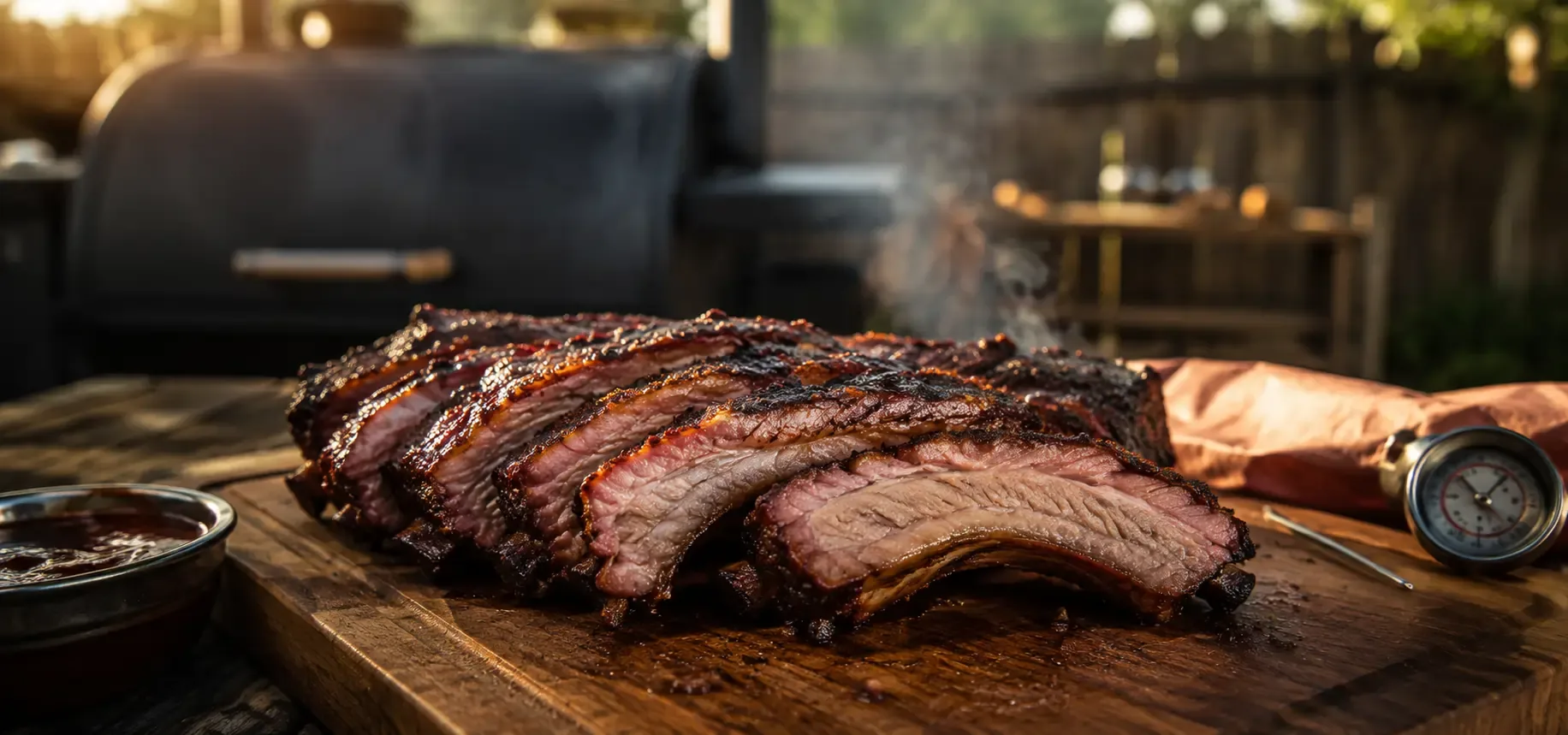
This guide explains how to smoke ribs without drying them out by controlling rack selection, trimming, seasoning, smoker temperature, spritzing, wrapping, doneness tests, sauce timing, resting, holding, slicing, and reheating.
Quick navigation
What this juicy smoked ribs guide covers
- Quick answer
- Why smoked ribs get dry
- Choose ribs with enough meat and fat
- Trim, salt, and season ribs correctly
- Best smoker temperature for juicy ribs
- Clean smoke and airflow
- Spritz, water pan, and moisture control
- When to wrap ribs while smoking
- Doneness tests beyond time
- Sauce timing, resting, and holding
- How to reheat ribs without drying them out
- How to fix dry smoked ribs
- Common mistakes
- 7 easy fixes
- FAQ
Quick answer
How to Smoke Ribs Without Drying Them Out: Quick Answer
Hold the smoker steady at 225–275°F and finish by tenderness, not a fixed clock. For baby back ribs and thin racks, start checking earlier and wrap after the bark has set if the surface is drying before the meat is tender. Spare ribs usually need more time for connective tissue to soften. With St. Louis ribs, protect the thinner edges and check tenderness across the whole rack.
Spritz, use a water pan, or wrap only when the rack and smoker conditions call for it. Use the bend and probe tests, rest before slicing, and treat 3-2-1 as an optional framework rather than a universal rule.
This is a troubleshooting guide for pork ribs. For the full process, use the step-by-step smoked ribs guide; for beef ribs, see the smoked beef ribs recipe.
Rib texture
Why smoked ribs get dry
Smoked ribs get dry when the meat loses too much moisture before the connective tissue has time to soften. This can happen with baby back ribs, spare ribs, St. Louis cut ribs, or very thin racks. The thinner the rack, the less protection it has during a long smoke.
Dry smoked ribs usually come from stacking several problems: cooking too hot, cooking too long, choosing a lean or thin rack, leaving the ribs unwrapped too long, using harsh smoke, skipping rest time, slicing too early, or reheating leftovers uncovered.
Sauce can hide dry edges for one bite, but it does not solve the real issue. Moist ribs come from the cook, not from painting dry meat at the end.
Rib selection
Choose ribs with enough meat and fat
The rack you buy affects how easy it is to keep ribs moist while smoking. Thin racks dry faster. Meaty racks give you more time to build smoke flavor, bark, tenderness, and juicy texture.
| Rib type | Moisture behavior | Best use | What to watch |
|---|---|---|---|
| Baby back ribs | Lean and can dry faster | Shorter cooks and tender bites | Do not overcook by time only |
| Spare ribs | More fat and connective tissue | Juicier low-and-slow BBQ | Need enough time to become tender |
| St. Louis ribs | Even shape and good BBQ structure | Balanced backyard smoking | Watch thinner edges |
| Very thin racks | Highest drying risk | Faster cooks only | Check early and protect with wrap if needed |
If your ribs keep coming out dry, start by looking at the rack itself. Technique matters, but a thin rack gives you less room for error.
Preparation
Trim, salt, and season ribs correctly
Good preparation helps smoked ribs stay juicy. Trim loose flaps, remove hanging pieces that will burn, and season early enough for salt to work. A balanced rub can build flavor without pulling too much moisture from the surface.
Remove the membrane if you prefer
Many backyard cooks remove the membrane from the bone side so seasoning can reach the rack better and the final bite feels cleaner. Some cooks leave it on for structure. Either way, do not let membrane debates distract from temperature and tenderness.
Season evenly
Season the meat side and bone side evenly. Avoid caking on so much rub that the surface turns muddy or burns before the ribs become tender.
Give salt time
Salt helps flavor the meat. Seasoning shortly before smoking works, but giving ribs a little time after seasoning can improve the final taste.
Watch sugar-heavy rubs
Sweet BBQ rubs can darken quickly if smoker heat runs high. Sugar is not the enemy, but uncontrolled heat can make it bitter.
Smoker temperature
Keep smoker temperature steady for juicy smoked ribs
Smoker temperature control is one of the biggest factors in dry smoked ribs. If heat runs too high, the outside can dry before the inside becomes tender. If heat swings wildly, the rack can cook unevenly.
Many backyard cooks smoke ribs in the 225°F to 275°F range. The exact number matters less than stability, rack thickness, and how the ribs feel near the end.
| Smoker temperature | Moisture impact | Best use | What to watch |
|---|---|---|---|
| 225°F | Gentle but longer cook | Classic low-and-slow ribs | Can dry if the cook drags too long |
| 250°F | Balanced backyard range | Most pork ribs | Still check tenderness, not just time |
| 275°F | Faster cook with good bark | Meatier racks and efficient cooks | Thin racks can dry faster |
| 300°F+ | Higher drying and burning risk | Hot-and-fast only with control | Sugar, edges, and thin meat can burn or dry |
Clean smoke
Use clean smoke instead of harsh heat and dirty smoke
Dry ribs are not only about moisture. Harsh smoke, poor airflow, and dirty combustion can make ribs taste bitter, rough, or overcooked even when the meat is technically tender.
Clean smoke should smell pleasant, woody, and appetizing. Thick dirty smoke can coat the meat and make the final bark taste heavy. Better smoke quality helps ribs taste juicy and balanced instead of dry and bitter.
Good smoke signs
- Light clean smoke
- Stable fire
- Good airflow
- Pleasant wood aroma
- Steady cooking temperature
Problem smoke signs
- Heavy white smoke for too long
- Bitter smell
- Smoldering fuel
- Choked airflow
- Sooty or dirty surface
Moisture control
Use spritz, water pan, or wrap strategically
Moisture tools can help keep ribs from drying out, but they are not magic. Spritzing, water pans, apple juice, vinegar, broth, butter, honey, and wrap methods should support the cook. They cannot fully rescue ribs that are cooked too hot or too long.
| Moisture tool | What it does | Best use | What to avoid |
|---|---|---|---|
| Water pan | Adds humidity and heat stability | Long rib cooks and dry smokers | Do not spill or block airflow |
| Spritz | Moistens the surface lightly | When bark is setting but drying too fast | Do not open the lid every few minutes |
| Foil wrap | Traps steam and softens ribs faster | Drying racks or tender BBQ ribs | Can make bark too soft if overused |
| Butcher paper | Protects while breathing more than foil | Less steamy wrap style | May not protect as much as foil |
| Butter or broth in wrap | Adds richness and moisture | Racks that need protection near the finish | Too much liquid can wash out bark |
Spritzing is a tool, not a nervous habit. If you open the lid constantly to spritz, you can create temperature swings and extend the cook.
Wrapping ribs
When to wrap ribs while smoking
Wrap ribs when the bark has color, the surface looks set, and the rack is starting to dry before it becomes tender. Wrapping too early can soften bark. Wrapping too late can leave you with dry smoked ribs.
The classic 3-2-1 method is only a framework. It can work for some spare ribs, but it can overcook thinner baby backs. Instead of following time blindly, use color, surface texture, bend, and tenderness.
Wrap if the ribs look dry
If the surface is darkening, the edges look dry, and the rack is not tender yet, wrapping can protect the meat and help it finish.
Do not wrap too early
If the bark is still wet or pale, wrapping can trap steam before the ribs develop enough BBQ texture.
Use foil for more protection
Foil traps more steam and moisture. It is useful for ribs that are drying out or need a softer bite.
Use butcher paper for lighter protection
Butcher paper protects the ribs while letting the surface breathe more than foil. It can preserve bark better but gives less moisture insurance.
Wrap based on what the ribs are doing, not because a timer yelled at you. BBQ is food, not a printer queue.
Doneness
Do not cook ribs by time only
Time is one of the easiest ways to dry out ribs. Rib thickness, fat content, smoker temperature, airflow, wrap style, and rack size all change the cook. Two racks can finish differently on the same smoker.
Internal temperature can help, but pork ribs are tricky because bones, thin meat, and uneven rack thickness make probe readings inconsistent. For ribs, tenderness tests matter more than chasing one exact internal temperature number.
| Doneness test | What to look for | Why it helps |
|---|---|---|
| Bend test | Rack bends and surface starts to crack slightly | Shows collagen and structure are softening |
| Probe test | Probe slides between bones with little resistance | Checks tenderness directly |
| Bone pullback | Meat pulls back from bone ends | Useful clue, but not perfect alone |
| Twist test | A bone twists with some movement | Helpful for softer rib styles |
| Bite test | Meat bites cleanly without being mushy | Best final judge for competition-style texture |
Fall-off-the-bone ribs are not the only goal. Some people love that texture, but others prefer a clean bite. Choose the texture you want, then cook toward that result.
Finish and rest
Sauce, rest, and hold ribs the right way
Sauce timing affects texture. If you sauce too early, sugars can burn or the surface can turn sticky before the ribs are tender. If you sauce too late and slice immediately, the glaze may not set.
Sauce near the end
Brush sauce on during the final stage and let it set until tacky. Do not drown the ribs if you are trying to preserve bark.
Rest before slicing
Rest ribs briefly so juices settle and the rack firms up enough to slice cleanly.
Hold gently
If ribs finish early, hold them warm and protected. Avoid trapping them so hot and steamy that the bark turns mushy.
Slice only when ready
Sliced ribs dry faster than whole racks. Cut them close to serving time when possible.
Leftovers
How to reheat ribs without drying them out
To reheat ribs without drying them out, use gentle covered heat with a small amount of moisture. Broth, apple juice, butter, sauce, or saved rib juices can help protect the meat while it warms.
Best method
Reheat ribs covered in a low oven or smoker with a splash of liquid. Stop when the ribs are warm and tender again.
What to avoid
Avoid blasting sliced ribs uncovered with high heat. The edges dry before the center warms through.
Keep leftover ribs in larger sections when possible. Whole or half racks usually reheat better than individual bones.
Rescue dry ribs
How to fix dry smoked ribs after cooking
You cannot completely reverse dry smoked ribs, but you can make them better. The goal is to add moisture, fat, sauce, steam, or a new use case without cooking the ribs to death again.
Wrap with liquid
Wrap the ribs with a small amount of broth, apple juice, butter, or sauce and warm gently until the meat softens.
Glaze lightly
A thin sauce glaze can improve the eating experience, especially if the bark is dry or rough.
Chop for sandwiches
Chop dry rib meat and mix it with sauce for sandwiches, tacos, baked beans, chili, nachos, or rice bowls.
Avoid more dry heat
Do not try to fix dry ribs by cooking them uncovered at high heat. That usually makes the texture worse.
Common mistakes
Common mistakes that make smoked ribs dry
Using thin racks
Thin racks have less meat and fat protection, so they dry faster during long cooks.
Cooking too hot
High heat can dry the outside before the ribs become tender inside.
Following 3-2-1 blindly
The 3-2-1 method is a framework, not a law. It can overcook thin baby backs or undercook larger racks depending on conditions.
Skipping wrap when ribs are drying
If the rack is dark and dry but still tough, wrapping can protect it while tenderness develops.
Overspritzing
Spritzing too often opens the lid repeatedly and can slow the cook. Use it with purpose.
Slicing too early
Cutting right away can make juices run out and expose more surface area to drying.
7-step method
7 easy fixes to smoke ribs without drying them out
Use this practical workflow when you want smoked ribs that stay tender, juicy, and beginner-friendly.
- Start with a meaty rack. Choose ribs with enough meat and fat to survive the cook.
- Trim loose pieces. Remove thin flaps that will burn or dry out early.
- Run steady heat. Keep the smoker stable instead of chasing huge temperature swings.
- Use moisture with purpose. Add a water pan, spritz, or light liquid only when it helps the rack.
- Wrap when the surface needs protection. Use foil or butcher paper once the bark has color and the ribs are drying before tender.
- Check tenderness, not just time. Use bend, probe, bone pullback, and bite texture.
- Rest and reheat gently. Slice near serving time and use covered moisture when reheating leftovers.
This 7-step method helps you smoke ribs without drying them out while still building bark, smoke flavor, tenderness, and a clean BBQ bite.
Food safety source
Separate pork safety from BBQ rib tenderness
BackyardBBQGuide.com explains BBQ technique, smoke flavor, rib texture, moisture control, wrapping, resting, and reheating. For official safe minimum internal temperature guidance, use FoodSafety.gov and USDA FSIS.
Official pork guidance lists 145°F with a 3-minute rest for pork steaks, roasts, and chops. BBQ ribs are often cooked beyond minimum safety guidance because tenderness depends on softening connective tissue, not just reaching a safe number.
External sources: FoodSafety.gov safe minimum internal temperatures and USDA FSIS safe temperature chart
FAQ
Dry smoked ribs questions
How do you smoke ribs without drying them out?
Use meaty racks, steady smoker temperature, moisture control, wrapping when needed, tenderness tests, proper resting, and gentle reheating. Do not rely only on time.
Why are my smoked ribs dry?
Smoked ribs usually turn dry because the rack was too thin, the smoker ran too hot, the ribs cooked too long, the surface was not protected, or the ribs were sliced or reheated badly.
How do you keep ribs moist while smoking?
Keep ribs moist by controlling heat, using a water pan if needed, spritzing lightly when the surface dries, wrapping at the right time, and resting before slicing.
Should you spritz ribs while smoking?
Spritzing can help if the surface is drying too fast, but it should be used with purpose. Opening the lid too often can create temperature swings and extend the cook.
When should you wrap ribs?
Wrap ribs after the bark has color and the surface is set, especially if the rack looks dry but is not tender yet. Foil gives more moisture protection, while butcher paper preserves more bark.
Does the 3-2-1 method dry out ribs?
It can. The 3-2-1 method may overcook thin baby back ribs or softer racks. Use it as a framework, not a fixed rule for every rib cook.
What temperature should ribs be smoked at?
Many backyard cooks smoke ribs between 225°F and 275°F. The best range depends on rack thickness, smoker behavior, wrap style, and the texture you want.
What internal temperature should smoked ribs reach?
Ribs are usually judged by tenderness more than one exact internal temperature because bones and uneven meat make readings inconsistent. Use bend, probe tenderness, bone pullback, and bite texture.
Are fall-off-the-bone ribs overcooked?
Not always. Fall-off-the-bone ribs are a preference. Some people love that soft texture, while others prefer ribs that bite cleanly from the bone without falling apart.
How do you reheat ribs without drying them out?
Reheat ribs gently while covered with a small amount of broth, apple juice, butter, sauce, or saved juices. Avoid high dry heat on sliced ribs.
Can you fix dry smoked ribs?
You cannot fully reverse dry ribs, but you can improve them by wrapping with liquid, glazing lightly, reheating gently, or chopping the meat into saucy dishes like sandwiches, tacos, beans, chili, or nachos.
Related BBQ guides
Build the full smoked ribs system.
Juicy smoked ribs come from rack selection, steady heat, smoke quality, moisture control, wrapping, tenderness checks, sauce timing, resting, and reheating.