Pit Boss brand overview
Pit Boss Grills: Formats, Fuel Systems, and Ownership Checks
Understand how Pit Boss pellet, gas, charcoal, griddle, vertical, portable, and combination formats differ before choosing a cooker.
Quick answer
Pit Boss should be evaluated by exact cooker format and model documentation, not by the brand name alone. First choose the fuel and installation type that fit your routine. Then verify cooking geometry, controls, cleaning access, required clearances, included equipment, manual, parts support, and written warranty terms for the complete model number.
This page is a brand-level decision guide. It does not rank models, report hands-on results, or claim that one format is best for every cook. Current products, specifications, documentation, and support terms can change, so the official US sources linked below are the final check.
Pit Boss product families
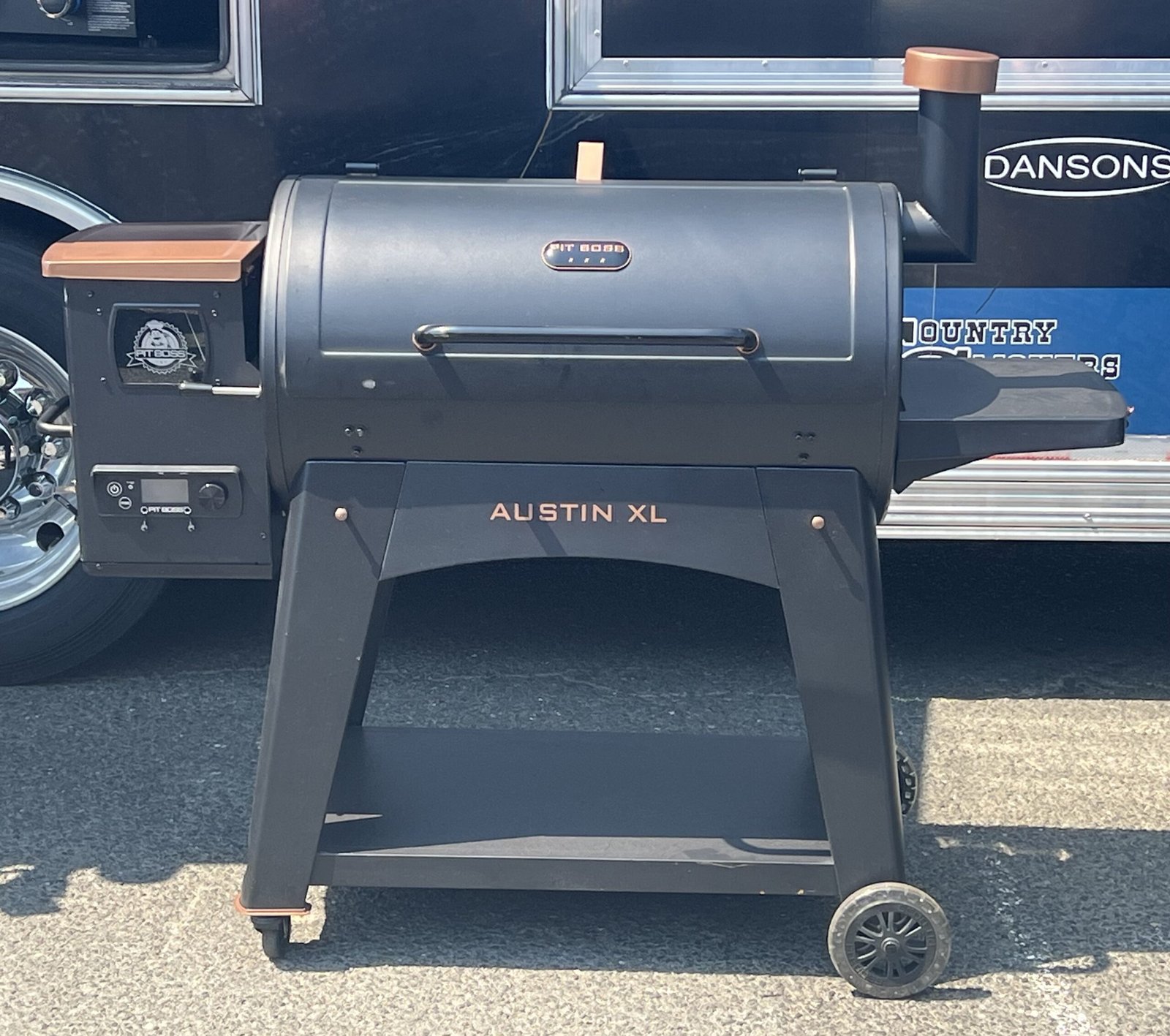
Pit Boss is associated with several outdoor-cooking formats rather than a single type of grill. The manufacturer’s product navigation may include wood-pellet grills and vertical smokers as well as gas, charcoal, griddle, portable, and combination cookers. Those labels describe different ownership routines. A pellet unit needs electricity and a pellet-handling system; a gas grill centers on burners and grease management; a charcoal cooker depends on vents and ash removal; a griddle requires care for an exposed flat cooking surface.
Start with the format that matches the food and workflow you expect to use most often. A combination cooker can put more than one fuel system in one footprint, but each side still has its own startup, cleanup, and maintenance requirements. Treat the model number—not a family nickname or retailer title—as the key for confirming what is actually included.
Fuel and cooking approach
Wood-pellet cooking uses fuel delivered from a hopper to a fire pot through an auger, with a controller and fan managing the burn. That means pellet quality, dry storage, electrical access, ash removal, grease routing, and the controller’s operating instructions all matter. Wi-Fi or app features, when listed for a specific unit, are conveniences; they do not by themselves establish cooking performance or eliminate the need to monitor food and fuel.
Gas, charcoal, and combination formats follow different logic. Gas emphasizes correct fuel configuration, burner condition, regulator and hose inspection, and grease control. Charcoal emphasizes airflow, fuel arrangement, and ash clearance. Never assume that a propane appliance can use natural gas, or that a conversion is allowed. Check the exact rating label and official manual before purchase or installation.
Cooking surface, footprint, and format
Compare the shape of the usable cooking area, not only an advertised area total. Rack spacing in a vertical smoker, headroom under a lid, access to food on an upper rack, and the width of a griddle can affect what fits. Also measure the product at its widest and deepest points with shelves, handles, lids, doors, and grease components in operating position.
For a portable or cart unit, check wheel arrangement, lift points, surface requirements, storage position, and whether loose internal parts must be removed before transport. For any cooker, preserve the clearances and placement conditions in its manual. “Fits on the patio” is not the same as “can be operated safely in that location.”
Controls, maintenance, parts, and support
Maintenance depends on the fuel system. A pellet cooker typically calls for attention to the fire pot, ash, grease channels, drip components, temperature sensor, hopper, and auger path. Follow shutdown instructions rather than simply disconnecting power. A gas cooker adds burner ports, ignition parts, hoses, and regulator checks. Charcoal formats add ash management and vent inspection. Griddle surfaces need the manufacturer’s cleaning and seasoning procedure plus protection from trapped moisture.
Before buying, locate the manual and identify every recurring task, required tool, removable component, and access panel. Confirm how replacement parts are matched to the model and serial number. A parts diagram can also reveal whether routine service requires reaching the rear, underside, or interior of the cabinet.
How to verify warranty and service terms
Do not apply a warranty statement from one Pit Boss product to the entire brand. Coverage can differ by model, component, purchase date, region, use, registration status, and other written conditions. Read the current warranty document associated with the exact product before buying. Note the coverage periods by component, exclusions, required maintenance, claim procedure, proof-of-purchase rules, and who pays for labor, shipping, removal, or reinstallation when those topics are addressed.
Also separate warranty coverage from parts availability and dealer service. A part shown in a diagram is not necessarily in stock, and a warranty does not automatically promise local labor. Confirm the support channel, documentation, and service route that apply to your location. Keep the receipt, model and serial record, manual, and installation documents together.
Questions to answer before buying
- Which fuel routine will I realistically maintain?
- Does the cooking geometry fit the foods and pans I use?
- Where will pellets, fuel, tools, and removable parts stay dry?
- Can I access the fire pot, grease path, ash area, and controller for cleaning?
- Does the official manual permit my planned operating location?
- What model and serial information will support require for parts?
Use written answers from the exact product page, manual, rating label, parts records, and warranty terms. If a retailer description conflicts with manufacturer documentation, pause and ask the manufacturer or an authorized service channel to clarify the complete model identity.
Frequently asked questions
Does Pit Boss make only pellet grills?
No. Pit Boss is associated with multiple categories, including pellet, gas, charcoal, griddle, portable, vertical, and combination formats. Verify the current US catalog and the exact model specification because product groupings can change.
Does a Pit Boss pellet grill need electricity?
A pellet cooker with an auger, fan, and electronic controller requires an appropriate power source. Confirm electrical requirements and extension-cord guidance in the specific manual.
How should pellets be stored?
Follow the manufacturer’s fuel guidance and keep pellets protected from moisture. Damp or degraded fuel can create feeding and combustion problems; the manual governs hopper emptying and storage steps.
Is this a hands-on Pit Boss review?
No. This is research-backed brand guidance based on official catalog and support materials. We did not cook on, measure, rate, or compare individual Pit Boss models.
Evidence and methodology
Evidence status: Research-backed, not hands-on tested. We organized manufacturer catalog, manual, support, parts, and warranty questions around the governed topic for Pit Boss. Official product documentation is the authority for current claims. Search-result snippets, retailer copy, and community discussion are not treated as proof of performance, reliability, popularity, or prevalence.
Limitations: We did not assemble, install, ignite, cook on, clean, photograph, measure, or compare a Pit Boss unit. We did not verify a current price, inventory level, promotion, model lineup, warranty outcome, or local service availability. The hero image is editorial illustration and is not evidence of our use. Recheck the exact US model documentation and obtain qualified installation help when the manual or local requirements call for it.
Official sources to verify
Accessed for editorial preparation on August 13, 2026. Recheck the current page, exact model manual, rating information, and written terms before making a purchase or installation decision.
Bottom line
The useful comparison is not whether Pit Boss is broadly “good.” It is whether a documented product format fits your fuel, space, cooking geometry, cleanup tolerance, storage, service access, and installation constraints. Verify those points against the exact model before committing.