Brand comparison guide
Pellet Grill Brands: Compare Controllers, Capacity, Cleanup, and Support
Compare pellet grill brands by controller, hopper, auger, fire pot, fan, probes, rack geometry, power needs, cleaning, firmware, and support.
Quick answer
Compare the whole pellet system, not only the controller. Verify rack geometry, hopper and pellet guidance, auger and fire-pot access, fan and probe functions, power and weather rules, ash and grease maintenance, offline operation, firmware support, parts, and exact warranty terms.
Choose the right comparison path
Pellet grill brands share a recognizable architecture: pellets move from a hopper through an auger toward a fire pot, while a fan, igniter, sensors, and controller manage combustion. That common outline can make products look interchangeable. They are not necessarily equivalent in rack layout, cleaning access, controller interface, connectivity requirements, direct-heat configuration, or support documentation.
Start with the cooking job and ownership environment. Note the foods and pans you need to fit, the outlet location, exposure to rain or humidity, pellet storage, cleanup space, and willingness to troubleshoot powered components. The current model manual should answer operational questions; a marketing page or app screenshot cannot replace it.
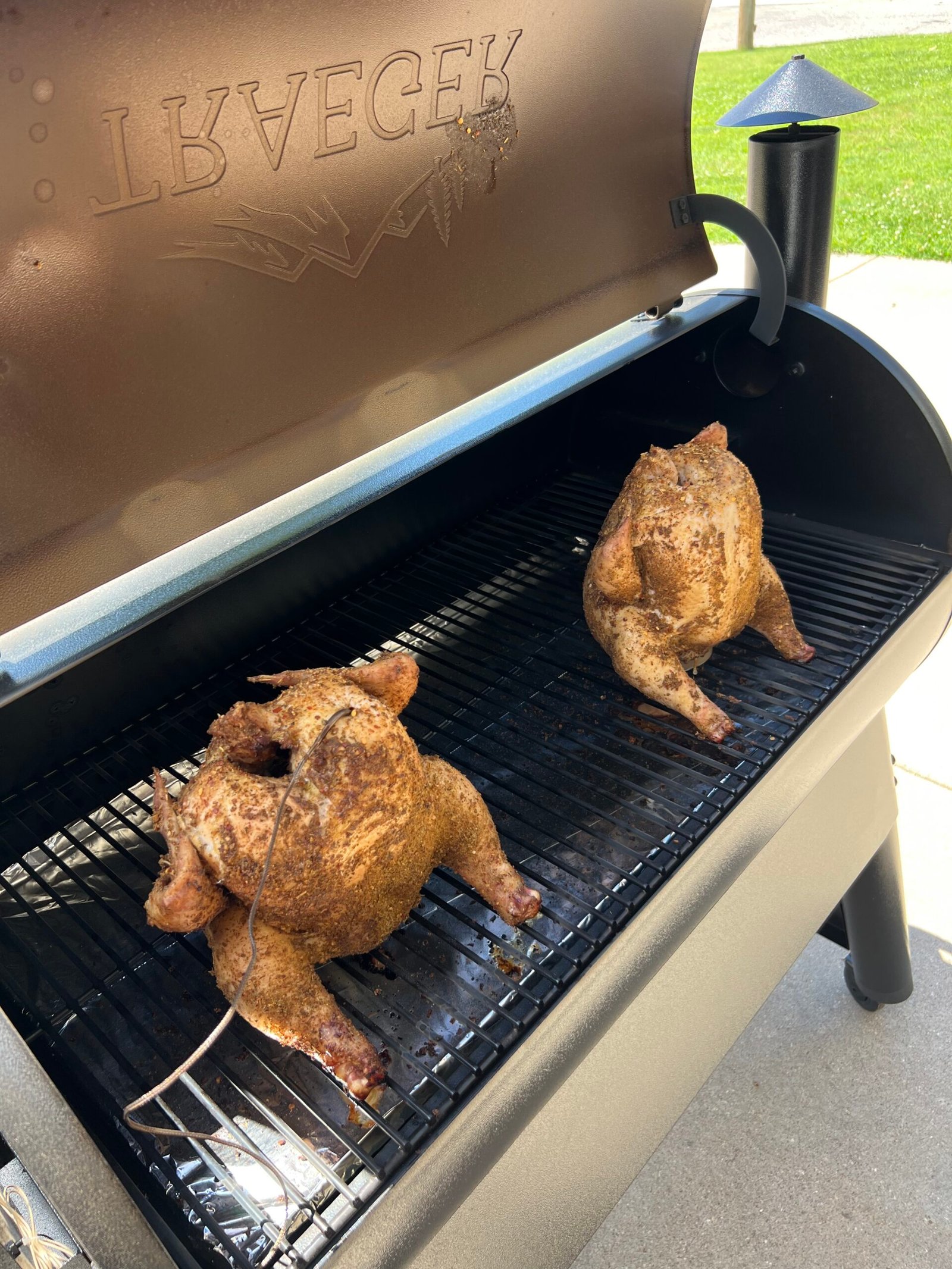
- Traeger — Review pellet-focused ownership and documentation questions.
- Pit Boss — Explore pellet products within a broader cooker portfolio.
- Smoker brands — Compare pellet operation with offset, charcoal, electric, and other smoking systems.
- Grill brands — Return to the full fuel-and-format decision.
- All brands — Navigate all governed manufacturer and category pages.
Compare fuel and format
Usable capacity depends on rack width, depth, spacing, and position. Measure for the actual briskets, ribs, poultry, pans, or vegetables you expect to cook, and check whether upper racks restrict tall food. If a model advertises direct-flame or searing access, verify the exact mechanism, usable area, operating instructions, and cleanup implications rather than assuming it behaves like an open gas or charcoal grill.
The fuel path needs equal attention. Check the specified pellet type and storage guidance, hopper access, any pellet-emptying provision, auger and fire-pot diagrams, and startup and shutdown cycles. Pellet capacity does not by itself establish runtime because use varies with settings, conditions, and operation. Plan power according to the manual, including outlet, grounding, cord, and weather restrictions.
Turn the use case into measurements
Write down the normal meal, the largest occasional cook, the tools or pans involved, and the available setup and storage space. Measure the narrowest gate or doorway on the delivery route. For every candidate, record cooking-surface dimensions, overall footprint, open-lid depth, working clearance, fuel or power needs, and the location of grease or ash collection. This converts broad claims into comparable facts.
Controls, cleaning, and ownership
Controller comparison should include the display, setting increments, probe inputs, alerts, error messages, restart behavior, and manual fallback—not merely Wi-Fi. Determine which features require an app, account, internet connection, or firmware update. Ask what cooking functions remain available if connectivity is unavailable and where firmware changes or support notices are documented.
Pellet cookers produce both ash and grease. Locate the fire pot, interior surfaces, drip tray, grease channel, bucket or container, and any removable ash feature. Read the required cool-down and cleaning sequence. A convenient ash mechanism does not eliminate inspection elsewhere, and grease access should be evaluated independently.
Also separate included equipment from optional accessories. Confirm the exact model or size each accessory fits, whether it changes clearance or cleaning, and whether the manual recognizes the setup. A family name is not a compatibility guarantee.
Failure points and maintenance
A system-based checklist may include damp or crumbling pellets, bridging in the hopper, auger obstruction, ignition failure, flameout, probe contamination or damage, fan or controller errors, grease buildup, ash accumulation, and corrosion from exposure. These are plausible maintenance and diagnosis categories, not evidence that any named brand fails more often.
The recovery path should be clear before purchase. Find instructions for an unsuccessful ignition, power interruption, error code, pellet change, auger clearing, and safe shutdown. Determine whether an owner can identify and order the correct igniter, probe, fan, controller, gasket, or grease component, and which repairs require service.
Build a maintenance calendar only from the manual. Record before-use checks, periodic cleaning, seasonal storage, and inspection after unusual operation. If the documentation uses vague intervals, ask support what condition should trigger service. Never bypass a safety device or improvise a fuel, electrical, or structural repair.
Questions to ask manufacturer support
Send questions with the complete model number and country. Save the dated reply with the manual and comparison notes; it provides a better decision record than an uncited claim.
- Which functions work without Wi-Fi, an app, an account, or internet access?
- Where are controller error codes, firmware information, and restart procedures documented?
- How are hopper, auger, fire pot, fan, probes, ash areas, drip tray, and grease path accessed?
- What pellet specifications and dry-storage practices does the manual require?
- Which powered components are owner-replaceable, and how is compatibility verified?
- Do written coverage terms differ for the body, controller, probes, igniter, fan, or other components?
A repeatable verification method
- Map rack geometry to real food dimensions and access needs.
- Confirm outdoor power, grounding, cord, shelter, clearance, and storage instructions.
- Trace pellets from storage through hopper, auger, fire pot, ash, and shutdown.
- Trace grease from the food to every tray, channel, and collection point.
- Test the documentation path on paper: manual, error code, part number, support contact, service option.
- Treat connected features as a separate convenience layer and verify offline core operation.
Use a simple pass, fail, or unknown field for each criterion. An unknown should remain open rather than being filled with an assumption. Recheck documents immediately before purchase because lineups and terms can change.
Frequently asked questions
Are all pellet grills also smokers?
Manufacturers may use both terms. Judge the exact cooker by its operating instructions, rack geometry, temperature controls, and intended modes.
Does a larger hopper guarantee a longer cook?
No. Capacity alone does not establish consumption or runtime; operating conditions and settings matter.
Is Wi-Fi necessary?
Not inherently. Decide whether remote monitoring is useful, then verify what core functions work without connectivity.
Do pellet grills need ash cleaning?
They produce ash. Follow the exact manual for fire-pot and interior inspection and cleaning, even when a convenience feature is present.
Can brand comments establish controller reliability?
No. Anecdotes can inspire support questions but cannot establish comparative rates or prevalence.
Evidence and methodology
This page is an editorial comparison framework, not a hands-on test or model review. It makes no rating, price, availability, performance, reliability, or universal-best claim. Manufacturer catalogs help define product families, while current US manuals, assembly or installation guides, parts diagrams, support pages, and written warranty terms govern exact-model facts.
Community comments are anecdotal and are not treated as proof. The collected search-result set was rejected for semantic use and is not cited. Questions and entities here come from the governed topic map: fuel, format, cooking geometry, airflow or burners, controls, power, ash, grease, materials, maintenance, manuals, parts, warranty, and support.
Source box
Verify before relying: the manufacturer’s current US product page for the complete model number; owner’s and assembly manuals; installation or cutout instructions where applicable; official parts diagrams; official troubleshooting and safety notices; and the full written US warranty. Retailer summaries may help locate a product but should not override model-specific manufacturer documents.
Final checklist
Do not choose until the exact model passes the same brief for fuel, format, fit, usable cooking geometry, controls, cleaning access, placement, storage, documentation, parts identification, and service path. Keep unresolved safety or compatibility questions marked as unknown and obtain a written answer before installation or operation.