Wood & Fuel Guide
Best Woods for Smoking Meat: Oak, Hickory, Mesquite, Apple, Cherry & More
Choosing the best woods for smoking meat can change the flavor, color, smoke intensity, and balance of your backyard BBQ. The right wood should support the meat instead of overpowering it.
This best woods for smoking meat guide explains how oak, hickory, mesquite, apple, cherry, pecan, maple, alder, and other smoking woods behave. You will also learn when to use wood chunks, chips, pellets, charcoal, and clean smoke.
Quick navigation
What this wood smoking guide covers
Quick answer
The simple way to choose smoking wood
The best woods for smoking meat depend on the meat, the smoker, the cook time, and how strong you want the smoke flavor to be. Oak is one of the best all-purpose BBQ woods. Hickory is stronger and classic for pork. Mesquite is bold and should be used carefully. Apple, cherry, maple, and peach are milder choices for poultry, pork, and lighter smoke flavor.
If you are not sure where to start, use oak for beef, hickory or pecan for pork, apple or cherry for chicken, and alder or fruit wood for fish.
This best woods for smoking meat guide is not about chasing the strongest smoke possible. It is about matching the wood to the food so smoke adds flavor without turning bitter, harsh, or overpowering.
Wood chart
Best woods for smoking meat chart
Use this chart as a practical starting point. Smoke strength can vary depending on wood quality, moisture, smoker type, airflow, and how much wood you use.
| Wood | Smoke strength | Best meats | Flavor profile | What to watch |
|---|---|---|---|---|
| Oak | Medium | Beef, brisket, ribs, pork, sausage | Clean, steady, balanced smoke | Excellent all-purpose wood, especially for longer cooks |
| Hickory | Medium to strong | Pork shoulder, ribs, bacon-style pork, beef | Classic BBQ smoke, bold, savory | Too much hickory can become heavy or bitter |
| Mesquite | Strong | Beef, steaks, short hot cooks | Earthy, intense, sharp smoke | Use carefully; it can overpower long cooks |
| Apple | Mild | Chicken, pork, ribs, turkey | Light, slightly sweet, gentle smoke | Can be too mild for big beef cuts by itself |
| Cherry | Mild to medium | Pork, ribs, chicken, turkey, beef blends | Subtle sweetness, warm color, smooth smoke | Great for color, but often works best blended |
| Pecan | Medium | Pork, poultry, ribs, turkey, brisket blends | Nutty, rich, slightly sweet | Softer than hickory but still flavorful |
| Maple | Mild to medium | Pork, poultry, ham, turkey | Soft, sweet, rounded smoke | Good when you want gentle smoke without sharpness |
| Alder | Mild | Fish, salmon, poultry | Light, delicate, clean smoke | Can disappear under heavy BBQ rubs |
| Peach | Mild | Pork, chicken, turkey | Soft fruit wood smoke | Useful for lighter backyard BBQ flavor |
| Post oak | Medium | Brisket, beef ribs, Texas-style BBQ | Clean, steady, beef-friendly smoke | Great for long beef cooks when available |
| Wood blends | Varies | Brisket, ribs, chicken, pork | Balanced smoke depending on the mix | Blend strong woods with mild woods for control |
Smoke strength
Mild woods vs strong woods
Mild woods create softer smoke flavor and are easier to use on poultry, fish, pork loin, turkey, and shorter cooks. Strong woods create a deeper smoke profile but can become harsh if used too heavily.
Mild smoking woods
Apple, cherry, peach, maple, and alder are useful when you want smoke flavor without overwhelming the meat. These woods are especially helpful for chicken, turkey, fish, and ribs.
Strong smoking woods
Hickory and mesquite create stronger smoke. Hickory works well for classic pork BBQ, while mesquite is better used carefully, especially on shorter beef cooks.
The best woods for smoking meat are not always the strongest woods. The best choice is the one that gives the meat enough smoke without covering up its natural flavor.
Beef
Best woods for smoking beef
Beef can handle stronger smoke than poultry or fish, especially large cuts like brisket, beef ribs, and chuck roast. Oak is one of the safest and most useful beef woods because it burns steady and gives a clean BBQ flavor.
- Oak: best all-purpose choice for brisket and beef ribs.
- Post oak: excellent for Texas-style brisket when available.
- Hickory: bold and savory, but use carefully on long cooks.
- Mesquite: intense and best for shorter beef cooks or small amounts.
- Cherry: useful in blends for color and smoother smoke.
Pork
Best woods for smoking pork
Pork works with many smoking woods because it can handle sweetness, nuttiness, and stronger BBQ smoke. Hickory is a classic choice, but apple, cherry, pecan, and oak are also excellent.
- Hickory: classic BBQ pork flavor for ribs and pork shoulder.
- Apple: mild and slightly sweet for ribs, pork belly, and pulled pork.
- Cherry: good color and smooth smoke for ribs and pork shoulder.
- Pecan: rich and nutty without being as aggressive as hickory.
- Oak: clean, balanced, and useful for longer pork cooks.
For pork ribs, apple plus hickory or cherry plus oak can give a balanced smoke profile. For pork shoulder, hickory and oak are strong options because the cook is long and the meat is rich.
Chicken and turkey
Best woods for smoking chicken and poultry
Chicken and turkey usually taste better with mild or medium smoke. Heavy smoke can cover the lighter flavor of poultry and make the skin taste bitter.
- Apple: mild, friendly, and easy for chicken wings and turkey.
- Cherry: smooth smoke with attractive color.
- Pecan: richer than apple but not as heavy as hickory.
- Maple: soft and slightly sweet for turkey and chicken.
- Oak: usable in small amounts when you want a cleaner BBQ profile.
Poultry needs safe internal temperature first. Smoke wood affects flavor, but a thermometer helps confirm the chicken or turkey is safe before serving.
Fish and seafood
Best woods for smoking fish
Fish usually needs a lighter smoke profile. Strong woods can overpower delicate fish quickly, especially if the cook is short or the fish is mild.
- Alder: classic mild choice for salmon and fish.
- Apple: soft and slightly sweet.
- Cherry: mild to medium with warmer color.
- Maple: gentle and rounded.
- Oak: usable in small amounts for stronger fish.
Avoid using too much wood on fish. The goal is clean smoke and gentle flavor, not a heavy BBQ profile that hides the fish.
Wood format
Wood chunks, chips, pellets, and logs
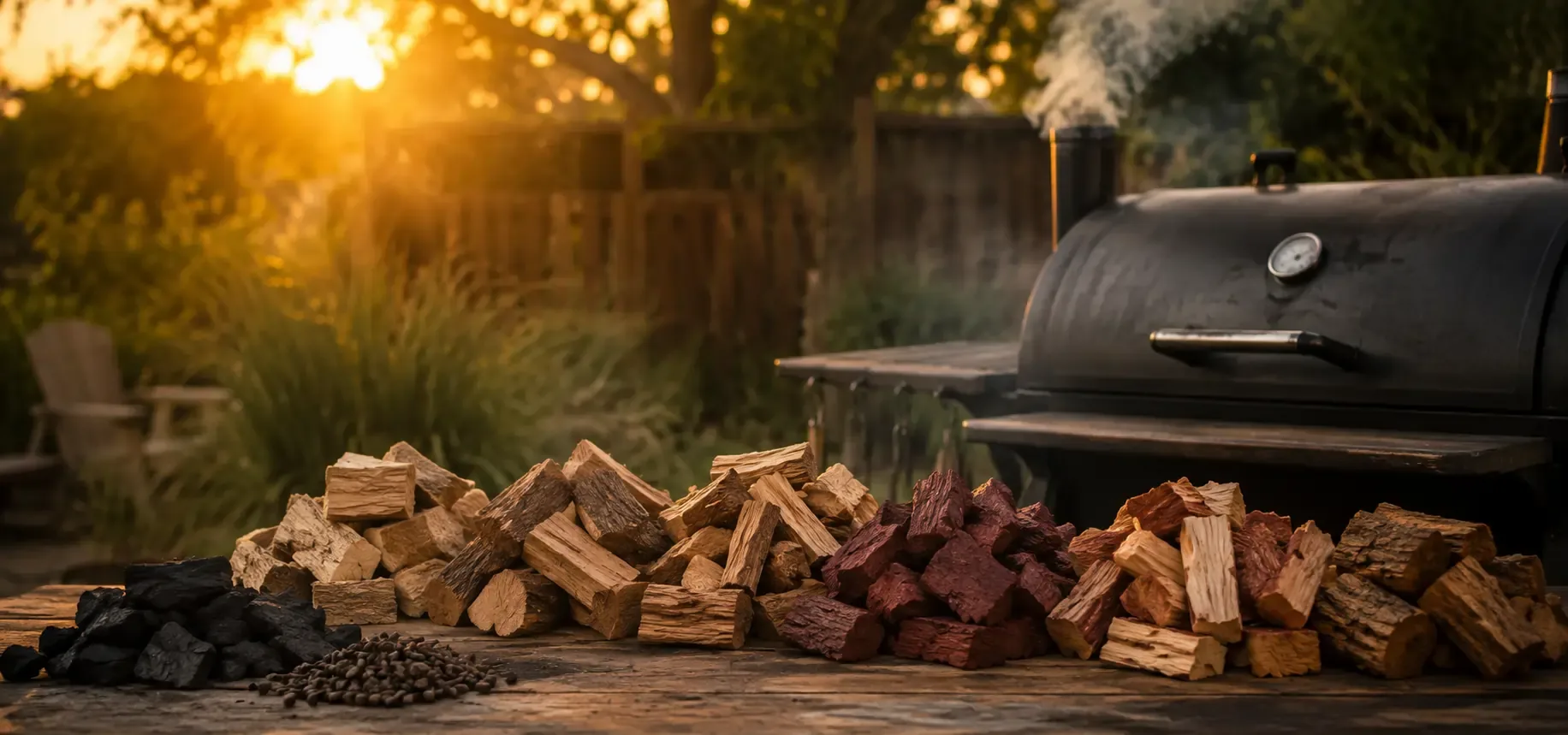
The type of wood matters, but the format also matters. Wood chunks, chips, pellets, and logs burn differently, and each one fits a different smoker setup.
| Wood format | Best use | How it behaves | What to watch |
|---|---|---|---|
| Wood chunks | Charcoal smokers and long cooks | Burn slower than chips and give steady smoke | Use a few chunks at a time instead of overloading |
| Wood chips | Shorter smoke sessions or small smokers | Burn faster and can smoke quickly | Easy to overuse or burn up too fast |
| Pellets | Pellet smokers and pellet tubes | Consistent fuel size and automated feed in pellet cookers | Keep pellets dry and avoid dusty, broken pellets |
| Wood splits/logs | Offset smokers | Feed the fire directly and create heat plus smoke | Need airflow and proper fire management |
For most backyard charcoal smokers, wood chunks are easier to control than chips. For pellet smokers, pellet quality matters because pellets are both the fuel and the smoke source.
Use this guide to narrow the choice before comparing products: note the food you cook most often, the fuel format your cooker requires, and whether the package identifies a single species or a blend. Then compare package size and storage instructions. You do not need a separate bag for every pairing in the chart. Choose a manageable starting option, record what you use, and change one variable at a time when you compare results in your own cooker.
Clean smoke
Clean smoke matters more than using more wood
More wood does not automatically mean better BBQ. Too much wood can create heavy smoke, harsh flavor, and bitterness. Clean smoke is usually thinner, lighter, and more pleasant than thick white smoke.
Heavy white smoke can come from poor airflow, wet wood, a struggling fire, cold wood, or overloading the smoker. A clean-burning fire gives better flavor than a smoldering pile of wood.
How to encourage cleaner smoke
- Use dry, food-safe hardwood.
- Avoid treated, painted, rotten, or moldy wood.
- Do not overload the smoker with too much wood.
- Keep the exhaust open enough for smoke to move through.
- Let the smoker stabilize before adding food.
- Use smaller amounts of strong wood like mesquite or hickory.
Clean smoke should season the meat. It should not make the meat taste like an ashtray.
Wood pairing
Easy wood pairings for backyard BBQ
Blending woods can make smoke flavor easier to control. Use a steady base wood like oak, then add a fruit wood or stronger wood depending on the meat.
| Meat | Easy wood pairing | Flavor goal | Beginner note |
|---|---|---|---|
| Brisket | Oak + cherry | Clean beef smoke with warmer color | Start mostly oak and add a little cherry |
| Ribs | Hickory + apple | Classic pork smoke with mild sweetness | Use more apple if you want softer smoke |
| Pulled pork | Oak + hickory | Bold BBQ pork flavor | Do not overdo hickory on long cooks |
| Chicken wings | Cherry + apple | Mild smoke and good color | Finish hot for skin texture |
| Turkey | Apple + maple | Gentle smoke and softer flavor | Avoid heavy smoke on lean white meat |
| Fish | Alder + apple | Light smoke without overpowering | Use less wood than you would for pork |
Common mistakes
Wood smoke mistakes beginners make
Using too much wood
Too much wood can make BBQ bitter, harsh, and smoky in the wrong way. Start with less wood and add more only when you understand your smoker.
Using wet or bad wood
Wet, moldy, treated, painted, or rotten wood should not be used for smoking meat. Use dry hardwood intended for cooking.
Choosing strong wood for delicate food
Mesquite or heavy hickory can overpower chicken, fish, and turkey. Mild woods usually work better for lighter foods.
Ignoring airflow
Wood flavor depends on fire quality. Poor airflow can make even good wood produce dirty smoke.
Food safety source
Wood adds flavor, but temperature keeps food safe
BackyardBBQGuide.com explains wood flavor, smoke strength, clean smoke, and fuel control. For official safe minimum internal temperature guidance, use FoodSafety.gov.
External source: FoodSafety.gov safe minimum internal temperatures
FAQ
Best woods for smoking meat questions
What are the best woods for smoking meat?
The best woods for smoking meat depend on the meat. Oak is a strong all-purpose choice, hickory is classic for pork, mesquite is bold for beef, apple and cherry are mild for poultry and pork, and alder is useful for fish.
What is the best all-purpose smoking wood?
Oak is one of the best all-purpose smoking woods because it gives clean, balanced smoke and works with beef, pork, ribs, sausage, and many long BBQ cooks.
Is hickory or oak better for smoking meat?
Oak is usually more balanced and easier for long cooks. Hickory is stronger and more classic for pork, ribs, bacon-style flavors, and bold BBQ smoke.
Is mesquite too strong for smoking meat?
Mesquite can be too strong for long cooks or delicate meats. It works better in small amounts, with beef, or during shorter hot cooks where its intense smoke will not dominate the food.
What wood is best for smoking brisket?
Oak, post oak, and oak blends are excellent for brisket. Hickory can work in smaller amounts, and cherry can be blended for color and a smoother smoke profile.
What wood is best for smoking ribs?
Hickory, apple, cherry, oak, and pecan all work well for ribs. Hickory gives classic pork smoke, while apple and cherry create a milder flavor.
What wood is best for smoking chicken?
Apple, cherry, pecan, maple, and mild oak are good choices for chicken. Avoid using too much strong smoke because poultry can absorb harsh flavors quickly.
Should you soak wood chips before smoking meat?
Soaking wood chips is not always necessary. Wet chips can smolder and create steam before they smoke. Many BBQ cooks prefer controlling the fire and using dry wood chunks or properly managed chips.
Are wood chunks better than wood chips?
Wood chunks are usually better for longer cooks because they burn slower and create steadier smoke. Wood chips burn faster and are more useful for short sessions or small smokers.
Can you mix smoking woods?
Yes. Mixing woods is a good way to balance smoke. Oak plus cherry, hickory plus apple, and pecan plus cherry are common combinations for backyard BBQ.
Related BBQ guides
Build the full wood and smoke system.
Wood choice is only one part of better BBQ. The best results come when wood, smoker temperature, airflow, internal temperature, and meat selection work together.