Wood & Fuel
Learn how wood, charcoal, and fuel shape BBQ flavor.
BBQ fuel is not just heat. Wood chunks, charcoal, pellets, chips, airflow, clean smoke, and fire management all affect flavor, temperature stability, bark, and how predictable your backyard cooks become.
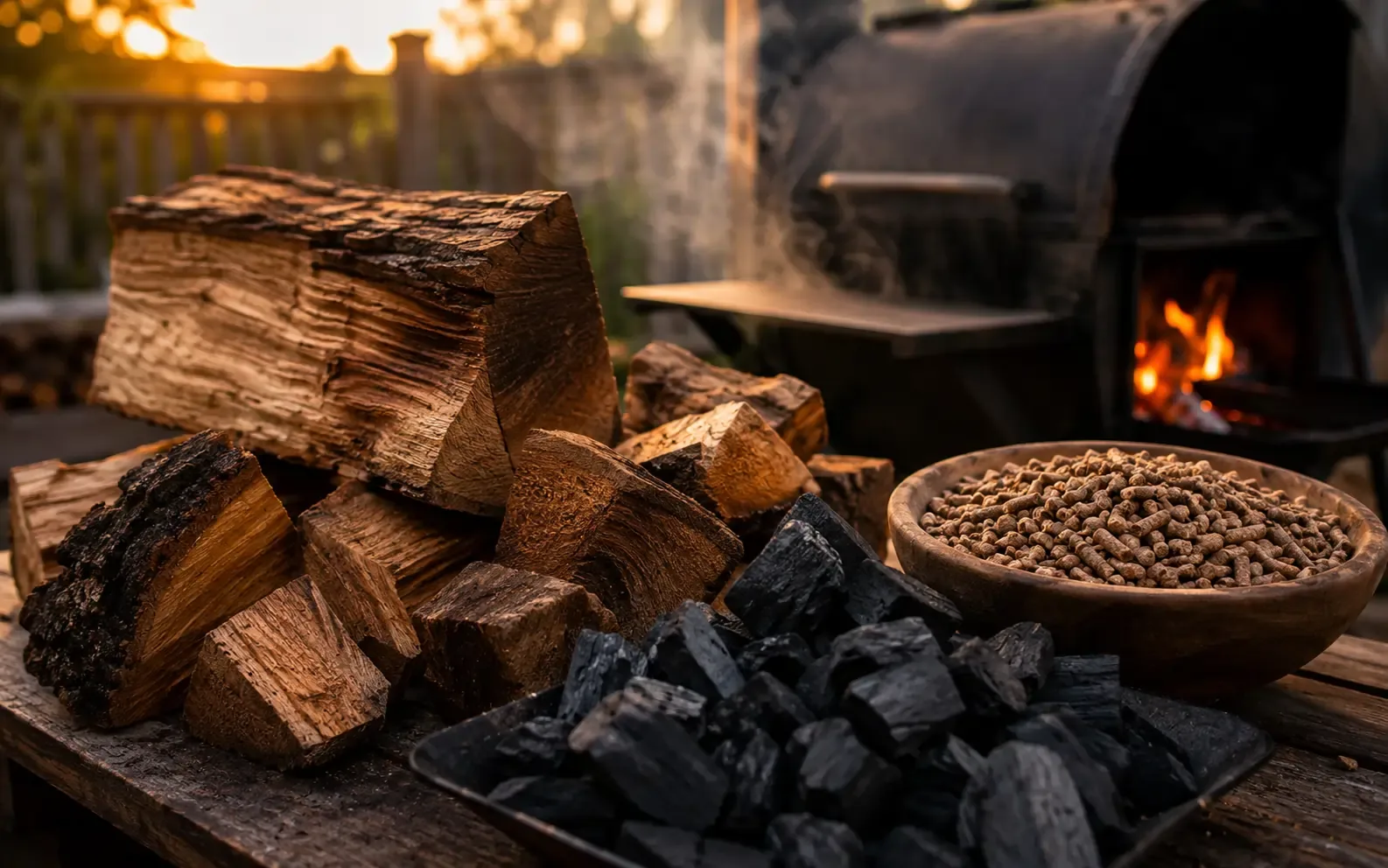
Fuel basics
Start with the fuel types that matter most.
Wood Chunks
Wood chunks are useful for longer smoke sessions because they burn slower than chips and can create steadier smoke flavor.
Explore current guides →
02Charcoal
Charcoal provides steady heat for grilling and smoking, but airflow, arrangement, and fuel quality affect how cleanly it burns.
Explore current guides →
03Pellets
Pellets are common in pellet smokers and help automate heat control, but flavor, smoke output, and burn quality can vary.
Explore current guides →
04Clean Smoke
Clean smoke usually looks thin and light, while heavy white smoke can create harsh, bitter flavors on barbecue.
Explore current guides →
Smoke quality
Good BBQ needs clean fire, not just more smoke.
More smoke is not always better. Backyard BBQ improves when the fire burns clean, airflow is managed, fuel is dry, and smoke flavor supports the meat instead of overpowering it.
Wood choice
Match the wood to the food and cook style.
Different woods can create different smoke profiles. Mild woods work well when you want a cleaner, softer flavor, while stronger woods can support richer meats and longer cooks when used carefully.
- Use mild smoke for poultry and lighter foods.
- Use stronger smoke carefully on beef and pork.
- Avoid wet or moldy wood.
- Do not overload the smoker with too much wood.
Fuel control
Fuel affects temperature as much as flavor.
Charcoal, wood, and pellets all burn differently. The way you arrange the fuel, control airflow, and add more fuel during the cook can change temperature stability and smoke quality.
- Preheat the smoker before adding food.
- Make small airflow adjustments instead of overcorrecting.
- Keep fuel dry and stored properly.
- Learn how your smoker reacts when fuel is added.
Next step
Connect fuel, smoke, and temperature control.
Wood and fuel choices matter most when they are connected to airflow and smoker temperature. Once you understand how the fire behaves, it becomes easier to create better smoke and more consistent barbecue.