Weber brand overview
Weber Grills: How to Compare Fuel Types, Formats, Controls, and Support
Use equipment type, cooking geometry, maintenance access, and official documentation—not a familiar badge alone—to narrow the Weber range.
Quick answer
Weber spans several fundamentally different cooker types. Start by choosing among gas, charcoal, pellet, electric, griddle, and portable formats. Then use the exact model number to confirm dimensions, controls, cleaning procedures, included parts, fuel requirements, and written support terms.
This is a brand-level decision guide, not a hands-on review, rating, current-catalog promise, or buying recommendation. Product names and configurations can change. Use the manufacturer’s current US materials and the exact model identifier before purchase, installation, maintenance, or a support request.
Weber equipment families
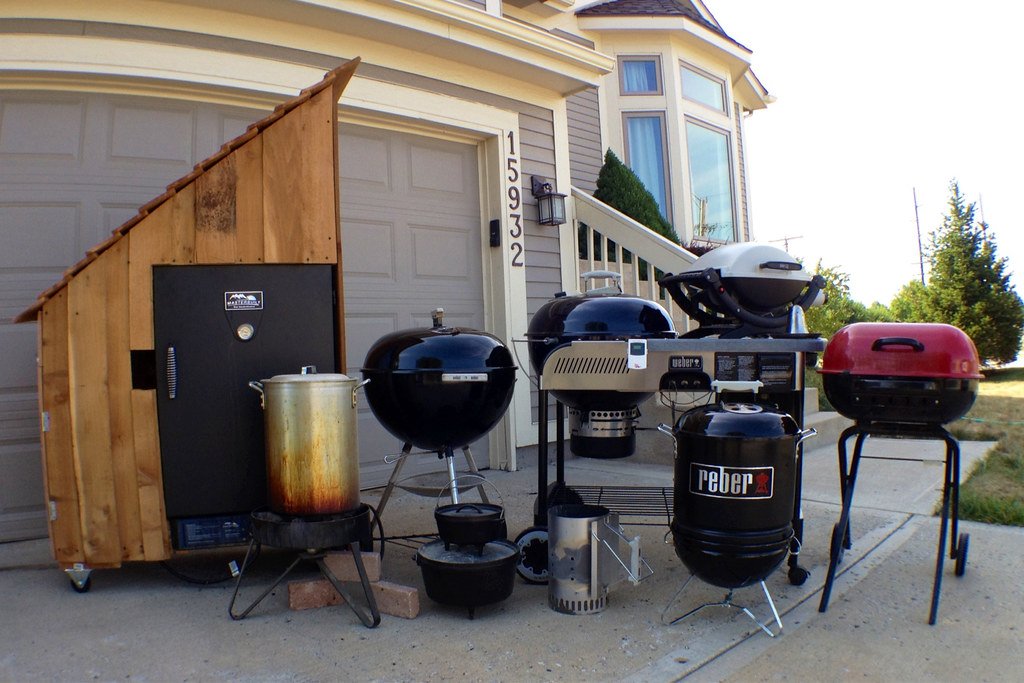
A Weber search can lead to gas grills, charcoal kettles and carts, pellet cookers, electric grills, flat-top griddles, and portable equipment. Those categories do not share the same fuel handling, startup routine, temperature control, or cleanup. Treat the brand page as a map of equipment types rather than evidence that every Weber product offers the same experience.
Within a category, cart design, grate layout, storage, side surfaces, and included components may vary. A family name can help with navigation, but the model number is the safer comparison key. Match that number across the product page, specification sheet, owner’s manual, parts lookup, and the label on the unit before relying on a detail.
Fuel and cooking system
Gas equipment prioritizes burner control and a connected fuel supply; charcoal equipment relies on fuel arrangement and adjustable airflow. Pellet equipment adds a hopper, auger, fire pot, fan, controller, and electrical dependency. Electric equipment needs a suitable outlet and follows a different preheat and placement routine. A griddle replaces open grates with a continuous cooking surface and introduces seasoning and surface-care tasks.
Do not reduce the choice to flavor slogans. Consider how often you want to handle fuel, whether an outlet is available, how quickly you expect to begin cooking, and whether you prefer direct zone control or a controller-led process. For gas, verify propane versus natural-gas configuration exactly as sold; never assume field conversion is permitted.
Cooking area, footprint, and installation
Headline cooking area is less useful than the shape and spacing of the primary grate or griddle. Check whether your normal pans, baskets, or food layout fit without blocking circulation or controls. Secondary racks may be useful, but they do not necessarily function like the main surface. Compare lid or hood clearance as well as width and depth.
Measure the complete operating footprint, not only the cookbox. Include an opened lid, side tables, handles, cylinder or cord routing, and the safe clearances stated in the manual. Portable does not automatically mean tabletop-safe or indoor-capable; the official instructions govern placement.
Controls and maintenance
Controls depend on the equipment type. Gas valves regulate individual burners, charcoal vents meter airflow, pellet controllers coordinate fuel feed and combustion, and electric controls regulate an element. Connected features may simplify monitoring, but they do not remove the need to understand shutdown, probe placement, alarms, power loss, or manual checks.
Maintenance also changes by system. Inspect grease pathways before choosing a grill: trays and catch pans should be reachable without an awkward teardown. Charcoal users should locate the ash-removal route. Pellet users should review fire-pot, ash, grease, hopper, and controller guidance. Griddle owners need the prescribed cleaning, drying, seasoning, and rust-prevention routine.
Manuals, replacement parts, and support
For long-term ownership, locate the official manual and parts diagram before purchase. Confirm that the documentation matches the complete model code, including any suffix. Identify routine-removal parts such as grease trays, ash catchers, grates, probes, ignition components, and hardware, but do not assume each is stocked indefinitely.
If a part is important to your decision, search the manufacturer’s official parts system or contact support with the model and serial number. Retailer descriptions can lag or combine configurations. Keep the purchase record, serial information, and manual together; they are more useful than a family nickname when requesting help.
Use the official site as the authority for current documentation. A search result, marketplace listing, old PDF, or community post may help you discover a term, but it cannot establish today’s specification, availability, warranty, or approved procedure. If official documents conflict, ask manufacturer support to resolve the discrepancy in writing before acting.
Questions to answer before buying
- Which equipment type fits my actual weeknight routine?
- Does the main cooking surface fit the cookware and food layout I use?
- Where do grease, ash, or surface residue go, and can I reach those areas?
- Does the installation need fuel plumbing, a cylinder location, or electrical power?
- Can I find the exact manual and parts diagram before buying?
- What does the current written warranty say for this model and component?
Write the answers beside the exact model number. That simple record prevents comparisons from drifting between similar-looking products, packages, markets, or model years.
Frequently asked questions
Are all Weber grills operated the same way?
No. Gas, charcoal, pellet, electric, and griddle products use different controls, fuels, shutdown steps, and maintenance routines. Read the manual for the exact model.
Should I compare Weber grills by total square inches?
Not by that number alone. Check the primary surface dimensions, grate or plate shape, rack spacing, lid clearance, and how your normal cooking setup fits.
Can a Weber gas grill be converted between propane and natural gas?
Do not assume it can. Verify the exact factory fuel configuration and follow the manufacturer’s written instructions; conversion restrictions can be model-specific.
Where should I verify Weber parts and warranty details?
Use Weber’s official US product, manual, parts, support, and written warranty resources. Search with the complete model and serial information when available.
Evidence and limitations
This page organizes buyer questions around the governed entities for Weber grills: equipment type, fuel, format, controls, maintenance, manuals, replacement parts, warranty, and support. It does not report hands-on testing, owner-review prevalence, reliability rates, prices, ratings, deals, availability, or a complete current catalog.
Community discussions can reveal useful questions—such as cleanup access, usable cooking geometry, power dependency, ceramic handling, or weather exposure—but anecdotes are not proof of performance or failure frequency. Specifications and procedures should be verified in current official US product pages, manuals, parts tools, support material, and written warranty terms.
Bottom line
Choose Weber equipment by the system you are prepared to operate and maintain, not by brand familiarity alone. The most defensible shortlist is the one that fits your fuel access, cooking geometry, placement, cleaning routine, and ability to retrieve model-specific documentation and support.