BBQ Temperature Guide
Smoking Meat Temperature Chart: 13 BBQ Meat Temps
Use this smoking meat temperature chart to understand safe internal temperatures, BBQ doneness cues, resting, carryover cooking, and when smoked meat is actually ready. A good meat smoking temperature chart should help you cook safely without ignoring tenderness, texture, smoke quality, and patience.
Quick navigation
What this BBQ meat temperature guide covers
- Quick answer
- Smoking meat temperature chart
- How to use a meat smoking temp chart
- Safe temperature vs BBQ doneness temperature
- Beef and brisket temperatures
- Pork shoulder, ribs, chops, and sausage
- Chicken and turkey internal temperatures
- Fish and seafood temperatures
- Where to place the thermometer probe
- Resting and carryover cooking
- Smoker temperature vs internal temperature
- Common temperature mistakes
- FAQ
Quick answer
Smoking meat temperature chart for backyard BBQ: quick answer
A smoking meat temperature chart gives you safe internal temperature targets, but BBQ doneness also depends on tenderness, texture, fat rendering, collagen breakdown, resting, and carryover cooking. Chicken and turkey need strict food safety attention at 165°F, while brisket, pork shoulder, and ribs often cook far beyond the safe minimum because they need time to become tender.
The safe internal temperature tells you when food has reached a minimum safety point. BBQ doneness tells you when the meat has the bite, texture, moisture, and tenderness you actually want.
Use this chart as a guide, not as a robot timer. A thermometer tells you where the meat is; tenderness tells you whether it is ready to eat.
Smoking meat temperature chart
Smoking meat temperature chart for backyard BBQ
This smoking meat temperature chart separates official safe minimum internal temperatures from common BBQ doneness cues. Use the safe minimum column for food safety, then use the BBQ doneness cues and resting notes to understand texture.
If you are looking for a meat smoking temperature chart, a smoking meat temp chart, or a smoke meat temperature chart, the most important thing to remember is this: not every cut is finished at the same temperature, and not every safe cut is tender yet.
| Food | Safe minimum internal temperature | BBQ doneness cues | Resting notes |
|---|---|---|---|
| Brisket | 145°F for whole-muscle beef, with 3 minutes rest | Often around 195°F–205°F for tenderness; probe should slide in with little resistance | Rest at least 1 hour; longer rests are common for large briskets |
| Beef steaks, roasts, chops | 145°F with 3 minutes rest | Depends on preferred doneness and cut thickness | Rest before slicing so juices redistribute |
| Ground beef burgers or ground meat | 160°F | Check the center of the patty, not the edge | Short rest is fine |
| Pork shoulder / pulled pork | 145°F for whole-muscle pork, with 3 minutes rest | Often around 195°F–205°F for pulling; bone wiggles and meat shreds easily | Rest before shredding |
| Pork ribs | 145°F for whole-muscle pork, with 3 minutes rest | Often around 190°F–203°F, but ribs are better judged by bend, toothpick tenderness, and pullback | Rest 10–20 minutes before slicing |
| Pork chops or pork loin | 145°F with 3 minutes rest | 145°F–150°F can stay juicy when rested properly | Rest 3–10 minutes depending on size |
| Chicken breast | 165°F | Check the thickest part; avoid drying it out by cooking far past target | Rest briefly before slicing |
| Chicken thighs, legs, wings | 165°F | Often better texture around 175°F–185°F because dark meat can handle more heat | Rest briefly before serving |
| Turkey breast | 165°F | Check the thickest part and avoid overshooting because turkey breast dries out fast | Rest before slicing |
| Whole turkey | 165°F in breast and thigh areas | Check multiple spots, especially thick breast and thigh areas | Rest before carving |
| Sausage | 160°F for ground meat sausage; 165°F for poultry sausage | Check the center; do not judge only by exterior color | Rest briefly |
| Fish, including salmon | 145°F, or until flesh is opaque and separates easily with a fork | Opaque flesh, flakes easily, not translucent in the center | Short rest only |
| Shrimp, lobster, crab, scallops | Cook until flesh is pearly or white and opaque | Firm, opaque flesh without a raw translucent center | Serve soon after cooking |
| Leftovers | 165°F | Heat evenly and check the center of thicker portions | Serve hot after reheating |
Food safety source: Safe minimum internal temperatures are based on FoodSafety.gov safe minimum internal temperature guidance . BackyardBBQGuide.com adds BBQ-specific doneness notes to explain tenderness, texture, resting, and practical smoker decisions.
How to use the chart
How to use a meat smoking temp chart
A meat smoking temp chart works best when you use it in stages. First, use safe internal temperatures to avoid unsafe food. Next, use BBQ doneness cues to decide whether the meat is actually tender. Finally, rest the meat before slicing, shredding, or serving.
Use temperature for safety
Chicken, turkey, ground meat, fish, leftovers, and sausage need careful internal temperature checks. Do not guess by color alone.
Use tenderness for BBQ texture
Brisket, ribs, pork shoulder, beef ribs, and other tough cuts may need to cook beyond their safe minimum temperature before they become tender.
This is why a smoked meat internal temperature chart should never be used as the only decision. It is the starting point for better barbecue, not the finish line.
Safe vs done
Safe internal temperature is not always BBQ doneness
This is where many beginner BBQ cooks get confused. A pork shoulder can pass a safe minimum temperature long before it is tender enough to pull. A brisket can be safe before the connective tissue has softened. Ribs can read a number that looks high but still feel tight if the collagen has not broken down enough.
For large smoked cuts, temperature is a guide. Tenderness is the decision. Experienced cooks use a thermometer first, then confirm with probe feel, bend tests, bone movement, bark texture, fat rendering, slicing behavior, and resting.
Think of the thermometer as your map. It tells you where you are. The final decision still comes from texture, tenderness, and how the meat feels.
Beef temperatures
Brisket and beef smoking temperatures
Brisket is the classic example of why BBQ temperature charts need context. A whole brisket may be food-safe before it is enjoyable, but it usually needs more time for connective tissue and fat to break down.
What temperature is brisket done?
Many briskets finish somewhere around 195°F–205°F, but the exact number is less important than tenderness. Start checking for probe tenderness when the brisket gets close to that range. The probe should slide into the flat and point with very little resistance.
Internal temperature for brisket
Internal temperature for brisket is useful because it tells you when to start checking texture. But brisket is not finished by number alone. A brisket at 198°F can still be tight, while another brisket at 203°F may be perfectly tender. Probe feel, bark, resting, and slicing behavior matter.
What temperature should smoked beef reach?
For steaks, roasts, and chops, use the safe minimum temperature as the baseline. For tough barbecue cuts like brisket, chuck roast, or beef ribs, expect the final BBQ doneness temperature to be higher because tenderness depends on collagen breakdown.
Pork temperatures
Pork shoulder, ribs, pork chops, and sausage
Pork is another category where safety and BBQ texture can separate. Pork chops and pork loin can be juicy around the safe minimum range when rested properly. Pork shoulder and ribs usually need a higher finishing temperature for the texture people expect from barbecue.
What temperature is pulled pork done?
Pulled pork is usually ready when the pork shoulder reaches the high 190s or low 200s and shreds easily. The bone should move easily, and the meat should pull apart without fighting you.
Are ribs done by temperature?
Ribs are not best judged by temperature alone. A thermometer can help, but ribs are thin and bony, which makes accurate readings harder. Use the bend test, toothpick tenderness, and meat pullback as stronger signals.
Poultry temperatures
Chicken and turkey internal temperature
Poultry needs a stricter food safety mindset. Chicken, turkey, ground poultry, wings, thighs, legs, and poultry sausage should reach 165°F internally.
For chicken thighs, legs, and wings, many BBQ cooks prefer a higher finishing range because dark meat can become more tender after the connective tissue softens. Chicken breast and turkey breast are leaner and can dry out faster, so careful temperature control matters.
For chicken breast, check the thickest part. For a whole bird, check multiple places, especially the breast and thigh area.
Fish temperatures
Fish, salmon, and seafood smoking temperatures
Fish and seafood cook faster than large BBQ cuts. Salmon, white fish, shrimp, scallops, crab, and lobster can go from tender to dry quickly. A smoke meat temperature chart is useful here because visual cues matter, but internal temperature and texture still need attention.
For fish, official guidance lists 145°F or flesh that is opaque and separates easily with a fork. For smoked salmon, the texture can become dry if heat runs too high or the fish cooks too long.
Probe placement
Where to place a meat thermometer probe
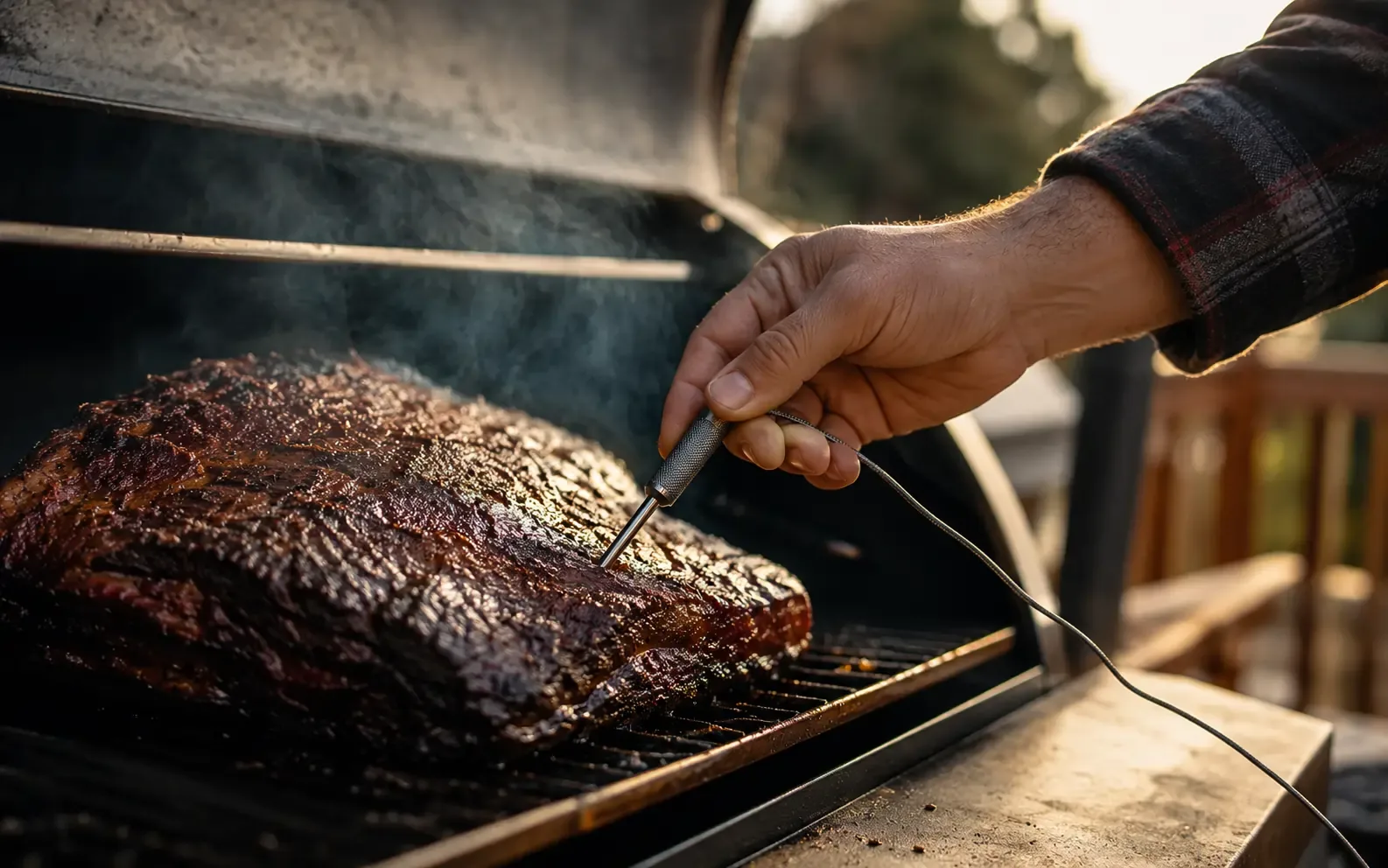
Probe placement can change the reading. Put the thermometer into the thickest part of the meat, away from bone, large pockets of fat, the cooking grate, and empty air spaces. For large cuts like brisket or pork shoulder, check more than one area.
- For brisket, check the flat and the point because they can finish differently.
- For chicken breast, place the probe into the thickest part of the breast.
- For turkey breast, check the thickest part without touching bone.
- For thighs and legs, avoid touching bone.
- For burgers and sausage, check the center.
- For ribs, use temperature as a secondary signal because bones make readings harder.
- For fish, check gently and avoid tearing delicate flesh apart.
A bad thermometer reading can make you pull food too early or cook it too long. That is why probe placement matters as much as the temperature number itself.
Resting and carryover
Resting, carryover cooking, and final meat temperature
Resting gives heat and juices time to settle after cooking. Some meats also continue rising in temperature after they leave the smoker. That continued rise is called carryover cooking.
Resting time depends on the size and type of meat. Small cuts may need only a few minutes. Large barbecue cuts like brisket and pork shoulder often benefit from a longer rest because they hold heat and moisture differently.
Common resting guidelines
- Steaks, chops, and smaller cuts: about 3–10 minutes.
- Chicken pieces: a short rest before serving.
- Turkey breast: rest before slicing to reduce moisture loss.
- Ribs: about 10–20 minutes before slicing.
- Pork shoulder: rest before shredding.
- Brisket: at least 1 hour; longer rests are common for large cooks.
Carryover cooking matters most with thick cuts. If you slice too early, you can lose moisture even when the internal temperature was correct.
Smoker temperature
Smoker temperature vs internal meat temperature
Smoker temperature is the heat of the cooking environment. Internal temperature is the heat inside the food. They are connected, but they are not the same thing.
A smoker can be running at 225°F, 250°F, or 275°F while the meat rises slowly over several hours. Large cuts can also stall, which means the internal temperature stops rising quickly while moisture evaporates from the surface.
For better BBQ, track both numbers. A grate-level smoker probe helps you understand what the food is actually experiencing, while an internal probe helps you know what is happening inside the meat.
Common mistakes
BBQ temperature mistakes beginners make
Pulling large cuts too early
Brisket, pork shoulder, and ribs may be safe before they are tender. Pulling them too early can leave the meat tight, chewy, or hard to slice.
Only checking one spot
Large or uneven cuts can have hot and cool areas. Check more than one spot when the cut is thick, irregular, or important.
Touching bone with the probe
Bone can give a misleading reading. Place the probe in the meat, not against bone or the cooking grate.
Ignoring the rest
Cutting too soon can waste moisture and make the final texture worse. Resting is part of the cook, not dead time.
Using time instead of temperature
Time is only an estimate. Meat size, smoker behavior, weather, fuel, airflow, and fat content all change the cook.
Confusing safe with tender
Safe temperature matters, but tough BBQ cuts often need more time to become tender, sliceable, or shreddable.
FAQ
Smoking meat temperature chart questions
What is the best smoking meat temperature chart for beginners?
The best smoking meat temperature chart for beginners shows safe internal temperatures, common BBQ doneness cues, resting notes, and carryover cooking. It should help you understand both safety and texture.
Is a meat smoking temp chart the same as a doneness chart?
Not exactly. A meat smoking temp chart gives safe internal temperature targets, but BBQ doneness also depends on tenderness, fat rendering, connective tissue, resting, slicing, and texture.
What is the best internal temperature for smoked meat?
There is no single best internal temperature for all smoked meat. Chicken and turkey should reach 165°F. Ground meat should reach 160°F. Whole-muscle beef and pork cuts have lower safe minimums, but tough BBQ cuts like brisket and pork shoulder are usually cooked higher for tenderness.
What temperature is smoked brisket done?
Smoked brisket is often done somewhere around 195°F–205°F, but the best signal is probe tenderness. The thermometer probe should slide into the meat with little resistance.
What temperature is pulled pork done?
Pulled pork is usually ready when pork shoulder reaches the high 190s or low 200s and shreds easily. The meat should pull apart without force.
Are ribs done by temperature or tenderness?
Ribs are better judged by tenderness. Temperature can help, but the bend test, toothpick tenderness, and meat pullback are usually more useful.
What temperature should smoked chicken reach?
Smoked chicken should reach 165°F internally. Check the thickest part and avoid touching bone with the thermometer probe.
What temperature should smoked salmon reach?
For food safety, fish guidance commonly lists 145°F or flesh that is opaque and separates easily with a fork. Smoked salmon can become dry if it is pushed too far beyond its best texture.
Where should you place a meat thermometer probe?
Place the probe in the thickest part of the meat, away from bone, fat pockets, the cooking grate, and empty air spaces. Large cuts should be checked in more than one spot.
What is carryover cooking?
Carryover cooking is the continued rise in internal temperature after food leaves the heat. It matters most with thicker cuts that hold heat.
How long should smoked meat rest?
Small cuts may need only a few minutes. Ribs often rest 10–20 minutes. Pork shoulder should rest before shredding. Brisket often benefits from at least 1 hour of rest.
What is the difference between smoker temperature and internal temperature?
Smoker temperature is the heat inside the cooker. Internal temperature is the heat inside the food. BBQ cooks should track both.
Can smoked meat be safe before it is tender?
Yes. Brisket, pork shoulder, and ribs can reach a safe internal temperature before they become tender. For those cuts, tenderness and texture are important final signals.
Sources
Food safety reference
Official safe minimum internal temperatures are based on FoodSafety.gov guidance. BackyardBBQGuide.com adds BBQ-specific doneness notes to explain tenderness, texture, resting, carryover cooking, and practical smoker decisions.
Related BBQ guides
Build your BBQ temperature system.
This smoking meat temperature chart is the starting point. For better barbecue, connect internal temperature with smoker control, fuel choice, clean smoke, wood selection, resting, and the way each cut behaves during a long cook.
Leave a Reply